CAG Report On Rafale Deal: More Questions Than Answers
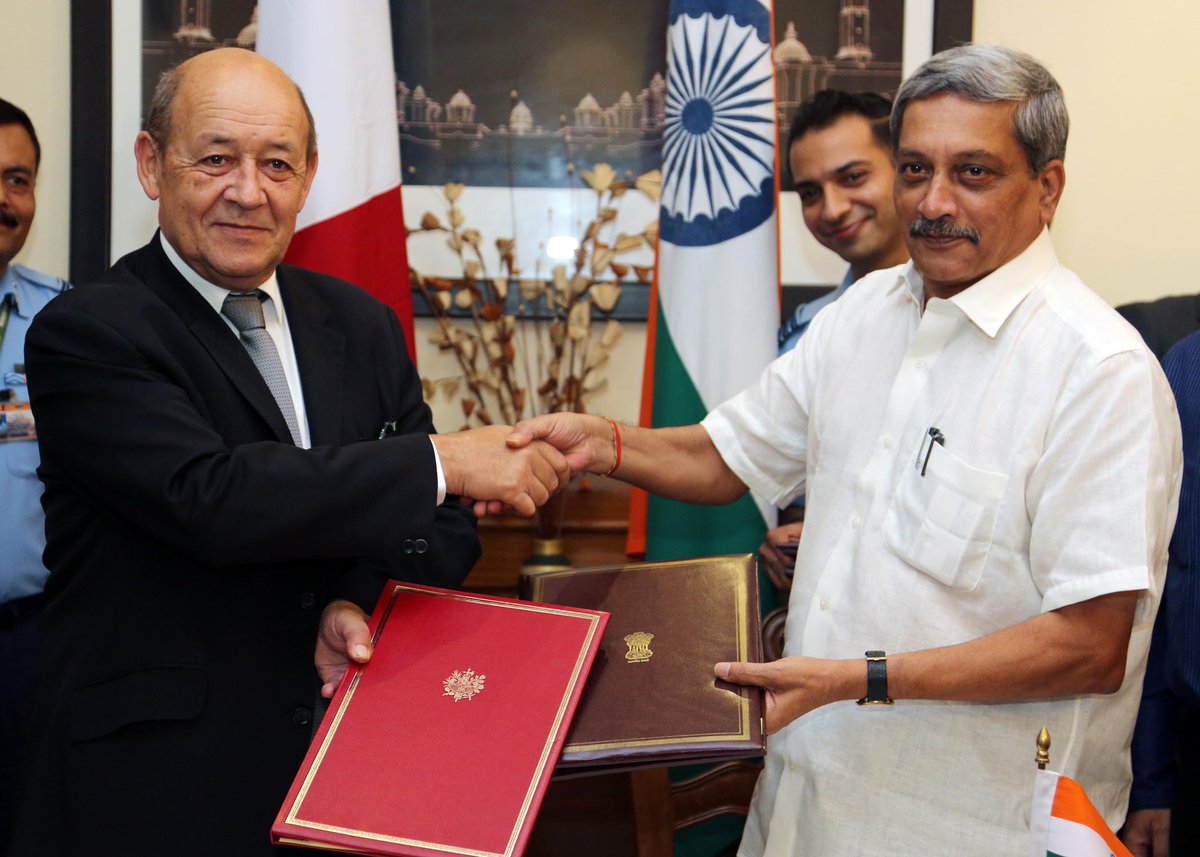
The entire deal to purchase French warplanes was done in a “slipshod manner, not just by the ruling government but also by previous governments”, according to defence expert Ajai Shukla.
That comes when the national auditor said in a report that the 36 Rafale jet deal negotiated by the Narendra Modi government was 2.86 percent cheaper than the original 126 aircraft negotiated by the United Progressive Alliance. The Comptroller and Auditor General of India added that the delivery schedule is also one month earlier compared with the UPA deal.
This offered reprieve to Prime Minister Narendra Modi who has been under pressure in the run up to general election to disprove the Congress-led campaign that alleges the jets were bought at a higher price.
But Shuka said that “translating the deal from 126 aircraft to 36 aircraft was the biggest blunder”.
Are there some serious flaws in the procurement process as well as the final inter government agreement between India and France? What does a close reading of the CAG report reveal? BloombergQuint spoke with the defence expert to understand some details in the report and what do they mean for the country's defence procurement process.
Indian Air Force Never Wanted The Rafale
The Indian Air Force initially asked for the Mirage 2000-II aircraft to be purchased directly from Dassault Aviation, according to the CAG report.
Given India's familiarity with the Mirage fighter jet, the Indian Air Force felt that a single-source deal would be cost-effective. That proposal, however, was turned down, as the government wanted a bidding process and not a single-source deal.
“Then Defence Minister George Fernandes, who was part of the Vajpayee-led National Democratic Alliance government, did not want to risk another corruption scandal as the Tehelka scam was still fresh in memory,” Shukla told BloombergQuint.
Fernandes wanted to play it safe, he said. “It would have been much cheaper if they bought the Mirage 2000-II. France was ready to transfer the factory lock stock and barrel to India.”

Dassault Bid: Three Strikes
The CAG report on the Rafale deal clearly stated that Dassault's bid was rejected not once but thrice between 2008 and 2009 by the technical evaluation committee. That's because the Rafale aircraft did not meet nine air staff qualitative requirements. Dassault also didn't submit information on manufacturers for spare parts and an engineering support package.
Not just that, a report by a panel of independent external monitors in 2015 highlighted issues relating to the calculation of manpower costs and lack of performance guarantees of manufacturing the Rafale aircraft at Hindustan Aeronautics Ltd. All these observations mean that Dassault was never the lowest bidder in the first place.

Lack Of Bank Guarantee
A big difference between the 2007 deal and the one that the Modi government negotiated was the absence of a bank guarantee.
A bank guarantee had to be embedded in the final bid, as per the procedure. Dassault would have to pay the bank a charge to hold this guarantee till the terms of the contract were fulfilled. But since the 2015 deal had no such provision, Dassault didn't have to pay any charge to the bank. This, according to the CAG report, resulted in savings for Dassault Aviation. These savings should have been passed on to India, said the CAG report.
Doubts Over India-Specific Enhancements
At least four of the India-specific enhancements that the government asked the Rafale aircraft to be retrofitted with weren't needed, the CAG report said.
Moreover, the India-specific requirements weren't exclusive to the Rafale fighter jet. Some of them, such as the helmet mounted display, were available in five other aircraft that were being evaluated.
“At the end of it all, translating the deal from 126 aircraft to 36 aircraft was the biggest blunder,” said Shukla. “The entire deal could not have been done in a more slipshod manner.”
Watch the full interview here:

-
We May Need Another Tukaram Mundhe To Fight Air Pollution | The Reason Why

Developers may install basic measures such as sprinklers and green nets, resume work, and continue violating rules when this equipment stops working.
-
Extracting Value From Battery Scrap Could Be Challenging For India | The Reason Why
A discarded lithium-ion battery still contains valuable materials such as lithium, nickel and cobalt. These can be recovered and reused. When such batteries are crushed and shredded, they produce a dark powder called black mass.
-
One El Nino, India Can Handle. Two Could Break The Granary
India's grain stocks can absorb one bad year, but a second El Nino could drain the buffer in two to three years, economists say.
-
India's Troika Of Good Luck | Joining The Dots
As Jensen Huang's exit drags Nvidia down, a cooling AI trade and resilient earnings have revived investor interest in India. A likely RBI rate hike looms.
-
Talking Points This Week: Leadership Shock At Nvidia, Earnings Strength, And The Fog Over Hormuz
The Anthropic IPO pricing and first trading day, Nvidia's upcoming earnings, and any fresh signals from Iran will set the tone for the following week.
-
Signature Play: The Classic Cocktail Is Dead. Or Is It?
Classic cocktails are disappearing from India's cocktail menus. But they're still being ordered, taught to bartenders and borrowed from. So, who's really having the last drink?
-
A New Samvat Wishlist: Inclusive Prosperity And Human Development
India has strengthened its economic foundations through infrastructure, digital access and enterprise. Its next growth chapter must deepen productivity, create better livelihoods and widen participation in prosperity.
-
Love, Sex Aur Dhokha: The Audacious Plot To Spy On Jensen Huang
A Taipei dinner, a Singapore chip buyer and a suspected Chinese asset: inside the alleged spy operation that got close to NVIDIA's Jensen Huang.
-
Ten Things I Learnt This Samvat
Patience can be a trap. Cheap stocks can stay cheap. Leverage can wipe you out. What did Samvat 2082 teach us? Niraj Shah writes on 10 lessons from the year gone by.
-
Talking Points This Week: Tech Nerves, FII Buying, And A Faraway Banking Shock
The global markets are not shining this Diwali. The exception in the large markets is, India.









