Bus to Pakistan, From China Via PoK: Why is India Worked Up?
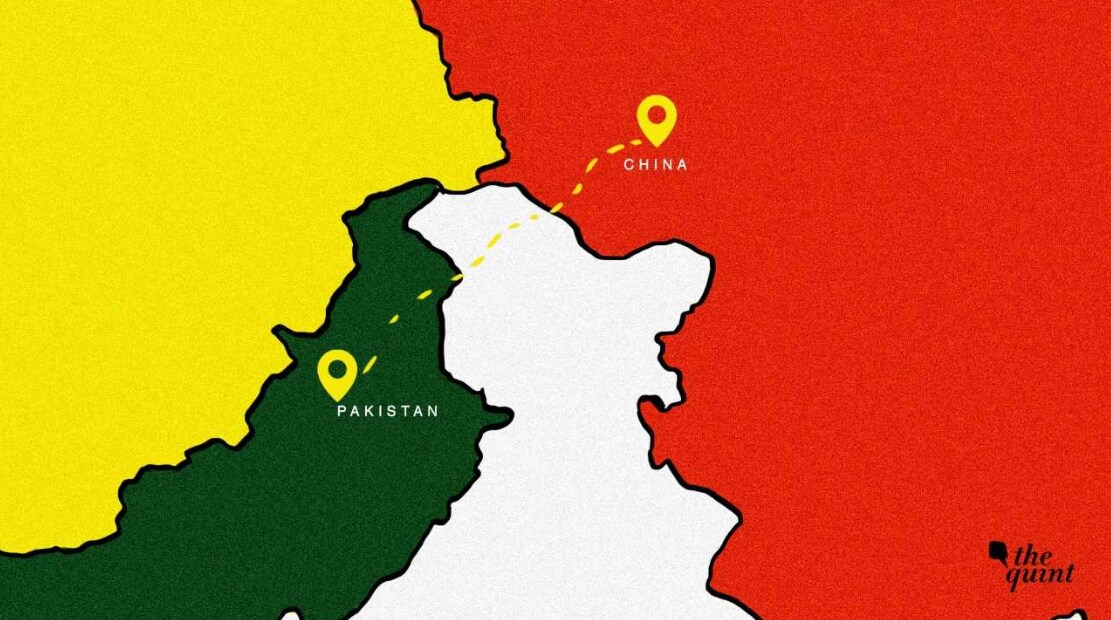
On 31 October, India formally protested the proposed launch of a bus service between China and Pakistan because the service would “operate between Pakistan Occupied Jammu and Kashmir” under the so-called ‘China-Pakistan Economic Corridor'. The official spokesman noted India held the China-Pakistan boundary agreement of 1963 as “illegal and invalid” and views the service as a violation of India's sovereignty and territorial integrity.
If all this sounds tough and uncompromising, it is. But it is hardly consistent and not especially helpful.
The Karakoram Highway over which the service will run has been around since the late 1960s and was opened to the public in 1979. The route, which is by no means an easy one, witnesses significant civilian traffic and, in fact, the first bus service on it was launched in 2006 between Gilgit and Kashgar.
This has been in use in the main by traders and tourists. There is no record of an Indian protest at the time.
Why is India Getting Worked Up Now?
Indeed, it's not clear whether India protested the building of the road itself and the various phases in which it was upgraded.
Too busy to read? Listen to it instead.
India had, of course, protested the China-Pakistan boundary agreement which was actually engineered by ZA Bhutto to torpedo the direct talks between India and Pakistan on the Kashmir issue that had been midwifed by the US and UK in 1963.
Presumably, this time around India is worked up because unlike the local traffic between Gilgit and Kashgar, the new service will be between Pakistan proper, viz Lahore, to Kashgar and back.
When it comes to the Kashmir dispute, there is an Indian strategy formulated by Pandit Nehru and Sardar Patel, evident from the very time that India accepted a ceasefire in December 1948 at a time when the military centre of gravity had shifted in its favour.
That strategy would essentially divide the state broadly along what then was the ceasefire line and is now the Line of Control. Given the fact that the country had largely gone along with the partition, there was nothing unusual in seeking to partition a state which bordered both of them.
The ceasefire line in the west divided the state in such a way that the Kashmiri-speaking areas remained in India and Pakistan kept control of a region which was populated by people who were ethnically closer to them. Further, Pakistan would be reassured that their Punjabi heartland would get some defence in depth from India.
But the Pakistanis have baulked at any such deal, demanding as Bhutto did in the 1963 talks that India cede the entire state of Jammu & Kashmir to them, barring the Kathua tehsil.
Of course, the same Bhutto was somewhat chastened when he met Indira Gandhi in Simla in 1972 in the wake of the Bangladesh war. Desperate to get back the 90,000 POWs in Indian hands, Bhutto agreed to change the nomenclature of the ceasefire line to the LoC, implying that it was no longer created by war but through acquiescence.
Further, as Indian accounts have it, he told Indira Gandhi that he would work towards converting the LoC into an international border. But this commitment was verbal and the Pakistanis have since denied that any such commitment was ever made.
Another manifestation of the Indian strategy vis-à-vis the so-called POK, came in 2006-7 when New Delhi engaged Islamabad in a backchannel dialogue that saw the emergence of a four point formula which would leave borders where they were, but seek to soften them to the point of irrelevance.
Since this plan collapsed along with Pervez Musharraf's presidency, it's not possible to gauge whether or not it would have been successful.
But what it does tell us, as indeed the decisions of Indira Gandhi and Nehru, is that India remains willing to live with a partitioned Jammu & Kashmir. So, to make a big fuss about a bus service in a part that India is not particularly attached to is formalistically correct, but its tantamount to missing the woods for the trees.
Whether it is the Sino-Indian border, or the border in J&K, it is highly unlikely that they are going to change dramatically in the coming decades. War to recover claims, be they Indian, Chinese or Pakistani, is unlikely because of the nuclear factor. A negotiated settlement is the way out and it will result in a reduction of massive expenditures to defend the border. Further it would promote a level of trans-border trade which could bring prosperity to the local people.
Chinese Position Highly Nuanced
In all this, the Chinese position is highly nuanced. Article 6 of the 1963 China- Pakistan agreement says that the agreement was subject to being replaced by another final version “after the settlement of the Kashmir dispute between Pakistan and India”.
As for CPEC, India has made a big issue of it because it goes through Gilgit and Baltistan. The Chinese deny that it is a change of status quo. In September 2017, their spokesman said that the CPEC “has nothing to do with territorial sovereignty disputes and will not affect China's position on the Kashmir issue.”
Given India's belief that Pakistan is in illegal occupation of a part of Jammu & Kashmir, there is nothing surprising in the remarks of the official spokesman. It is, of course, quite another thing to ask whether it's worth insistently reiterating India's claim every time a bus or convoy crosses the border from Pakistan to China and vice versa. India could, through some smart diplomacy, instead, leverage this to get the Chinese to open up border trade across the Line of Actual Control in Ladakh or Arunachal Pradesh.
(The writer is a Distinguished Fellow, Observer Research Foundation, New Delhi. This is an opinion piece and the views expressed above are the author's own. The Quint neither endorses nor is responsible for the same)

-
Getting To Work Costs Women More | The Reason Why

It is not just about women paying more than men. It is about women paying much more in cities than in villages.
-
AI Bias In Investing Cannot Be Eliminated, But It Can Be Governed
Framing is a particularly important example as identical financial information presented in terms of gains rather than losses can lead an LLM to reach a different assessment.
-
Joining The Dots | Dark Skies, Steady Diya: Why Hope Holds This Diwali
With war, a weak rupee and foreign outflows weighing on sentiment, policymakers at the NDTV World Summit and market veterans at NDTV Profit Ignite: Diwali Edition offered the same advice: stay invested and filter out the noise.
-
The Curious Case of Equitas Small Finance Bank And A CEO Who Quit For Stock
PN Vasudevan believes persistent investor concerns over a perceived conflict of interest had become a governance overhang on Equitas Small Finance Bank's stock, even as the lender improved profitability and asset quality.
-
Talking Points This Week: AI Cash Burn, A Tiger Comeback And An India That Still Finds Its Own Path
India is not immune to higher oil or tighter global liquidity, yet its earnings base is broader, its domestic policy levers are still available.
-
Foreign Investors Own Half Of HDFC Bank and ICICI Bank. An LTCG Cut Could Matter Most Here
Foreign portfolio investors have US$115 billion parked in HDFC Bank, ICICI Bank. If the government cuts long-term capital gains tax, Jefferies says returning foreign money could land here first.
-
'Never Seen This Level Of Negativity': Sandeep Tandon Says The Next Rally May Be Closer Than You Think
Veteran investor Sandeep Tandon says foreign selling is easing, large-caps are due a comeback and mid-caps are crowded, while he turns positive on gold, power and pharma this Diwali.
-
Indians Stay With Family, Not In Hotels | The Reason Why
India still lacks enough clean, reliable and affordable hotels for budget-conscious travellers.
-
The Economic Imperative: Analysing The Material Driving Force Behind India-Canada Strategic Reset
This economic complementarity is further reinforced by deep institutional investment ties and talent mobility, which form the bedrock of the bilateral framework.
-
Medicine Pricing: Where Must Profit Stop?
India must confront excessive margins, hidden incentives and regulatory gaps that threaten the integrity of medicine.










