BQ Explains: What Curbs On Interest Subvention Schemes Mean For Homebuyers
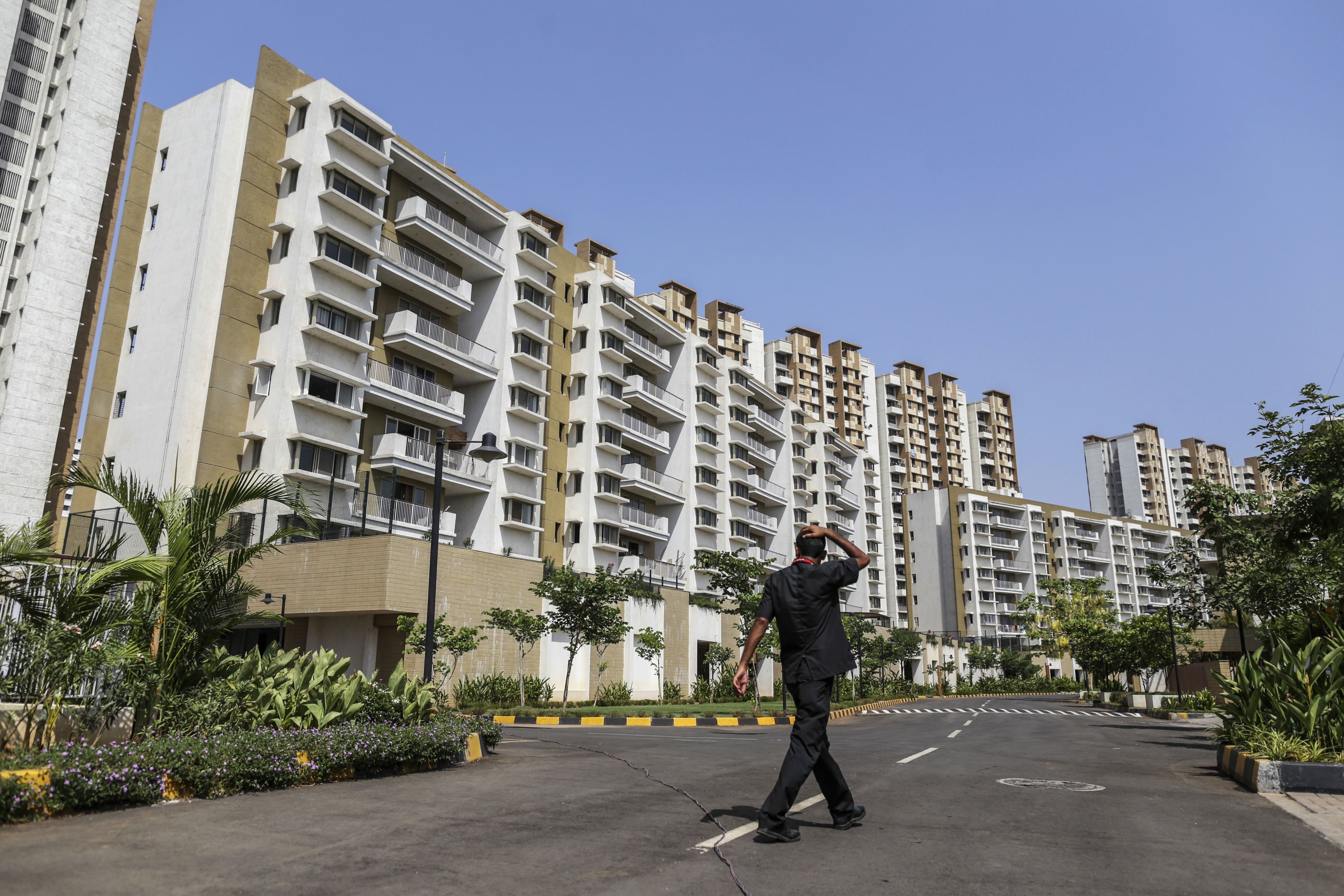
The National Housing Bank has advised housing financiers not to grant home loans under schemes where developers offer to pay interest on behalf of borrowers till possession is handed over, saying that such offers are susceptible to fraud.
It said loan disbursal should be strictly based on the stages of construction, and mortgage lenders shouldn't release funds upfront in under-construction projects. It warned mortgage lenders that “release of funds by the company without linkage to the stage of construction will be seen as dereliction of duty”.
That could affect funding to the real estate sector as such loans, according to property consultant JLL's estimate, comprise over a third of lending, driving residential home sales. The sector is already reeling from a slowdown after demonetisation, rollout of goods and services tax, a new housing law that protects buyers against fraud and a crackdown against benami assets or property held via proxy.
BloombergQuint spoke to developers, legal experts and property consultants to find out how the NHB circular will impact consumers:
What are interest subvention schemes?
Commonly called “Pay 10 percent now, rest after possession” or “Own a home now, pay later”, such schemes were offered by developers to lure homebuyers in mostly urban markets. Buyers made an initial down-payment—that ranges between 10 percent and 30 percent of the property value—with banks providing the remainder of the mortgage value.
How did homebuyers borrow money under such schemes?
After booking a property, homebuyers approached lenders—usually a housing finance company—to avail loans. Money is released, depending on the stages of construction, under the terms of the buyer-seller agreement. Developers, as agreed, would service the interest component on housing loan EMIs for a specified period, after which the buyer begins to pay the instalments.
Why lending under such offers is a problem?
The concern stems from housing financiers making upfront disbursal of loan in incomplete projects without linking the payments to stages of construction. “This shows a clear nexus between the developers and housing finance companies. While doing this, HFCs (housing finance companies) throw all caution to the wind,” Vinod Sampat, an advocate specialising in property law, told BloombergQuint. “It surprises me why the Reserve Bank of India as well as government officials haven't taken any strict action against such HFC officials.”
Other problems, real estate consultants told BloombergQuint on the condition of anonymity, included:
- Developers diverting funds for purposes other than the project in question after the housing finance company released payments.
- Developers wilfully stalling projects after accepting payments, and not making interest payments as promised to homebuyers.
How did such schemes help developers?
It was a source of cheaper funds for real estate developers, besides a way to lure homebuyers.
To sanction construction loans to developers, banks use a range of criteria based on assessment of risks, record and performances, Arvind Nandan, managing director, research & consulting at Savills, told BloombergQuint. “Usually, a construction loan could be availed in a wide-ranging [interest rate] band of 14-20 percent,” he said. “Through these subvention schemes, the cost was reportedly turning out to be lower in effect,” Nandan said, referring to the lower rate of interest on home loans. There have been reports that such schemes have been misused, he said.
Were such schemes only available for under-construction projects?
It's more suitable for under-construction projects. But there have been instances where developers, with unsold inventory, offered similar schemes for ready-to-move-in projects as well, where they would make interest payments on behalf of the buyer for a fixed time period.
Is there protection for homebuyers if a developer failed to deliver the project on time?
No. There isn't specific protection under such schemes.
What happens if construction is delayed?
Usually, the developer stops paying EMIs. The lender can then hold borrowers liable as loans are sanctioned in their names. They must, then, start paying EMIs without taking possession of the property.
How will homebuyers be affected?
They will lose out on a flexible payment option while buying a home. This scheme provided relief to homebuyers who stay on rent and book an under-construction home as they were saved from the additional burden of paying EMIs, said Pankaj Kapoor, founder and managing director, Liases Foras. “With this option no longer available, homebuyers who are staying on rent will face the double burden of rent as well as EMI.” Developers will have to come up with more incentives to lure buyers for under-construction apartments, he said.
What happens to such agreements already signed between homebuyers, developers and lenders?
The circular, according to legal experts, isn't retrospective and won't affect existing agreements. “It's clarified that the above stipulation shall also be effected in cases wherein the HFC (housing finance company) is yet to commence disbursements under the sanctioned cases,” according to the circular. But no new projects will be able to offer such schemes.

-
Talking Points This Week: Leadership Shock At Nvidia, Earnings Strength, And The Fog Over Hormuz

The Anthropic IPO pricing and first trading day, Nvidia's upcoming earnings, and any fresh signals from Iran will set the tone for the following week.
-
Signature Play: The Classic Cocktail Is Dead. Or Is It?
Classic cocktails are disappearing from India's cocktail menus. But they're still being ordered, taught to bartenders and borrowed from. So, who's really having the last drink?
-
A New Samvat Wishlist: Inclusive Prosperity And Human Development
India has strengthened its economic foundations through infrastructure, digital access and enterprise. Its next growth chapter must deepen productivity, create better livelihoods and widen participation in prosperity.
-
Love, Sex Aur Dhokha: The Audacious Plot To Spy On Jensen Huang
A Taipei dinner, a Singapore chip buyer and a suspected Chinese asset: inside the alleged spy operation that got close to NVIDIA's Jensen Huang.
-
Ten Things I Learnt This Samvat
Patience can be a trap. Cheap stocks can stay cheap. Leverage can wipe you out. What did Samvat 2082 teach us? Niraj Shah writes on 10 lessons from the year gone by.
-
Talking Points This Week: Tech Nerves, FII Buying, And A Faraway Banking Shock
The global markets are not shining this Diwali. The exception in the large markets is, India.
-
Midterm Rally Lasted A Day. The Hard Reality Of A Divided US May Last Two Years | Opinion
Between a contested AI boom, a debt ceiling that arrives in 2027 and a president with every incentive to act alone, the next two years may prove more volatile than the first day's rally suggests.
-
Blue Wave Will Derail the AI Trade but Won't Dismantle the AI Era | Unhedged Position
The Democrats' sweep of the US Congress will see politics collide with economic forces both over the long and short term.
-
It's Time To Take The GST Council's Bet On Trust Global
Payment records can prove India's services exports, and clear, proportionate rules can bring foreign digital sellers into the tax net.
-
Opinion | India at 38: From Innovation Overperformer to Innovation Powerhouse
India now has 453 VC-backed deep science startups, 18 of them late-stage, after 117 percent growth since 2020. Laurus Labs, at USD 9.3 billion, is the most valuable deep science company in any middle-income economy outside China.









