Boris Johnson Clings to Power, But Question Now Is for How Long
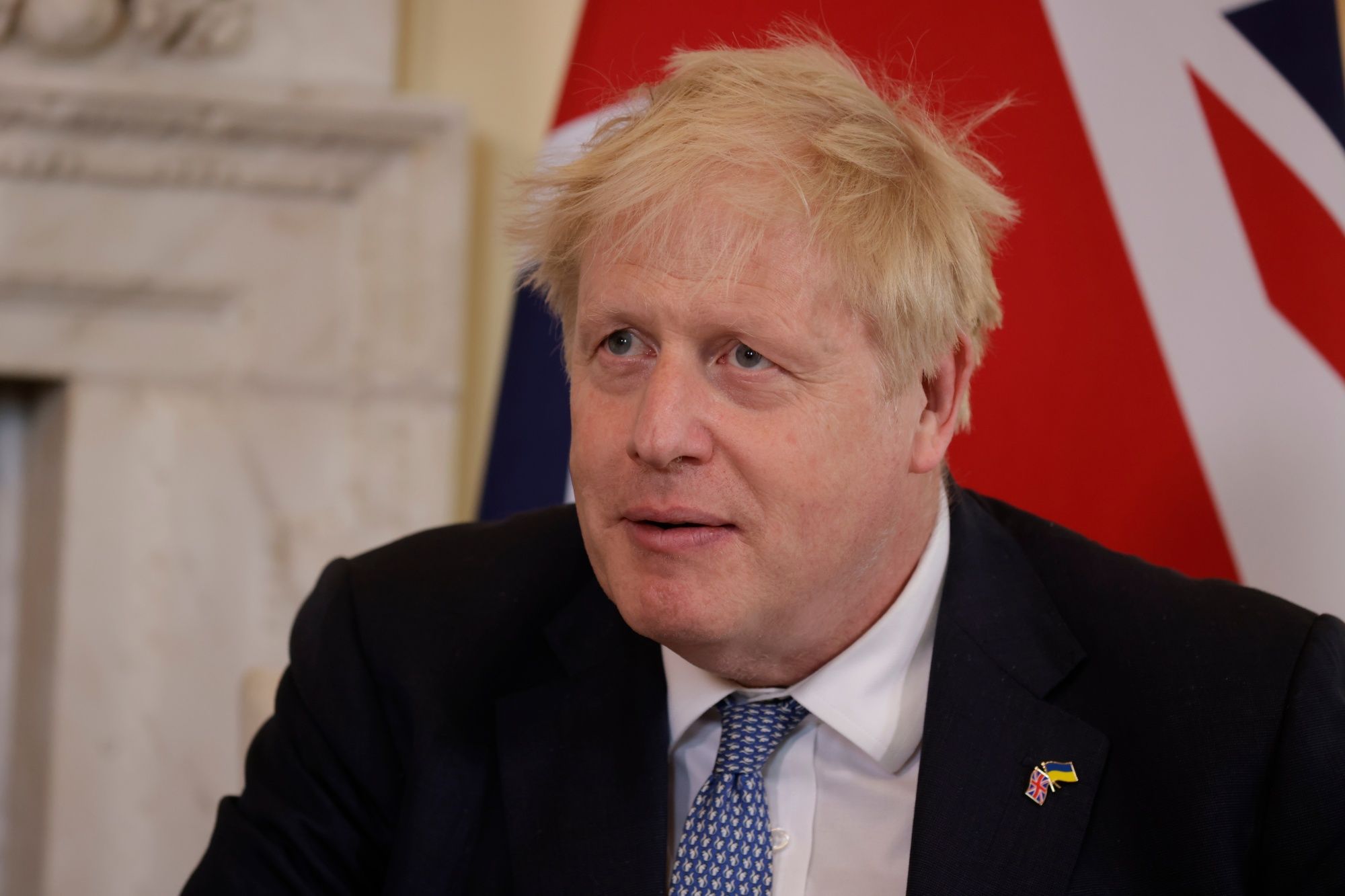
(Bloomberg) -- Boris Johnson sought to draw a line under the controversy that's been threatening his leadership, though the scale of a mutiny against the British prime minister suggests his days may be numbered.
The deep discontent within his Conservative Party was laid bare on Monday evening, when 211 Tory MPs voted for Johnson in a confidence motion yet 148 against him. The rebellion was bigger than the one suffered by predecessor Theresa May, who was ousted as premier six months later after failing to unite the party over leaving the European Union.
https://t.co/65dXd9CRkI pic.twitter.com/2E8k1CowHq
Pressure has been building on Johnson for weeks over so-called “partygate,” events in Downing Street during the pandemic for which the 57-year-old premier received a police fine. A report by senior civil servant Sue Gray found many of them shouldn't have been allowed. But the malaise goes far beyond the illegal gatherings and has been increasing for months. One MP said after the vote, nothing is imminent, but ultimately he's finished.

Johnson steered the party to its biggest general election win in more than three decades in 2019, delivered Brexit and then after a chaotic start to the handling of Covid-19 managed to make the UK a trailblazer for vaccinations. More recently, though, many within his party have been frustrated at having to defend controversial policies only for the government to then U-turn.
A windfall tax on energy firms was proposed by the opposition Labour Party and rejected by Johnson before he later adopted the idea. Increases in government spending have angered some Conservatives, while others are concerned his plan to rip up the Brexit deal over Northern Ireland will see their party break international law.
The question is now much authority Johnson can continue to command, according to John Curtice, professor of politics at the University of Strathclyde in Glasgow. “It's not a given that Johnson will lead the party into the next election,” he said. “The result is bad enough to raise questions about the long-term future of his leadership.”
Decisive Result?
Recent history suggests Johnson's time in office could come to an end before he gets a chance to fight the next election, currently scheduled for 2024. In a vote over her Brexit policy, May survived a confidence vote with a majority of 83 in December 2018. That compares with 63 for Johnson.
Johnson spent Monday pleading with MPs to back him, with loyal lieutenants defending him in broadcast interviews. He also attempted to appease his critics within the party by promising tax cuts.
After the result, Johnson said it was time to get back to helping people with the cost of living, strengthening the economy and bolstering the health service. The pound held gains after the result, albeit during a slow period of trading. It rose 0.4% to $1.25.
“It's an extremely good, positive, conclusive, decisive result which enables us to move on to unite and to focus on delivery,” Johnson told reporters. “I am certainly not interested in snap elections. We are going to bash on. We have a huge agenda and we're going to get it done.”

Damaged Leader
Yet there's no doubt the vote was a blow. It was triggered by at least 15% of Conservative MPs submitting letters of no confidence in their leader. In the end, 41% of MPs rebelled.
Under current rules, Tory MPs would not be allowed to hold another confidence vote for a year. However, it would be possible to change the rules in order to hold another vote sooner.
“We now know that 40% of his MPs don't even think he should be prime minister,” said Alice Lilly, senior researcher at the Institute for Government. “How on earth is the government actually going to get anything done? There's absolutely no way this has drawn a line under it.”
On Monday, former minister Jesse Norman published a letter to Johnson excoriating the prime minister and accusing him of “lacking a sense of mission.” John Penrose, who Johnson appointed to lead on his anti-corruption agenda, also resigned his position. He said Johnson had broken the country's ministerial code, which would normally lead to resignation.

Tory fears that Johnson could cost them the next election will have been heightened by new polling suggesting the party is facing defeat in two special votes on June 23.
The seat in Wakefield is among the historically Labour-voting districts in northern England -- the so-called Red Wall -- whose defections helped deliver the huge House of Commons majority for the Tories in 2019. On Sunday, pollster J.L. Partners put Labour 20 points ahead.
The Conservatives are also facing humiliation in a separate by-election in Tiverton and Honiton in southwest England. Bookmakers put the Liberal Democrats as favorites to take the Tory stronghold. Both votes were triggered by Tory MPs stepping down over separate sex scandals.
More stories like this are available on bloomberg.com
©2022 Bloomberg L.P.

-
Talking Points This Week: Leadership Shock At Nvidia, Earnings Strength, And The Fog Over Hormuz

The Anthropic IPO pricing and first trading day, Nvidia's upcoming earnings, and any fresh signals from Iran will set the tone for the following week.
-
Signature Play: The Classic Cocktail Is Dead. Or Is It?
Classic cocktails are disappearing from India's cocktail menus. But they're still being ordered, taught to bartenders and borrowed from. So, who's really having the last drink?
-
A New Samvat Wishlist: Inclusive Prosperity And Human Development
India has strengthened its economic foundations through infrastructure, digital access and enterprise. Its next growth chapter must deepen productivity, create better livelihoods and widen participation in prosperity.
-
Love, Sex Aur Dhokha: The Audacious Plot To Spy On Jensen Huang
A Taipei dinner, a Singapore chip buyer and a suspected Chinese asset: inside the alleged spy operation that got close to NVIDIA's Jensen Huang.
-
Ten Things I Learnt This Samvat
Patience can be a trap. Cheap stocks can stay cheap. Leverage can wipe you out. What did Samvat 2082 teach us? Niraj Shah writes on 10 lessons from the year gone by.
-
Talking Points This Week: Tech Nerves, FII Buying, And A Faraway Banking Shock
The global markets are not shining this Diwali. The exception in the large markets is, India.
-
Midterm Rally Lasted A Day. The Hard Reality Of A Divided US May Last Two Years | Opinion
Between a contested AI boom, a debt ceiling that arrives in 2027 and a president with every incentive to act alone, the next two years may prove more volatile than the first day's rally suggests.
-
Blue Wave Will Derail the AI Trade but Won't Dismantle the AI Era | Unhedged Position
The Democrats' sweep of the US Congress will see politics collide with economic forces both over the long and short term.
-
It's Time To Take The GST Council's Bet On Trust Global
Payment records can prove India's services exports, and clear, proportionate rules can bring foreign digital sellers into the tax net.
-
Opinion | India at 38: From Innovation Overperformer to Innovation Powerhouse
India now has 453 VC-backed deep science startups, 18 of them late-stage, after 117 percent growth since 2020. Laurus Labs, at USD 9.3 billion, is the most valuable deep science company in any middle-income economy outside China.









