BJP Sweeps Jammu, Makes Advances In Kashmir In Urban Local Body Polls
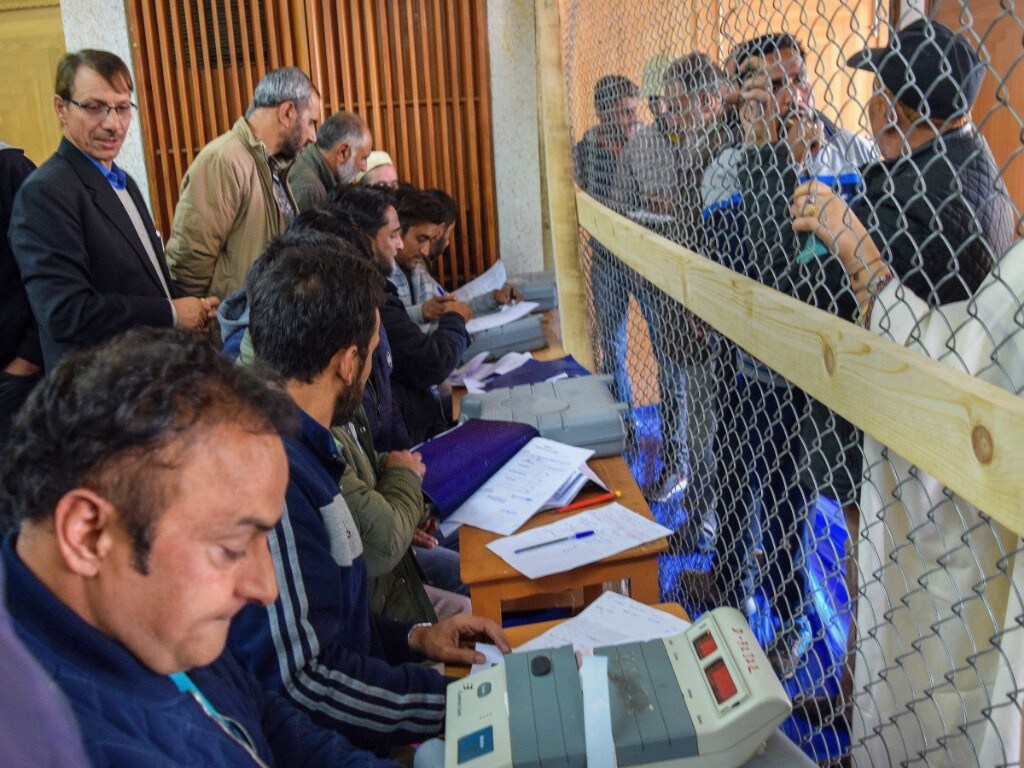
The Bharatiya Janata Party swept the Jammu Municipal Corporation elections and made some advances in Kashmir, by winning 100 wards in the valley, in the four-phased urban local body elections in the state that were marred by boycott by the National Conference and Peoples Democratic Party.
Independents emerged as the single largest group in the elections in Kashmir by winning 178 wards across 42 municipal bodies in Kashmir division, including Leh and Kargil, elections authorities said.
The Congress was ahead of the BJP in the valley by bagging 157 wards, while the BJP won in 100 wards.
The boycott call by separatists, coupled with threats by militants, and non-participation of the National Conference and the PDP, helped both the BJP and the Congress in a major way as 76 and 78 candidates from the respective national parties were elected unopposed.
While the BJP emerged as the single largest party in 12 municipal bodies, it has majority in five of these bodies. The Congress was the single largest party in 15 bodies, having majority in 11 of them, they said.
In the prestigious Srinagar Municipal Corporation, the Congress won 16 seats and the BJP won in four wards.
Junaid Azim Mattu, who resigned from NC to contest the elections, was among the prominent winners. He had contested from four wards and won from three.
The BJP, which had won the Ladakh constituency in 2014 Lok Sabha elections, got a drubbing from the Congress in Leh and Kargil civic bodies. The saffron party failed to open its account in the two bodies while Congress bagged all 13 seats in Leh and six seats in Kargil.
In Jammu, the Congress suffered a big loss in the election, winning only 14 seats in the 74-member house. Independent candidates won 18 seats in the JMC, they said.
The party this time bettered its previous strength of 25 in the House.
In rest of the 446 wards spread across Jammu region covering a total of 36 municipal committees and councils, the BJP had an edge over its rivals in 15 bodies followed by Independents in 12 and the Congress in five, they said.
The BJP won a total of 169 seats in these bodies followed by independents at 167 and the Congress at 96, the officials said.
They attributed the emergence of independents as a strong force in view of the absence of the NC and the PDP, the key regional parties.
The election in a ward in Ramban was countermanded due to the death of a BJP candidate who suffered a heart attack on the day of polling in the second phase on October 10.
The election in the 521 municipal wards in the 10 districts of Jammu was held in the first three phases of the elections in the state, which concluded on October 16, recording a high voter turnout of 68.4 per cent among the over 6.44 lakh electorate.
Thirteen candidates were elected to different municipal wards unopposed, leaving a total of 2,137 candidates in the fray.
The JMC along with seven municipal committees of Jammu went to polls in the first phase on October 8, registering a turnout of 63.8 per cent.
The counting of votes in the winter capital started at a government polytechnic institute at 9 am. As the results started pouring in, BJP leaders and activists came out to celebrate party's victory.
The Jammu and Kashmir National Panthers Party failed to open its account in the majority of the wards, including the JMC.
Party chairman and former minister Harsh Dev Singh alleged rigging and claimed, “It is not the BJP but electronic voting machine which won the election for the party.”
In the seven municipal committees of Jammu, the BJP won Akhnoor with 11 seats, while two seats went to Congress. In Bishnah, the BJP won six seats against seven by Independents.
In Arnia, the BJP won seven seats, independents five and Congress one, in RS Pura the BJP won nine, Independents three and the Congress one, in Ghmanhansan won the BJP two, the Congress two, in Khour won the BJP nine and Congress four and in Jourian the BJP won two, the Congress four and independent one, the officials said.

-
Getting To Work Costs Women More | The Reason Why

It is not just about women paying more than men. It is about women paying much more in cities than in villages.
-
AI Bias In Investing Cannot Be Eliminated, But It Can Be Governed
Framing is a particularly important example as identical financial information presented in terms of gains rather than losses can lead an LLM to reach a different assessment.
-
Joining The Dots | Dark Skies, Steady Diya: Why Hope Holds This Diwali
With war, a weak rupee and foreign outflows weighing on sentiment, policymakers at the NDTV World Summit and market veterans at NDTV Profit Ignite: Diwali Edition offered the same advice: stay invested and filter out the noise.
-
The Curious Case of Equitas Small Finance Bank And A CEO Who Quit For Stock
PN Vasudevan believes persistent investor concerns over a perceived conflict of interest had become a governance overhang on Equitas Small Finance Bank's stock, even as the lender improved profitability and asset quality.
-
Talking Points This Week: AI Cash Burn, A Tiger Comeback And An India That Still Finds Its Own Path
India is not immune to higher oil or tighter global liquidity, yet its earnings base is broader, its domestic policy levers are still available.
-
Foreign Investors Own Half Of HDFC Bank and ICICI Bank. An LTCG Cut Could Matter Most Here
Foreign portfolio investors have US$115 billion parked in HDFC Bank, ICICI Bank. If the government cuts long-term capital gains tax, Jefferies says returning foreign money could land here first.
-
'Never Seen This Level Of Negativity': Sandeep Tandon Says The Next Rally May Be Closer Than You Think
Veteran investor Sandeep Tandon says foreign selling is easing, large-caps are due a comeback and mid-caps are crowded, while he turns positive on gold, power and pharma this Diwali.
-
Indians Stay With Family, Not In Hotels | The Reason Why
India still lacks enough clean, reliable and affordable hotels for budget-conscious travellers.
-
The Economic Imperative: Analysing The Material Driving Force Behind India-Canada Strategic Reset
This economic complementarity is further reinforced by deep institutional investment ties and talent mobility, which form the bedrock of the bilateral framework.
-
Medicine Pricing: Where Must Profit Stop?
India must confront excessive margins, hidden incentives and regulatory gaps that threaten the integrity of medicine.










