Biden’s Limited Options to Respond to OPEC+’s Surprise Oil Cut
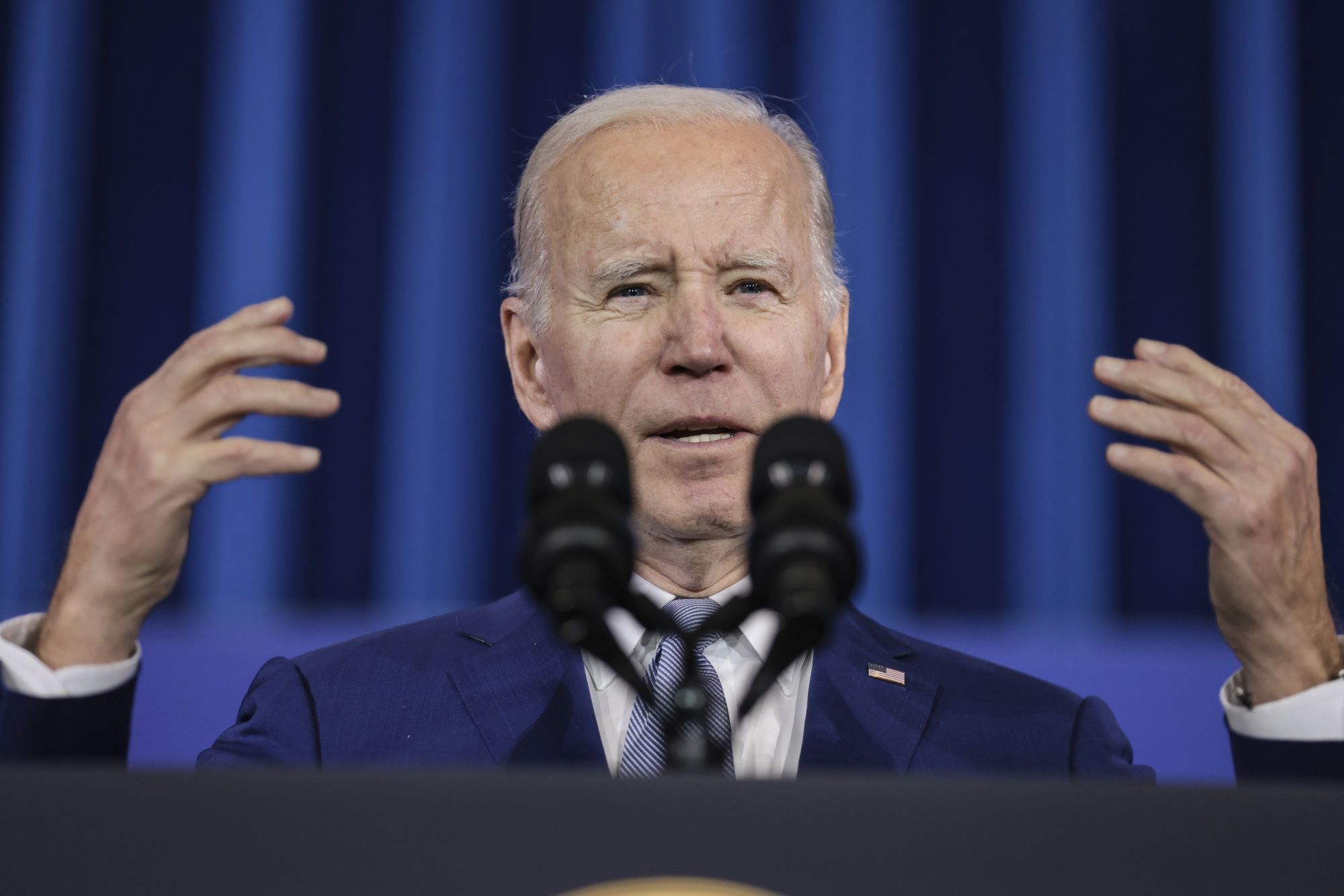
(Bloomberg) -- OPEC+'s surprise move to cut 1 million barrels a day of oil production is poised to raise US fuel prices just as President Joe Biden is expected to launch his re-election campaign. He has a limited range of options with which to respond.
1: Tap the Strategic Reserve
Biden may go for another release of oil from the Strategic Petroleum Reserve. The emergency stockpile was created in the 1970s after the Arab oil embargo. It's holding about 371 million of barrels, according to Energy Department data, around half the SPR's capacity, largely due to a historic release of 180 million barrels last year to tame surging gasoline prices in the wake of the war in Ukraine.
The administration has made refilling the SPR a priority, but it has been hampered by factors that include maintenance at two of the reserve's four sites. Energy Secretary Jennifer Granholm has said the government isn't able to release oil from the cache and refill it at the same time, so an emergency sale would likely further delay any plans for replenishment.

Still, there's nothing to stop another sale, said Kevin Book, managing director of ClearView Energy Partners, a Washington consulting firm. “President Biden has taken ownership of gasoline prices in ways other president's before him have not,” Book said. “If he continues that, it creates possibility for more interventions.”
2: Pressure US Producers
Don't be surprised if there are more political attacks on the US energy sector, which has ignored repeated pleas from Biden over the past year to accelerate production increases, and received tongue-lashings for making record profits. For all the rhetoric, domestic oil output continues to grow slowly, with the industry reluctant to ramp up drilling and risk a repeat of previous boom-and-bust cycles.
“Since the US can't really force the hand of the OPEC+ members, the proverbial ‘whipping person' will be the domestic oil and gas industry,” said Timm Schneider, an analyst who runs The Schneider Capital Group LLC.
The Energy Department referred a request for comment to the White House National Security Council. “We will continue to work with all producers and consumers to ensure energy markets support economic growth and lower prices for American consumers,” a spokesman for the council said. “We're focused on prices for American consumers, not barrels, and prices have come down significantly since last year.”
3: Back ‘NOPEC'
The White House hinted last year, in response to OPEC+'s unexpected decision to cut production by 2 million barrels a day, that it could back legislation that would allow the US to take the dramatic step of suing OPEC nations. Ultimately, the administration backed off from supporting the bill — the “No Oil Producing and Exporting Cartels Act,” or “NOPEC” — amid warnings of the effects it could have on diplomatic relations and the defense industry.
4: Export Curbs
Other levers the Biden administration has at its disposal include limiting the export of gasoline and diesel. The White House considered that option last year as a potential means to tame pump prices, which reached an all-time high in June, but it never pulled the trigger. Analysts said moving ahead with the curbs could backfire and actually lead to higher prices in some parts of the US.
5: Do Nothing
Standing pat is also very much an option, said David Goldwyn, an energy envoy under former President Barack Obama and now the president of consulting firm Goldwyn Global Strategies.
“This looks like a market-based cut from OPEC, which does not require an administration response,” Goldwyn said. “OPEC is anticipating slow demand growth. This year's congressionally mandated sale has not hit the market and OPEC's action is probably designed in part to counteract that.”
--With assistance from Jordan Fabian.
More stories like this are available on bloomberg.com
©2023 Bloomberg L.P.

-
The Economic Imperative: Analysing The Material Driving Force Behind India-Canada Strategic Reset

This economic complementarity is further reinforced by deep institutional investment ties and talent mobility, which form the bedrock of the bilateral framework.
-
Medicine Pricing: Where Must Profit Stop?
India must confront excessive margins, hidden incentives and regulatory gaps that threaten the integrity of medicine.
-
Why Amazon And Flipkart Are Struggling To Beat Meesho In India's Smaller Cities
With 274 million users and lowest-cost logistics, Meesho is defending its value commerce crown against giants like Amazon and Flipkart.
-
High US Salaries, No Green Card Certainty: The Financial Calculation Facing Indian H-1B Families
The suspension of PERM processing at eight technology employers does not cancel existing H-1B visas. What it does is force a question many Indian families have been avoiding: is the US salary worth tying your career and family plans to one employer?
-
Swiggy vs Eternal: Food Delivery's Two Rivals Are No Longer In The Same Race
Eternal is building a private AI assistant, dark.ai. Swiggy is still working out how to make Instamart pay, with an operating loss of Rs 895 crore in the July-September quarter while Blinkit stayed profitable.
-
Where You Live Shapes How You Get To Work | The Reason Why
Two-wheelers are the most popular way to get to work in India, accounting for nearly 43% of workplace commutes.
-
Unhedged Position: Can India See An Indonesia-Style Time Correction?
The Nifty is trading below levels it first clocked in 2024. Is there, then, as I have suggested in the headline, potential that the current time correction drags on painfully for the next three-five, even ten years?
-
Navigating Friction And Energy Realities: An Analysis Of Marco Rubio's October Visit To India
Occurring at a critical juncture marked by stalled trade negotiations and escalating geopolitical pressures over global energy supplies, the visit offers a profound window into modern US-India relations.
-
India Exports Capital. Why Not Export Trusteeship?
The big question, then, is whether India can build an institution that global borrowers, investors, banks, and lawyers can trust, even without an Indian connection.
-
France's Economy & Politics Are In Crisis | The Reason Why
Let's look at how the French economy and politics evolved under Nicolas Sarkozy, Franois Hollande and Emmanuel Macron.










