Ban On Cattle Trade For Slaughter To Regulate, Government Tells Supreme Court
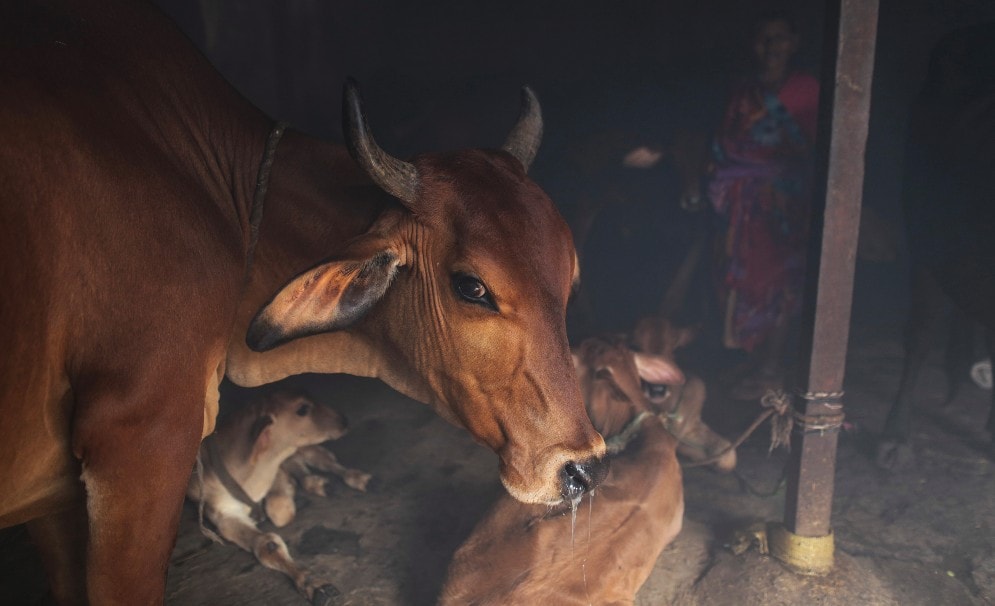
The Centre on Thursday told the Supreme Court that its notification banning the sale and purchase of cattle at animal markets for slaughter was aimed at having a ‘regulatory regime' on cattle trade across the country.
The Centre's submission came as the apex court sought its response on the pleas challenging the May 26 notification under the Prevention of Cruelty to Animals Act banning sale and purchase of cattle from animal markets for slaughter.
A vacation bench comprising justices RK Agrawal and SK Kaul issued notice to the government and asked it to file its reply on the pleas within two weeks and fixed the matter for hearing on July 11.
During the brief hearing, Additional Solicitor General PS Narasimha, representing the Centre, told that bench that the intention behind coming out with the notification was to have some kind of a regulatory regime.
"The intention was to bring in existence some kind of a regulatory regime for cattle trade," he told the bench.
He said the notification would also check irregularities in cattle markets and it would not have any impediment on the genuine cattle traders across the country.
Also Read: Madras High Court Stays Ban On Sale And Purchase Of Cattle For Slaughter
When one of the petitioners requested the bench to stay the notification, Narasimha said the Madurai bench of the Madras High Court has already granted an interim stay on it and it would not be enforced as of now.
The counsel appearing for one of the petitioners told the apex court that due to the notification, serious problems have cropped up in places like Kerala, Tamil Nadu and other nearby states.
One of the petitioners before the apex court has claimed that provisions in the notification were unconstitutional as they violated the fundamental rights including freedom of conscience and religion and right to livelihood.
The Centre had last month banned the sale and purchase of cattle from animal markets for slaughter through an Environment Ministry notification -- ‘Prevention of Cruelty to Animals (Regulation of Livestock Markets) Rules, 2017' under the Prevention of Cruelty to Animals Act.
One of the petitioners, Hyderabad-based Mohammed Abdul Faheem Qureshi, had contended in his plea that the notification was ‘against the freedom of religious practice to sacrifice the animals' and imposing a ban on slaughter of animals for food violates the right to food, privacy and personal liberty guaranteed to a citizen under the Constitution.
It also claimed that states like Kerala, West Bengal, Tripura and Karnataka have said that they would not implement the Centre's ban as it would impact the livelihood of those involved in this business.
Also Read: New Cattle Sale Rules: Meat Trade to be Hit, Mayday for Farmers
"It is also to be noted that slaughtering of animals for food, the foods and culinary made out of such animal flesh and offering sacrifice of animals is a part of cultural identity of such communities, which is protected from any legislative or executive encroachment under Article 29 of the Constitution of India which is not been subjected to any restriction by the framers of the Constitution...," the petitioner had said.
A complete ban on sale or purchase or re-sale of animals would cast a huge economic burden on the farmers, cattle traders who find it difficult to feed their children today, the plea had said.
The cattle also needs to be fed as it was an offence under Prevention of Cruelty to Animals Act, 1960 to starve an animal or failure to maintain it and the notification would also ‘give way for cow vigilantes to harass farmers and cattle traders under the blessing of impugned regulations', it said.
It had also sought the apex court's direction to declare these rules of Prevention of Cruelty to Animal (Regulation Of Live Stocks, Markets) Rules and Prevention of Cruelty to Animals (Care And Maintenance Of Case Property Animals) as ultra vires and unconstitutional.
It is depriving the citizens food of their choice and is in violation of the right to livelihood under Article 21 of the Constitution and also inconsistent and violative of section 28 of the parent Act, the plea said.
Also Read: Cattle Futures, Beef Prices Soar After Blizzard Clobbers Midwest

-
AI Bias In Investing Cannot Be Eliminated, But It Can Be Governed

Framing is a particularly important example as identical financial information presented in terms of gains rather than losses can lead an LLM to reach a different assessment.
-
Joining The Dots | Dark Skies, Steady Diya: Why Hope Holds This Diwali
With war, a weak rupee and foreign outflows weighing on sentiment, policymakers at the NDTV World Summit and market veterans at NDTV Profit Ignite: Diwali Edition offered the same advice: stay invested and filter out the noise.
-
The Curious Case of Equitas Small Finance Bank And A CEO Who Quit For Stock
PN Vasudevan believes persistent investor concerns over a perceived conflict of interest had become a governance overhang on Equitas Small Finance Bank's stock, even as the lender improved profitability and asset quality.
-
Talking Points This Week: AI Cash Burn, A Tiger Comeback And An India That Still Finds Its Own Path
India is not immune to higher oil or tighter global liquidity, yet its earnings base is broader, its domestic policy levers are still available.
-
Foreign Investors Own Half Of HDFC Bank and ICICI Bank. An LTCG Cut Could Matter Most Here
Foreign portfolio investors have US$115 billion parked in HDFC Bank, ICICI Bank. If the government cuts long-term capital gains tax, Jefferies says returning foreign money could land here first.
-
'Never Seen This Level Of Negativity': Sandeep Tandon Says The Next Rally May Be Closer Than You Think
Veteran investor Sandeep Tandon says foreign selling is easing, large-caps are due a comeback and mid-caps are crowded, while he turns positive on gold, power and pharma this Diwali.
-
Indians Stay With Family, Not In Hotels | The Reason Why
India still lacks enough clean, reliable and affordable hotels for budget-conscious travellers.
-
The Economic Imperative: Analysing The Material Driving Force Behind India-Canada Strategic Reset
This economic complementarity is further reinforced by deep institutional investment ties and talent mobility, which form the bedrock of the bilateral framework.
-
Medicine Pricing: Where Must Profit Stop?
India must confront excessive margins, hidden incentives and regulatory gaps that threaten the integrity of medicine.
-
Why Amazon And Flipkart Are Struggling To Beat Meesho In India's Smaller Cities
With 274 million users and lowest-cost logistics, Meesho is defending its value commerce crown against giants like Amazon and Flipkart.










