Ayodhya Case: SC Fixes Next Hearing on 13 July
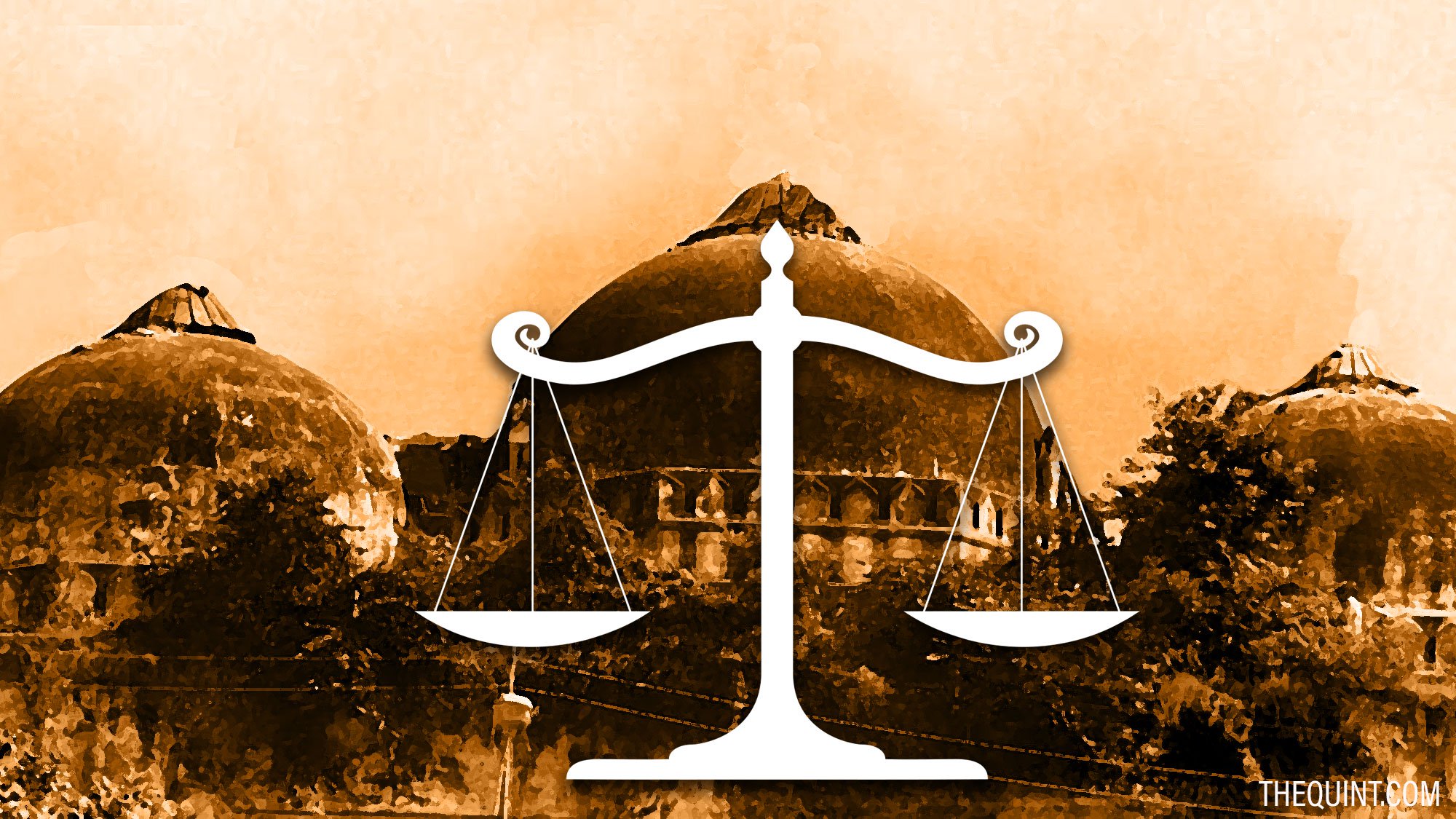
The Supreme Court on Friday, 6 July, resumed hearing the contentious Babri Masjid-Ram Temple land dispute case, fixing 13 July as the next date of hearing.
On Friday, senior counsel Rajeev Dhawan told the three-judge bench of the SC, "Mosques are not built for fun. Hundreds congregate there to offer prayers, are they not an essential part of practice?"
A special bench of Chief Justice Dipak Misra and Justices Ashok Bhushan and SA Nazeer had on 17 May heard submissions on behalf of Hindu groups that opposed the plea of their Muslim counterparts that the 1994 verdict holding that a mosque was not integral to the prayers offered by the followers of Islam, be referred to a larger bench.
M Siddiq, one of the original litigants of the Ayodhya case who has died and is being represented through his legal heir, had assailed certain findings of the 1994 verdict in the case of M Ismail Faruqui holding that a mosque was not integral to the prayers offered by the followers of Islam.
He had told the bench that the observations made in the land acquisition matter pertaining to the Ayodhya site had a bearing on the outcome of the title case.
However, the Hindu groups had said the issue relating to the observations that the mosque was not integral to Islam has already been settled and cannot be reopened.
Meanwhile, the Uttar Pradesh government, on Friday, questioned the Muslim litigants in the Ramjanmabhoomi-Babri Majid title suit case for making “belated efforts” seeking a relook at the 1994 Ismail Farooqui judgment.
The three-judge bench was told that the Muslim parties did not question the 1994 verdict's legality till the appeal against 2010 Allahabad High Court judgment on the ownership of the disputed land was taken up for hearing by the top court, reported IANS.
The special bench of the apex court is seized of a total of 14 appeals filed against the high court judgement delivered in four civil suits.
A three-judge bench of the Allahabad High Court, in a 2:1 majority ruling, had in 2010 ordered that the land be partitioned equally among three parties – the Sunni Waqf Board, the Nirmohi Akhara and Ram Lalla.
Ram Temple Construction in Fully Legal Way to Begin Year-End: VHP
Vishwa Hindu Parishad working president Alok Kumar on Thursday, 5 July, hoped that the construction of the Ram temple in Ayodhya would begin by year-end in a legal and constitutional manner overcoming all statutory roadblocks.
"It is expected that the Supreme Court will begin the hearing on Ram janambhoomi dispute on a day-to-day basis... and if it happens, the final order may come by the September-end," Kumar told PTI.
He said if the hearing does not proceed as expected, the VHP will go to the 'sant samaj' (seers) and seek their guidance "for the future course of action" on the issue.
Asked about the reasons of his optimism over beginning of the construction of Ram Lalla's temple by year-end, he said, "I believe the law is on our side.”
Asked about the eventuality of the apex court giving an unfavourable verdict on the issue, he said:
I have already said that legally we are in strong position... and at the end, the seers will decide our future course of action.
Asked what VHP would do if the apex court does not hear the the matter on day-to-day basis, he said in that case, the VHP would go to the parliamentarians to seek enactment of a law to facilitate the early construction of the Ram Lalla temple in Ayodhya.
"The construction of the Ram Lalla temple is inevitable now. The issue of temple is not aimed at achieving political mileage but it's a question of the faith of millions of Hindus. It would be better for the country that the apex court hears and decide the matter expeditiously," he reiterated.
(With inputs from PTI, ANI and IANS)

-
The Economic Imperative: Analysing The Material Driving Force Behind India-Canada Strategic Reset

This economic complementarity is further reinforced by deep institutional investment ties and talent mobility, which form the bedrock of the bilateral framework.
-
Medicine Pricing: Where Must Profit Stop?
India must confront excessive margins, hidden incentives and regulatory gaps that threaten the integrity of medicine.
-
Why Amazon And Flipkart Are Struggling To Beat Meesho In India's Smaller Cities
With 274 million users and lowest-cost logistics, Meesho is defending its value commerce crown against giants like Amazon and Flipkart.
-
High US Salaries, No Green Card Certainty: The Financial Calculation Facing Indian H-1B Families
The suspension of PERM processing at eight technology employers does not cancel existing H-1B visas. What it does is force a question many Indian families have been avoiding: is the US salary worth tying your career and family plans to one employer?
-
Swiggy vs Eternal: Food Delivery's Two Rivals Are No Longer In The Same Race
Eternal is building a private AI assistant, dark.ai. Swiggy is still working out how to make Instamart pay, with an operating loss of Rs 895 crore in the July-September quarter while Blinkit stayed profitable.
-
Where You Live Shapes How You Get To Work | The Reason Why
Two-wheelers are the most popular way to get to work in India, accounting for nearly 43% of workplace commutes.
-
Unhedged Position: Can India See An Indonesia-Style Time Correction?
The Nifty is trading below levels it first clocked in 2024. Is there, then, as I have suggested in the headline, potential that the current time correction drags on painfully for the next three-five, even ten years?
-
Navigating Friction And Energy Realities: An Analysis Of Marco Rubio's October Visit To India
Occurring at a critical juncture marked by stalled trade negotiations and escalating geopolitical pressures over global energy supplies, the visit offers a profound window into modern US-India relations.
-
India Exports Capital. Why Not Export Trusteeship?
The big question, then, is whether India can build an institution that global borrowers, investors, banks, and lawyers can trust, even without an Indian connection.
-
France's Economy & Politics Are In Crisis | The Reason Why
Let's look at how the French economy and politics evolved under Nicolas Sarkozy, Franois Hollande and Emmanuel Macron.










