Army Must Combat Lethal Infiltrators, Not Go After Stone-Pelters
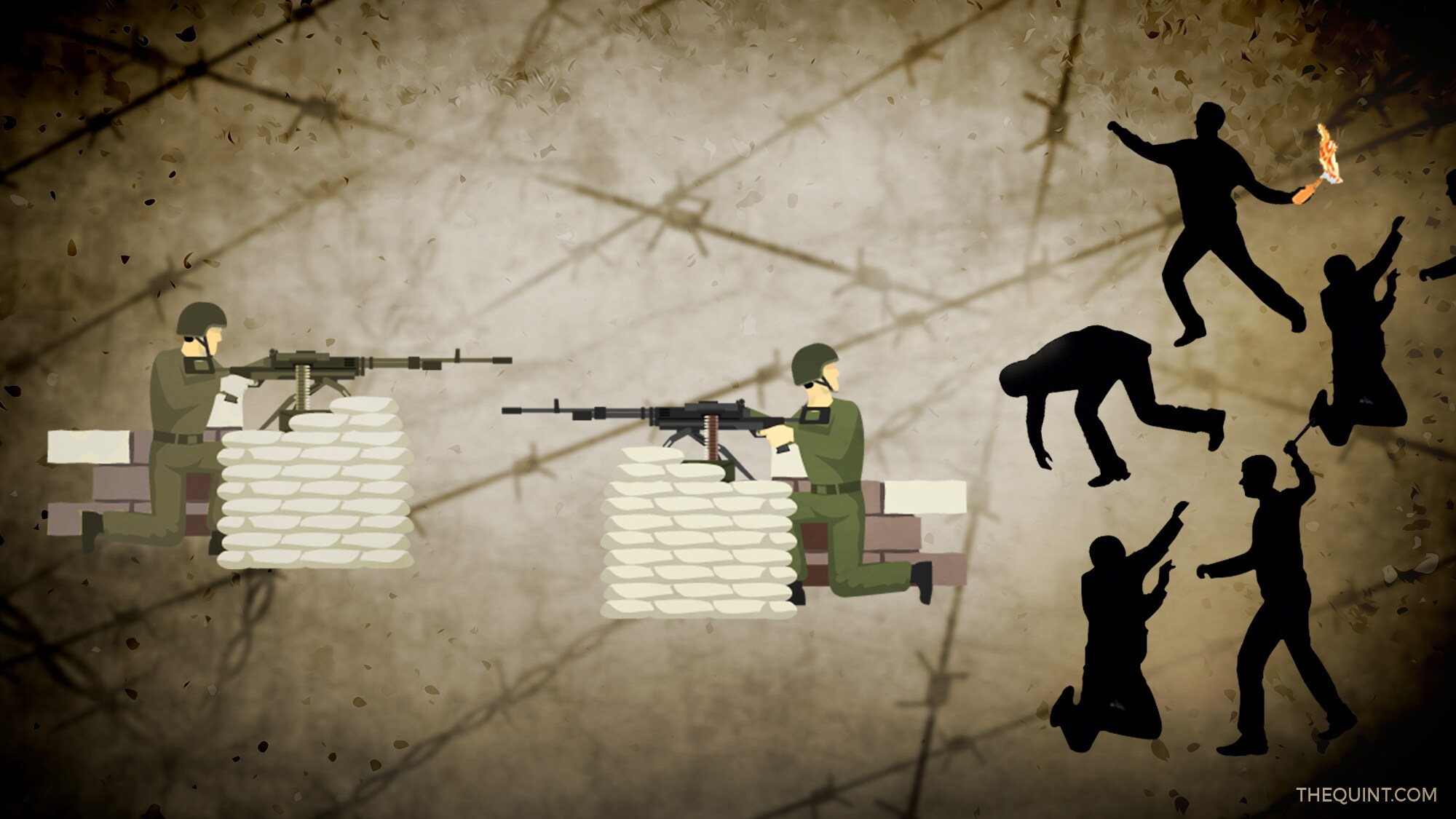
Intelligence and analysis can be critical to winning war-likesituations. And since well before 9/11, it has been obvious, what I call ‘war-likesituations' can be far bigger contemporary challenges than formally declaredwars.
What has happened in Kashmir over the past year amply demonstrated thatIndia's intelligence and analysis was in shambles. What has happened since 8July, when militant commander Burhan Wani was killed, demonstrated thatintelligence and analysis were still bumbling along in disarray. What hashappened over the past couple of weeks leaves one lost for words.
The timing of the decision to beef up joint operations by police,army and paramilitary forces in south Kashmir shows that intelligence andanalysis remain in a shockingly poor state. Indeed, one should say anunforgivable state. All the intelligence agencies, armed forces and policeintelligence wings, analysts in the prime minister's and major ministries'set-ups, and in sundry think tanks, evidently remain at sea. Not only have theyfailed to get a grip on the nature of the challenge, they are taking hopelesslyill-advised decisions.
The decision to push the army into Operation Calm Down to try andsuppress the stone-pelting teenager warriors in south Kashmir was one of theworst advised. It was wrong for a range of reasons. Here are some of them:
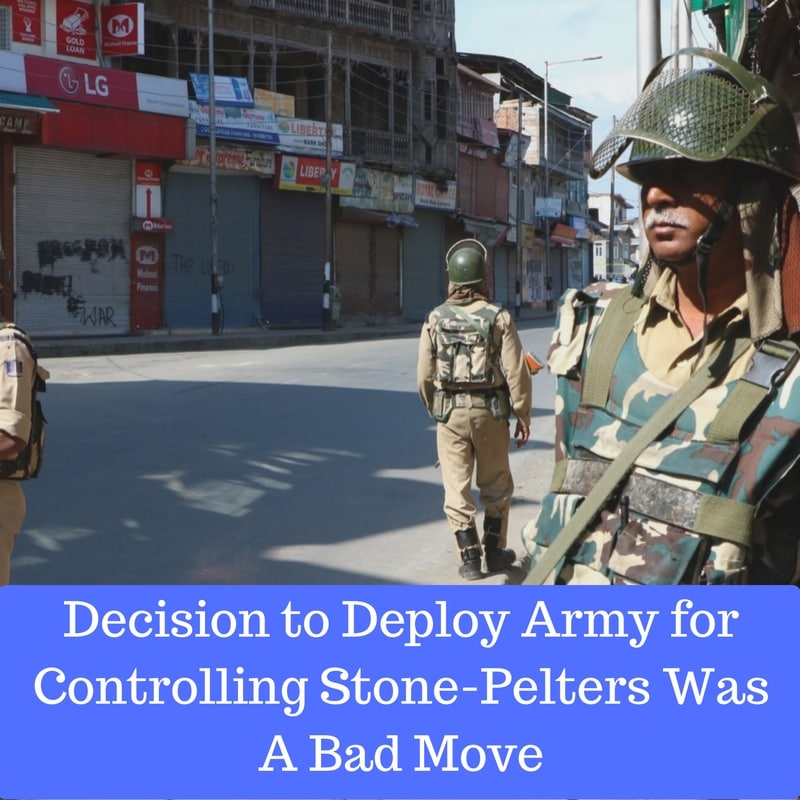
Army Is Not For Stone-Pelters
One, the decision came just a few days before the Pakistaniattack at Uri. The army should have been reserved for the vital task of takingon the lethal infiltrators that had already been streaming in over the pastcouple of years. The graph of ingress had been rising and had gone up to afeverish level since around the Independence Day. That was just around three weeksbefore the south Kashmir plan was put into action.
It should have been obvious by then to any sensible analyst, even one with intelligence of only the cranial sort rather than the inputs sort, that the army had to gear up for the infiltrators — if not also for potentially more daunting challenges. Evidently, this was not obvious to the army brass. The generals in-charge were eager to play street cop.
The most insightful generals of the past, men like General BCJoshi for example, were crystal clear about the fact that the army is not meantto be used against their own people. One wishes fervently for such commandersamid the current challenge —which might yet turn out to be an unprecedentedone.
.jpg "(Photo: PTI/ Altered by <b>The Quint</b>)")
Give Disillusionment Space
Two, a growing number of people in Kashmir was getting graduallydistressed with the stone-pelting mobs of teenagers that have held large partsof Kashmir in thrall over the past several weeks. The silent majority was notbacking the demonstrations from even a couple of days after militant commanderBurhan Wani's death on 8 July. A couple of months on, that number was growing.Given time, it would have found a way to assert itself.
The apple season is here. Despite words of bravado aboutwillingness to lose the season, people have battened down to harvesting thebiggest crop of the year. The streets of Srinagar are full of carts andmini-tempos filled with apples selling at twenty rupees a kilo. Large parts ofsouth Kashmir, including Shopian, Pulwama, Kulgam and Tral, depend heavily onthe crop. The last three of those four centres have been among the most heavilyaffected by demonstrations.
Exams too are creeping up and the studious minority of teenagerswho want an education-based career have been getting increasingly uneasy. Theautumn too has arrived in Kashmir, and the cold of winter would surely havebrought some respite from even the most die-hard demonstrators.
And now, the Uri attack has jolted Kashmiris into seriouslyquestioning what the supporters of their struggle across the Line of Controlreally have in mind. Some are even asking if the Pakistanis have the Kashmiris' best interests at heart.
.jpg "(Photo: IANS/ Altered by <b>The Quint</b>)")
Goodwill Lost
Three, Operation Calm Down has needlessly put at risk what littleis left of public goodwill for the army in Kashmir. Senior figures from theruling establishment acknowledge that the police did not measure up. That wasgood reason to haul up the police, establish a strong command structure, and providemore professional back-up than the CRPF has given. It was not a good reason tosend out the army to back the police.
Operation Calm Down stands in stark contrast to 2010, the lasttime the government reached the end of its tether with regard to civil order inthe face of stone-pelting mobs.
The then Corps Commander, Lt Gen Naresh Marwah, had assiduously kept army troops away from police operations. Even when the then chief minister, Omar Abdullah, demanded an army flag march, Marwah smartly sent a convoy with red flags down the Boulevard along the Dal Lake, and no further.
The result was that not a single army vehicle or personnel wasattacked. A majority of the Kashmiri youth did not use invective for the army asthey did for the police, and even more so for the CRPF. The army earnedgoodwill in a real sense, the way it had over part of the previous decade — forwhich Marwah's ebullient successor claimed credit.
The irony is that, when it kept so firmly away from policing in2010, the army was not even needed for the sort of daunting operations that itis engaged in right now in places like Uri.
.jpg "(Photo: IANS/ Altered by <b>The Quint</b>)")
Deliberate Obfuscation
The crying shame is that not only were the plethora ofintelligence outfits oblivious to the nature of the threat India faced (as hasbecame apparent at Uri), an argument for pulling the army in for Operation CalmDown was deliberately orchestrated through false reports.
A report was put out a few weeks ago that south Kashmir was all but lost, that only four police posts remained in the entire region. It was a deliberately misleading obfuscation of the sort this country must stop tolerating if it does not want to lose its integrity.
The fact is that police posts are not police stations. They areoutposts of police stations placed for the convenience of small hamlets innormal times. Indeed, many of them have been wound up since they are vulnerableto stone-pelting mobs. However, all the police stations were functioning athigh intensity round the clock — literally — when that false report was plantedto pave the way for Operation Calm Down.
Enough is Enough
It is imperative that the vastly flatulent intelligence set-uptry and get what it can of its act together relatively quickly. Decisions likesending the army out on Operation Calm Down just when far greater challengesare round the corner are mistakes India cannot afford.
(The writer is a Kashmir-based author and journalist. He can be reached at @david_devadas. This is an opinion piece and the views expressed above are the author's own. The Quint neither endorses nor is responsible for the same.)

-
Gold Is Rs 22,000 Cheaper Than A Month Ago. Should You Buy Amid The Wedding Season?

Gold's potential slide to $3,500 could save around Rs 4,700 per 10 grams, but a soft inflation print could just as easily push prices back up. One way to split the risk is to buy in parts, some now and the rest after the Fed's Dec. 9 decision.
-
AI Agents Are Gaining Power. Who Governs Them?
Artificial intelligence agents promise to transform productivity by moving machines from assisting decisions to executing them. But as organisations delegate greater authority to these AI-agents, they must first establish who controls that authority and who remains accountable when things go wrong.
-
Why Swapping Your Old Gold Can Trigger A Rs 5 Lakh Tax Bill, And How You Can Avoid It Legally
Swapping old gold for new is taxed as a sale and a fresh purchase. Getting your own gold remade can cut most of that bill, though it has its own costs.
-
The AI Trade is Done. The Real Opportunity for Investors Starts in 2027 | Unhedged Position
As pureplay AI stocks plunge and circular, capex-led financing unwinds, 2027 is set to be a year of reckoning for AI companies. Yet the bust clears the way for a better opportunity for investors in 2027 -- shifting the spotlight from AI builders to the companies using AI.
-
Leadership As Mission: Why The Age Of AI Demands More Human Leadership
Debjani Ghosh examines how AI is changing leadership, arguing that its success must be measured by its impact on people and the accountability of those guiding its use.
-
We May Need Another Tukaram Mundhe To Fight Air Pollution | The Reason Why
Developers may install basic measures such as sprinklers and green nets, resume work, and continue violating rules when this equipment stops working.
-
Extracting Value From Battery Scrap Could Be Challenging For India | The Reason Why
A discarded lithium-ion battery still contains valuable materials such as lithium, nickel and cobalt. These can be recovered and reused. When such batteries are crushed and shredded, they produce a dark powder called black mass.
-
One El Nino, India Can Handle. Two Could Break The Granary
India's grain stocks can absorb one bad year, but a second El Nino could drain the buffer in two to three years, economists say.
-
India's Troika Of Good Luck | Joining The Dots
As Jensen Huang's exit drags Nvidia down, a cooling AI trade and resilient earnings have revived investor interest in India. A likely RBI rate hike looms.
-
Talking Points This Week: Leadership Shock At Nvidia, Earnings Strength, And The Fog Over Hormuz
The Anthropic IPO pricing and first trading day, Nvidia's upcoming earnings, and any fresh signals from Iran will set the tone for the following week.









