Arif Alvi Sworn In As Pakistan’s 13th President
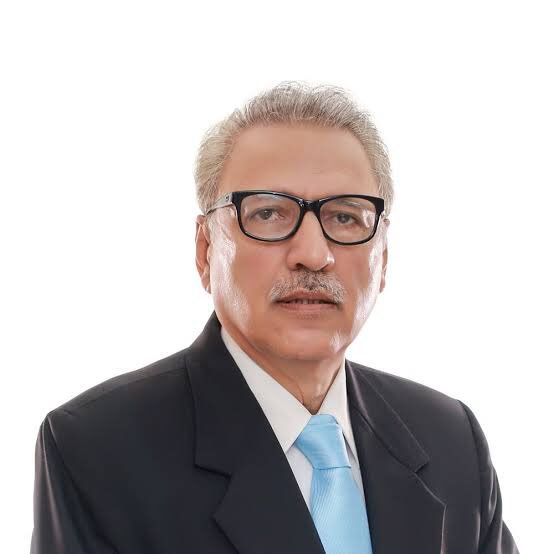
Arif Alvi, a close ally of Prime Minister Imran Khan and one of the founding members of the ruling Pakistan Tehreek-e-Insaf party, was sworn in as Pakistan's new president today.
The 69-year-old dentist was administered the oath of office as Pakistan's 13th President by Chief Justice Saqib Nisar at a simple ceremony held at the Aiwan-e-Sadr (the President House) in Islamabad.
The oath-taking ceremony was attended by top civil-military brass, including Prime Minister Khan and Army Chief General Qamar Javed Bajwa.
Visiting Chinese Foreign Minister Wang Yi and Saudi Information Minister Awwad Bin Saleh Al Awwad were also present at the event.
Alvi had defeated Pakistan Peoples Party candidate Aitzaz Ahsan and the Pakistan Muslim League-N nominee Maulana Fazl ur Rehman in a three-way presidential contest.
He belongs to Karachi and comes from a family that migrated to Pakistan after partition. His predecessors Mamnoon Hussain's family came from Agra and Pervez Musharraf's parents migrated from New Delhi.
Alvi shares an interesting connection with India as his father Dr Habib ur Rehman Elahi Alvi was a dentist to India's first prime minister Jawaharlal Nehru, according to the ruling Pakistan Tehreek-e-Insaf party.
In 1969, Alvi was active in the student movement during Field Marshal Ayub Khan's era. He was shot during a protest in Lahore and proudly carries a bullet in his right arm.
In 1979, he was a Jamaat-e-Islami (JI) candidate for the provincial assembly but elections did not take place.
Alvi is one of the founding members of PTI. He served as PTI secretary general from 2006 to 2013.
He won the National Assembly elections from NA-247 (Karachi) during the July 25 polls. He was also elected member of the National Assembly in the 2013 general election.
In Pakistan, the President is considered as a symbol of the federation and head of the state and exercises all powers on the recommendations of the prime minister.
With his close ally Alvi as President, Khan can smoothly implement his agenda, according to observers.

-
Getting To Work Costs Women More | The Reason Why

It is not just about women paying more than men. It is about women paying much more in cities than in villages.
-
AI Bias In Investing Cannot Be Eliminated, But It Can Be Governed
Framing is a particularly important example as identical financial information presented in terms of gains rather than losses can lead an LLM to reach a different assessment.
-
Joining The Dots | Dark Skies, Steady Diya: Why Hope Holds This Diwali
With war, a weak rupee and foreign outflows weighing on sentiment, policymakers at the NDTV World Summit and market veterans at NDTV Profit Ignite: Diwali Edition offered the same advice: stay invested and filter out the noise.
-
The Curious Case of Equitas Small Finance Bank And A CEO Who Quit For Stock
PN Vasudevan believes persistent investor concerns over a perceived conflict of interest had become a governance overhang on Equitas Small Finance Bank's stock, even as the lender improved profitability and asset quality.
-
Talking Points This Week: AI Cash Burn, A Tiger Comeback And An India That Still Finds Its Own Path
India is not immune to higher oil or tighter global liquidity, yet its earnings base is broader, its domestic policy levers are still available.
-
Foreign Investors Own Half Of HDFC Bank and ICICI Bank. An LTCG Cut Could Matter Most Here
Foreign portfolio investors have US$115 billion parked in HDFC Bank, ICICI Bank. If the government cuts long-term capital gains tax, Jefferies says returning foreign money could land here first.
-
'Never Seen This Level Of Negativity': Sandeep Tandon Says The Next Rally May Be Closer Than You Think
Veteran investor Sandeep Tandon says foreign selling is easing, large-caps are due a comeback and mid-caps are crowded, while he turns positive on gold, power and pharma this Diwali.
-
Indians Stay With Family, Not In Hotels | The Reason Why
India still lacks enough clean, reliable and affordable hotels for budget-conscious travellers.
-
The Economic Imperative: Analysing The Material Driving Force Behind India-Canada Strategic Reset
This economic complementarity is further reinforced by deep institutional investment ties and talent mobility, which form the bedrock of the bilateral framework.
-
Medicine Pricing: Where Must Profit Stop?
India must confront excessive margins, hidden incentives and regulatory gaps that threaten the integrity of medicine.










