Arbitration Act: Supreme Court To Decide Whether Automatic Stays Can Be Retrospective
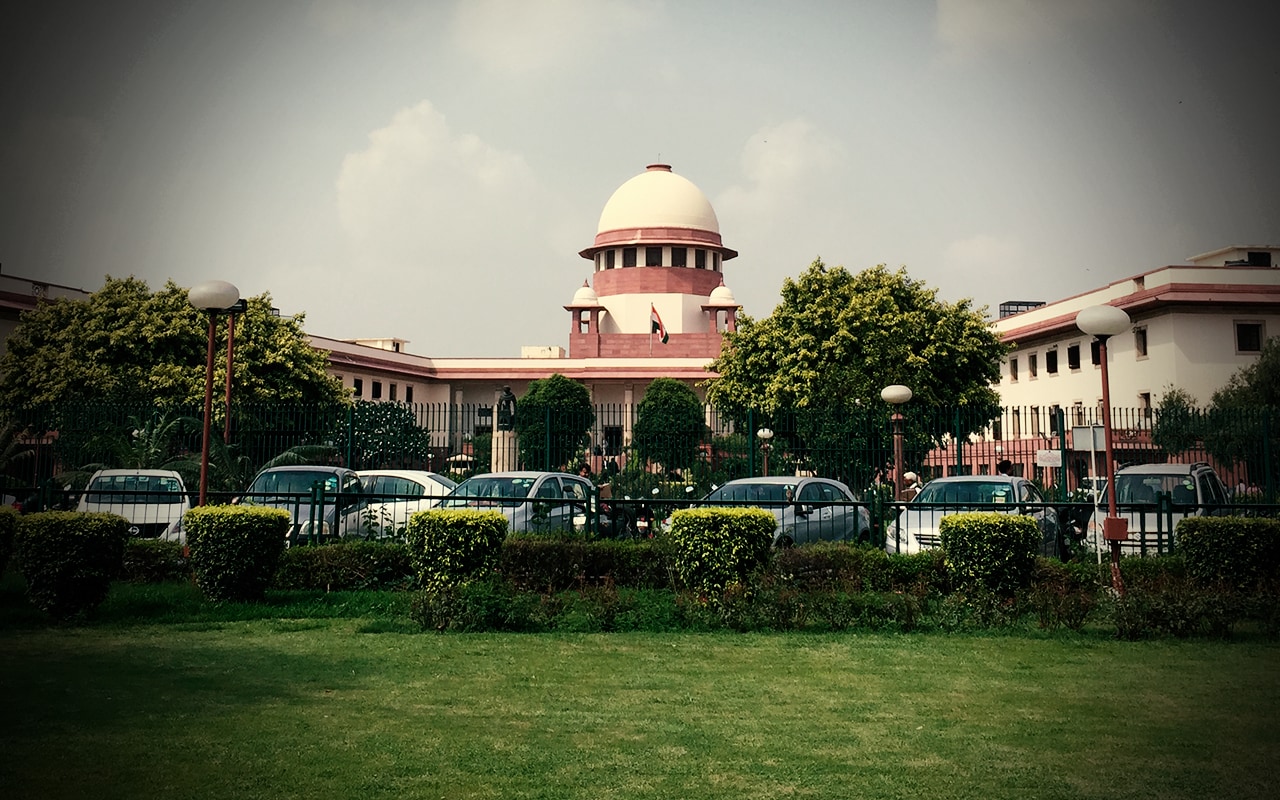
The Supreme Court of India today reserved its judgment after hearing petitions challenging the amendments introduced in Arbitration and Conciliation Act, 1996.
The main contention before the top court bench headed by Justice Rohinton Nariman is Section 87 of the amended Act, which puts on automatic stay on all arbitral awards in which arbitral proceedings commenced before Oct. 23, 2015. The stay comes in effect as soon as the arbitral awards are challenged in a high court under provisions of the Arbitration Act. This led to infrastructure companies such as Hindustan Construction Company Ltd. and Gammon India Ltd. challenging the provisions in the apex court.
Senior Advocate Abhishek Manu Singhvi argued for the petitioner, HCC, that by the introduction of the amended section 87, they are being forced into insolvency despite the fact they are owned large sums of money by government run or statutory companies such as National Highways Authority of India.
HCC, the petitioner said, claimed it's being dragged to insolvency under the IBC Code from its own operational creditors while state-run firms owe it nearly Rs 6,000 crore.
The challenge to the IBC Code is on the ground that while HCC's operational creditors are dragging them to insolvency, the company can't exercise the same option against state-run bodies.
“HCC submits that for any ‘default' of HCC in making payment to its supplier of goods or services, which is above Rs 1 lakh, HCC would suffer the consequences under S. 9 of the IBC. However, even if a statutory body like NHAI defaults in making payments to HCC, it's exempted against the effects of Sections 7 and 9 of the IBC,” the petitioner said. “This unequal treatment amongst equals makes the provisions of IBC discriminatory and violative of Article 14, 19(1)(g), 21, and 300A of the Constitution.”
The petitioners asked court to protect companies from consequences of being dragged into insolvency proceedings if they are in possession of arbitral awards in excess to the claims against them. They also sought the right to take government bodies to IBC proceedings for recovery of their award and staying the proceedings against them until their arbitral awards is decided.
The government, however, opposed the arguments of the petitioner and said Parliament was within its right to introduce the amendments and there's no discrimination between any classes in its application.
Attorney General KK Venugopal who represented the central government argued that putting a cut-off date in the application of a law is unavoidable in any case.
During hearing, the bench had observed that the amended Section 87 seems to have reversed the court's order in BCCI Vs Kochi Cricket case where the top court had barred retrospective application of the provisions of the Arbitration Act.
The attorney general argued that the amendment was clarificatory in nature and Parliament has only explained its true intention in light of the court's observations.
“It's open to Parliament, if it finds that a view expressed by the apex court doesn't reflect its original intention, to clarify its real intention through an amendment to the Act,” Venugopal said. “Again, in such a case, no question arises of passing a validating Act to neutralise any action or law which had earlier been set aside by a court.”

-
AI Bias In Investing Cannot Be Eliminated, But It Can Be Governed

Framing is a particularly important example as identical financial information presented in terms of gains rather than losses can lead an LLM to reach a different assessment.
-
Joining The Dots | Dark Skies, Steady Diya: Why Hope Holds This Diwali
With war, a weak rupee and foreign outflows weighing on sentiment, policymakers at the NDTV World Summit and market veterans at NDTV Profit Ignite: Diwali Edition offered the same advice: stay invested and filter out the noise.
-
The Curious Case of Equitas Small Finance Bank And A CEO Who Quit For Stock
PN Vasudevan believes persistent investor concerns over a perceived conflict of interest had become a governance overhang on Equitas Small Finance Bank's stock, even as the lender improved profitability and asset quality.
-
Talking Points This Week: AI Cash Burn, A Tiger Comeback And An India That Still Finds Its Own Path
India is not immune to higher oil or tighter global liquidity, yet its earnings base is broader, its domestic policy levers are still available.
-
Foreign Investors Own Half Of HDFC Bank and ICICI Bank. An LTCG Cut Could Matter Most Here
Foreign portfolio investors have US$115 billion parked in HDFC Bank, ICICI Bank. If the government cuts long-term capital gains tax, Jefferies says returning foreign money could land here first.
-
'Never Seen This Level Of Negativity': Sandeep Tandon Says The Next Rally May Be Closer Than You Think
Veteran investor Sandeep Tandon says foreign selling is easing, large-caps are due a comeback and mid-caps are crowded, while he turns positive on gold, power and pharma this Diwali.
-
Indians Stay With Family, Not In Hotels | The Reason Why
India still lacks enough clean, reliable and affordable hotels for budget-conscious travellers.
-
The Economic Imperative: Analysing The Material Driving Force Behind India-Canada Strategic Reset
This economic complementarity is further reinforced by deep institutional investment ties and talent mobility, which form the bedrock of the bilateral framework.
-
Medicine Pricing: Where Must Profit Stop?
India must confront excessive margins, hidden incentives and regulatory gaps that threaten the integrity of medicine.
-
Why Amazon And Flipkart Are Struggling To Beat Meesho In India's Smaller Cities
With 274 million users and lowest-cost logistics, Meesho is defending its value commerce crown against giants like Amazon and Flipkart.










