Air India Plane Crash: How Lone Survivor Ramesh Vishwaskumar Escaped
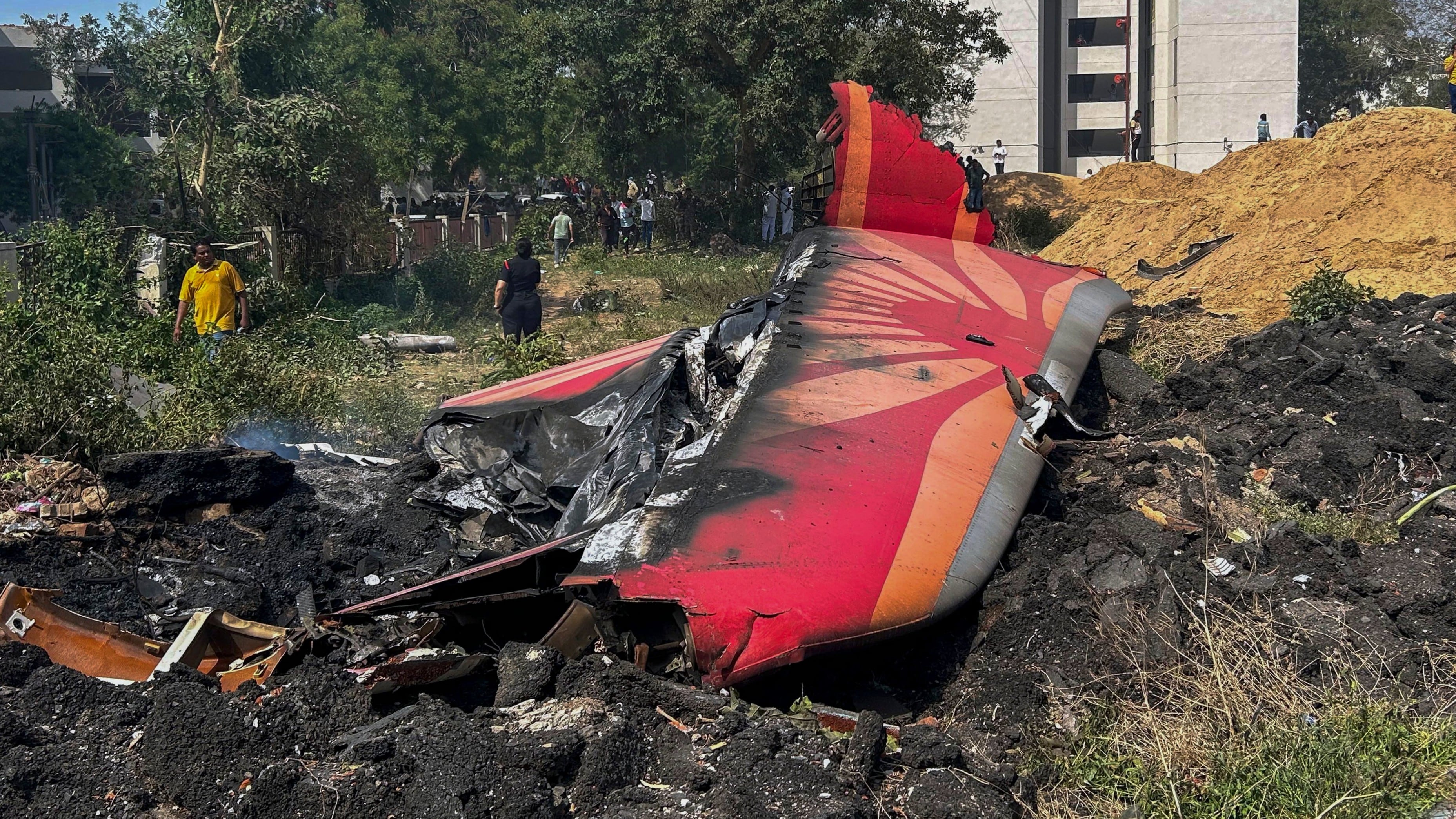
As Air India Flight AI171 descended toward its doom on Thursday, Ramesh Vishwaskumar sat in the first row of economy class — headed for one of the most harrowing and luckiest moments of his life.
After the Boeing Co. 787 Dreamliner crashed into a densely populated district of the western Indian city of Ahmedabad, Vishwaskumar managed to get out of the plane. He was injured, but alive. All the 241 others on board had perished.
A video that has since gone viral on social media shows a slightly bloodied man walking near the crash site, surrounded by an incredulous crowd.
“Thirty seconds after take-off, there was a loud noise,” Vishwaskumar told local reporters, according to the Hindustan Times newspaper. “There were dead bodies around me. I got scared. I got up and ran. There were pieces of the plane everywhere.” Media outlets identified him as a UK citizen aged 40, from the city of Leicester.
It's a tale of survival that stands out in an aircraft accident that ranks as the worst disaster in civil aviation in more than a decade. The cause of the crash, which killed scores more on the ground as the fully fueled aircraft tore into buildings and exploded into flames, remains unknown.
Doctors said Vishwaskumar's injuries weren't life threatening, according to the Hindustan Times report. However, he still appears to be dealing with loss: his brother was also on the flight, according to the article.
Vishwaskumar's survival defies what has otherwise been a devastating episode that extends a string of deadly aviation crashes in recent months.
Other accidents have included the mid-air collision between a military helicopter and a civil aircraft above Washington DC in January, which left no survivors. Only two people escaped the impact of a Boeing 737 with a runway barrier in December in South Korea.
Vishwaskumar may be able to offer valuable clues as to what caused the accident. Salvage crews are still sifting through the wreckage to find possible survivors among people on the ground, alongside technical data like the voice and data recorders that are crucial to piece together the final moments of the doomed flight.
The lucky passenger was seated in row 11 at the left window seat, the first row in economy class that's positioned right behind an emergency exit. An Air India 787 Dreamliner typically seats 256 passengers in a two-class configuration, with 18 seats in business and 238 seats in economy.
On smaller aircraft like the Boeing 737, that particular seat number happens to be one that savvy passengers often avoid because it's typically slightly offset away from a window, thereby offering no outside view.
For Vishwaskumar, the seat and its proximity to an exit may well have contributed saving his life.

-
Gold Is Rs 22,000 Cheaper Than A Month Ago. Should You Buy Amid The Wedding Season?

Gold's potential slide to $3,500 could save around Rs 4,700 per 10 grams, but a soft inflation print could just as easily push prices back up. One way to split the risk is to buy in parts, some now and the rest after the Fed's Dec. 9 decision.
-
AI Agents Are Gaining Power. Who Governs Them?
Artificial intelligence agents promise to transform productivity by moving machines from assisting decisions to executing them. But as organisations delegate greater authority to these AI-agents, they must first establish who controls that authority and who remains accountable when things go wrong.
-
Why Swapping Your Old Gold Can Trigger A Rs 5 Lakh Tax Bill, And How You Can Avoid It Legally
Swapping old gold for new is taxed as a sale and a fresh purchase. Getting your own gold remade can cut most of that bill, though it has its own costs.
-
The AI Trade is Done. The Real Opportunity for Investors Starts in 2027 | Unhedged Position
As pureplay AI stocks plunge and circular, capex-led financing unwinds, 2027 is set to be a year of reckoning for AI companies. Yet the bust clears the way for a better opportunity for investors in 2027 -- shifting the spotlight from AI builders to the companies using AI.
-
Leadership As Mission: Why The Age Of AI Demands More Human Leadership
Debjani Ghosh examines how AI is changing leadership, arguing that its success must be measured by its impact on people and the accountability of those guiding its use.
-
We May Need Another Tukaram Mundhe To Fight Air Pollution | The Reason Why
Developers may install basic measures such as sprinklers and green nets, resume work, and continue violating rules when this equipment stops working.
-
Extracting Value From Battery Scrap Could Be Challenging For India | The Reason Why
A discarded lithium-ion battery still contains valuable materials such as lithium, nickel and cobalt. These can be recovered and reused. When such batteries are crushed and shredded, they produce a dark powder called black mass.
-
One El Nino, India Can Handle. Two Could Break The Granary
India's grain stocks can absorb one bad year, but a second El Nino could drain the buffer in two to three years, economists say.
-
India's Troika Of Good Luck | Joining The Dots
As Jensen Huang's exit drags Nvidia down, a cooling AI trade and resilient earnings have revived investor interest in India. A likely RBI rate hike looms.
-
Talking Points This Week: Leadership Shock At Nvidia, Earnings Strength, And The Fog Over Hormuz
The Anthropic IPO pricing and first trading day, Nvidia's upcoming earnings, and any fresh signals from Iran will set the tone for the following week.









