Tariff Effect Clearly Visible, Says Powell At Jackson Hole, But Hints Fed May Cut Rates
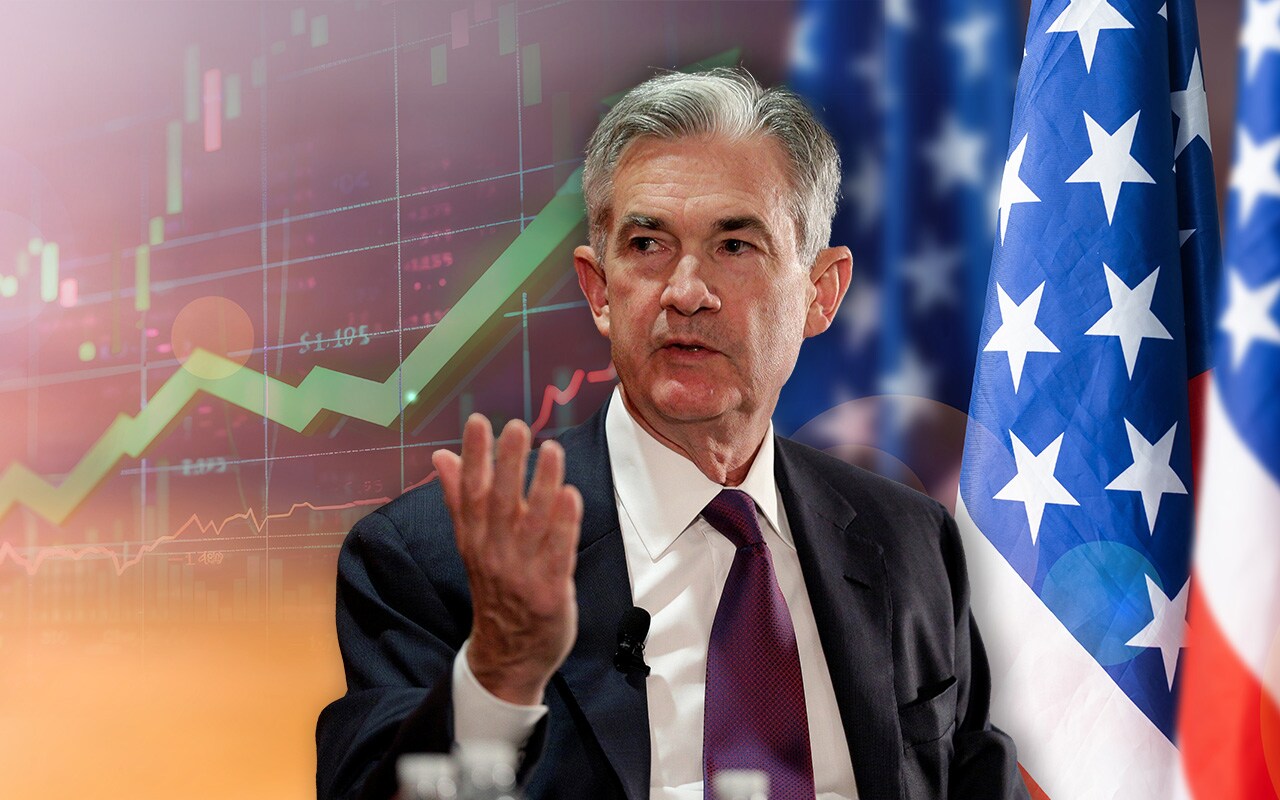
Federal Reserve Chair Jerome Powell acknowledged on Friday that the effects of tariffs on consumer prices are now "clearly visible," warning that the impact will continue to accumulate over the coming months.
Speaking at the Jackson Hole Symposium, Powell said the main policy question is whether these price increases could materially heighten the risk of persistent inflation.
With rates now 100 basis points closer to neutral than a year ago, Powell also signalled at likely cuts by the Fed going forward, saying that the conditions "may warrant" the monetary policy body to adjust its stance.
Powell has, notably, faced intense criticism from US President Donald Trump for not initiating interest rate cuts at a time when most of the global central banks had kicked off the monetary policy easing cycles.
Tariff Concerns Prevail
On tariffs, Powell said, "Our reasonable base case is that the effects will be relatively short lived with a one-time shift in the price level". He added that "one-time does not mean all at once," as tariffs take time to work through supply chains and distribution networks.
The Fed chief also pointed to broader structural shifts, citing changes in trade and immigration policy that are reshaping both demand and supply. "Distinguishing cyclical developments from structural developments is difficult," Powell said, noting that while monetary policy can stabilise cycles, it cannot offset structural changes.
Trump's crack down on immigrants with a pursuit of a tighter immigration policy is likely to trigger a shrinking labour force, believe analysts. Within hours of being sworn in as the President for his second tenure, Trump had signed executive orders which sought to rescind birthright citizenship and limit immigration.
Reviewing the past year, Powell recalled that when he last spoke at Jackson Hole, the Fed's policy rate was held steady at 5.25%–5.50% to curb inflation. Since then, inflation has eased closer to the Fed's target and the labor market has cooled, though unemployment rose by almost a full percentage point.
This year, however, new challenges have emerged, pointed out Powell. "Significantly higher tariffs across our trading partners are remaking the global trading system. Tighter immigration policy has led to an abrupt slowdown in labor force growth," Powell said, adding that changes in tax, spending, and regulatory policies could also shape long-term productivity.
The Trump administration escalated its trade offensive on India by announcing a 25% additional tariff as a punitive measure for imports of Russian oil. That rate came on top of the 25% 'reciprocal' duty Washington imposed last week on Indian exports. Washington had also slapped Brazil with a 50% levy, marking India and Brazil as countries which see the highest tariffs.
The European Union, one of Washington's biggest trading partners, saw levies of 15% being locked as part of a trade deal.
Impact On Monetary Policy
On the outlook for policy, Powell acknowledged the tension in the Fed's dual mandate. "In the near term, risks to inflation are tilted to the upside, and risks to employment to the downside—a challenging situation," he said.
"Monetary policy is not on a preset course," he stressed. "FOMC members will make decisions solely based on their assessment of the data and its implications for the outlook and balance of risks."
With Powell's tenure as chief set to end in May 2026, Trump is currently considering 11 candidates to replace him, according to a report by CNBC.
The new names includes Jefferies Chief Market Strategist David Zervos, former Fed Governor Larry Lindsey, and Rick Rieder, chief investment officer for global fixed income at BlackRock.

-
The Curious Case of Equitas Small Finance Bank And A CEO Who Quit For Stock

PN Vasudevan believes persistent investor concerns over a perceived conflict of interest had become a governance overhang on Equitas Small Finance Bank's stock, even as the lender improved profitability and asset quality.
-
Talking Points This Week: AI Cash Burn, A Tiger Comeback And An India That Still Finds Its Own Path
India is not immune to higher oil or tighter global liquidity, yet its earnings base is broader, its domestic policy levers are still available.
-
Foreign Investors Own Half Of HDFC Bank and ICICI Bank. An LTCG Cut Could Matter Most Here
Foreign portfolio investors have US$115 billion parked in HDFC Bank, ICICI Bank. If the government cuts long-term capital gains tax, Jefferies says returning foreign money could land here first.
-
'Never Seen This Level Of Negativity': Sandeep Tandon Says The Next Rally May Be Closer Than You Think
Veteran investor Sandeep Tandon says foreign selling is easing, large-caps are due a comeback and mid-caps are crowded, while he turns positive on gold, power and pharma this Diwali.
-
Indians Stay With Family, Not In Hotels | The Reason Why
India still lacks enough clean, reliable and affordable hotels for budget-conscious travellers.
-
The Economic Imperative: Analysing The Material Driving Force Behind India-Canada Strategic Reset
This economic complementarity is further reinforced by deep institutional investment ties and talent mobility, which form the bedrock of the bilateral framework.
-
Medicine Pricing: Where Must Profit Stop?
India must confront excessive margins, hidden incentives and regulatory gaps that threaten the integrity of medicine.
-
Why Amazon And Flipkart Are Struggling To Beat Meesho In India's Smaller Cities
With 274 million users and lowest-cost logistics, Meesho is defending its value commerce crown against giants like Amazon and Flipkart.
-
High US Salaries, No Green Card Certainty: The Financial Calculation Facing Indian H-1B Families
The suspension of PERM processing at eight technology employers does not cancel existing H-1B visas. What it does is force a question many Indian families have been avoiding: is the US salary worth tying your career and family plans to one employer?
-
Swiggy vs Eternal: Food Delivery's Two Rivals Are No Longer In The Same Race
Eternal is building a private AI assistant, dark.ai. Swiggy is still working out how to make Instamart pay, with an operating loss of Rs 895 crore in the July-September quarter while Blinkit stayed profitable.










