.jpg?downsize=773:435 "China’s Fiscal Spending Will Rise This Year, Finance Chief Says")
(Bloomberg) -- China's government spending will rise this year, the nation's Minister of Finance said, as authorities look for ways to bolster domestic demand and help the world's second-largest economy regain momentum.
“We will make sure the overall size of fiscal spending increases,” Finance Minister Lan Fo'an said in an interview published Thursday by the People's Daily, the Communist Party's mouthpiece.
Lan's remarks add to pledges from top Chinese officials who have stressed the need to strengthen fiscal support for the economy this year. Those vows have raised expectations that Beijing may set an ambitious economic growth target during a year in which it still faces several challenges to growth, including from an ongoing property slump and still-weak confidence among businesses and consumers.
Lan also told the newspaper that the size of the country's budget deficit will be maintained at a “certain level” in 2024, and added that authorities will continue to set an “appropriate” quota for new special local government bonds, a key source of infrastructure investment. That way, overall government spending will increase and “play a better role stimulating domestic demand.”
To help cash-strapped local authorities meet basic spending needs, Lan said the central government would continue transferring funds to them, with poorer areas receiving preference. He also said officials would roll out some tax cuts focusing on support for technological innovation and manufacturing development.
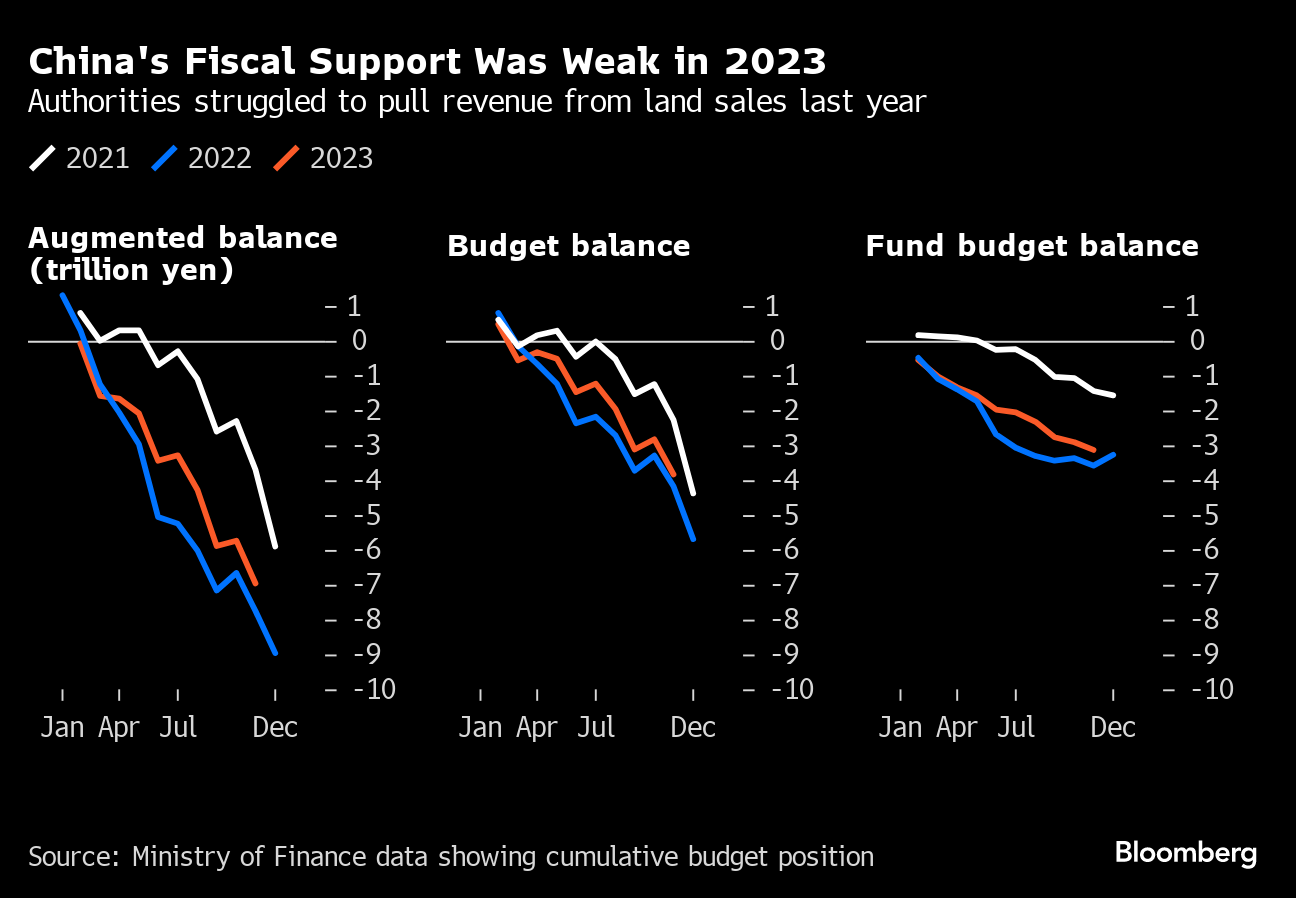
Government fiscal support was generally weak last year as authorities struggled to pull revenue from selling land, a consequence of the property crisis. The most recently available official data showed a broad measure of government spending falling 0.5% through the first 11 months of last year compared to 2022. That put Beijing's initial goal of boosting that so-called augmented expenditure by about 6% for the year far beyond reach.
Some economists expect the official budget deficit this year to be similar, if not slightly bigger, than last year's. Beijing set that deficit-to-gross domestic product ratio at 3% last March, but made a rare mid-year revision to 3.8% by issuing more sovereign debt for disaster relief and construction.
Lan described the government's debt ratio in the interview as being “in a reasonable range,” adding that officials have been “appropriately expanding spending and meeting realistic needs, while saving room for tackling potential risks and challenges in the future.”
There will be additional support not accounted for in the official budget deficit ratio. For example, some economists see the government keeping its quota for new special local government bonds unchanged from last year at around 3.8 trillion yuan ($531 billion). The central bank could also keep making use of its Pledged Supplemental Lending program, a tool used to give policy-oriented banks low-cost funds for housing and infrastructure projects.
More stories like this are available on bloomberg.com
©2024 Bloomberg L.P.
Essential Business Intelligence, Sharp Market Insights, Practical Personal Finance Advice, Daily Fuel, Gold and Silver Prices and Latest Stories — On NDTV Profit.