Charting the Global Economy: US Tariffs Launch Proves Messy; ECB Cuts Rates
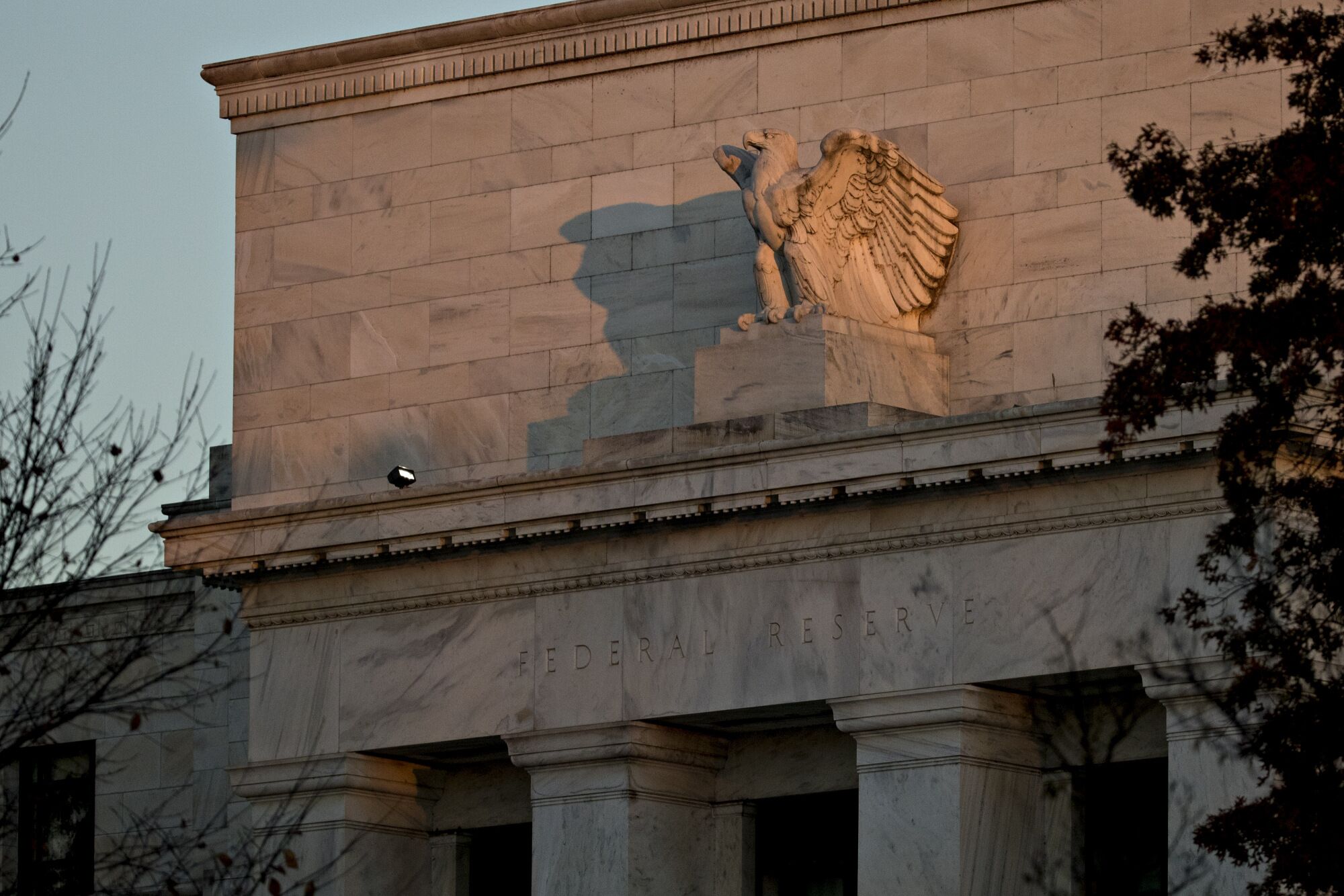
President Donald Trump's frenzied tariff barrage has been marked by reversals and faulty rollouts, baffling US trading partners and businesses while raising questions about the aims of his signature policy.
Following a tumultuous few days of delays and exemptions, Trump introduced another variable at the end of the week by saying he may implement reciprocal tariffs on Canadian lumber and dairy products as soon as Friday. The president spoke after a report showed the US job market softened in February as unemployment unexpectedly rose.
Separately, the European Central Bank lowered interest rates for the sixth time since June and indicated that its cutting phase may be drawing to a close as inflation cools and the economy digests seismic shifts in geopolitics. Officials are bracing for tough negotiations over whether to cut interest rates further or hold off when they next set borrowing costs in April, according to people familiar with their thinking.
Here are some of the charts that appeared on Bloomberg this week on the latest developments in the global economy, markets and geopolitics:
US

Trump's supporters say his rapid tariff rollout reflects the president's urgency to address trade inequities, lure more investment and stem the flow of fentanyl into the US. Even so, the pace has fed confusion, coming on top of regulatory pivots and uncertainty about the future of tax cuts. US equities have taken a beating and consumer confidence has eroded, economic warning signs that pose political risks for the president.

US job growth steadied last month while the unemployment rate rose — a mixed snapshot of a job market hanging in the balance of quickly changing government policy. Friday's report is the latest evidence that the labor market is softening, with more people permanently out of work, fewer workers on federal government payrolls and a jump in those working part-time for economic reasons.

US factory activity last month edged closer to stagnation as orders and employment contracted, while a gauge of prices paid for materials surged to the highest since June 2022 as tariff concerns mounted. Rising input costs represent a challenge for manufacturers against a backdrop of shrinking orders that suggests demand is at risk of retrenching as businesses weigh the implications of tariffs from the Trump administration.

An eye-popping imports surge that has driven the US trade deficit to a record and elevated anxiety about the economy largely has its roots in a frantic scramble by a rush of bullion into New York depositories. Typically, such a dramatic widening in the US trade gap would weigh heavily on gross domestic product. But because the jump in imports mainly reflects the impact of arbitrage in the gold market and most of the inbound metal won't be used in production, the government will exclude the influx as it calculates GDP.
Europe

The ECB lowered its deposit rate a quarter point to 2.5% and officials described their monetary-policy stance as becoming “meaningfully less restrictive.” Revealing that inflation will take slightly longer to reach 2%, the ECB is switching “to a more evolutionary approach,” President Christine Lagarde said.

The euro-area economy grew more than initially estimated at the end of last year, bolstered by consumer spending and business investments. Fourth-quarter gross domestic product increased 0.2% from the previous three months. While twice the pace reported earlier, it represents a marked slowdown in momentum that underscores how the region is suffering from uncertainty at home and abroad.
Asia

President Xi Jinping signaled China's determination to push ahead with an ambitious growth goal this year, despite the trade war. If Trump boosts tariffs further, analysts say Beijing will need to unleash big stimulus to hit the target.

Singapore's public housing system has started to show signs of strain. Some homeseekers are frustrated at long wait times and rising costs. The rules favor married couples, pushing young adults into early engagements to get on the ballot for a new home. And critics are concerned about the huge windfalls being made in the resale market.

Faced with a severe labor shortage and one of the world's most rapidly aging populations, service-sector businesses in Japan are increasingly investing in robots that don't need expert supervision and can work alongside people instead of replacing them.
Emerging Markets

Chile's economic activity rose more than expected for the fourth straight month in January, corroborating the central bank's stance that there's a high bar for further interest-rate cuts. The fourth consecutive month of growth is the longest streak since 2021.

Trump repeated his criticism of India's high tariffs, indicating the country remains a target of reciprocal duties set to take effect April 2. India is expected to be hit hard by the like-for-like duties given the high tariffs it charges when compared with the US.
World

Denmark cut its benchmark rate by a quarter point, after the ECB reduced its borrowing costs by the same margin earlier in the same day. Turkey also cut rates. Ukraine and Kazakhstan both hiked to help tame accelerating inflation, while Malaysia held rates steady.

-
The Curious Case of Equitas Small Finance Bank And A CEO Who Quit For Stock

PN Vasudevan believes persistent investor concerns over a perceived conflict of interest had become a governance overhang on Equitas Small Finance Bank's stock, even as the lender improved profitability and asset quality.
-
Talking Points This Week: AI Cash Burn, A Tiger Comeback And An India That Still Finds Its Own Path
India is not immune to higher oil or tighter global liquidity, yet its earnings base is broader, its domestic policy levers are still available.
-
Foreign Investors Own Half Of HDFC Bank and ICICI Bank. An LTCG Cut Could Matter Most Here
Foreign portfolio investors have US$115 billion parked in HDFC Bank, ICICI Bank. If the government cuts long-term capital gains tax, Jefferies says returning foreign money could land here first.
-
'Never Seen This Level Of Negativity': Sandeep Tandon Says The Next Rally May Be Closer Than You Think
Veteran investor Sandeep Tandon says foreign selling is easing, large-caps are due a comeback and mid-caps are crowded, while he turns positive on gold, power and pharma this Diwali.
-
Indians Stay With Family, Not In Hotels | The Reason Why
India still lacks enough clean, reliable and affordable hotels for budget-conscious travellers.
-
The Economic Imperative: Analysing The Material Driving Force Behind India-Canada Strategic Reset
This economic complementarity is further reinforced by deep institutional investment ties and talent mobility, which form the bedrock of the bilateral framework.
-
Medicine Pricing: Where Must Profit Stop?
India must confront excessive margins, hidden incentives and regulatory gaps that threaten the integrity of medicine.
-
Why Amazon And Flipkart Are Struggling To Beat Meesho In India's Smaller Cities
With 274 million users and lowest-cost logistics, Meesho is defending its value commerce crown against giants like Amazon and Flipkart.
-
High US Salaries, No Green Card Certainty: The Financial Calculation Facing Indian H-1B Families
The suspension of PERM processing at eight technology employers does not cancel existing H-1B visas. What it does is force a question many Indian families have been avoiding: is the US salary worth tying your career and family plans to one employer?
-
Swiggy vs Eternal: Food Delivery's Two Rivals Are No Longer In The Same Race
Eternal is building a private AI assistant, dark.ai. Swiggy is still working out how to make Instamart pay, with an operating loss of Rs 895 crore in the July-September quarter while Blinkit stayed profitable.










