Trump Unveils 10% Global Tariff, Many Nations Face Higher Rate
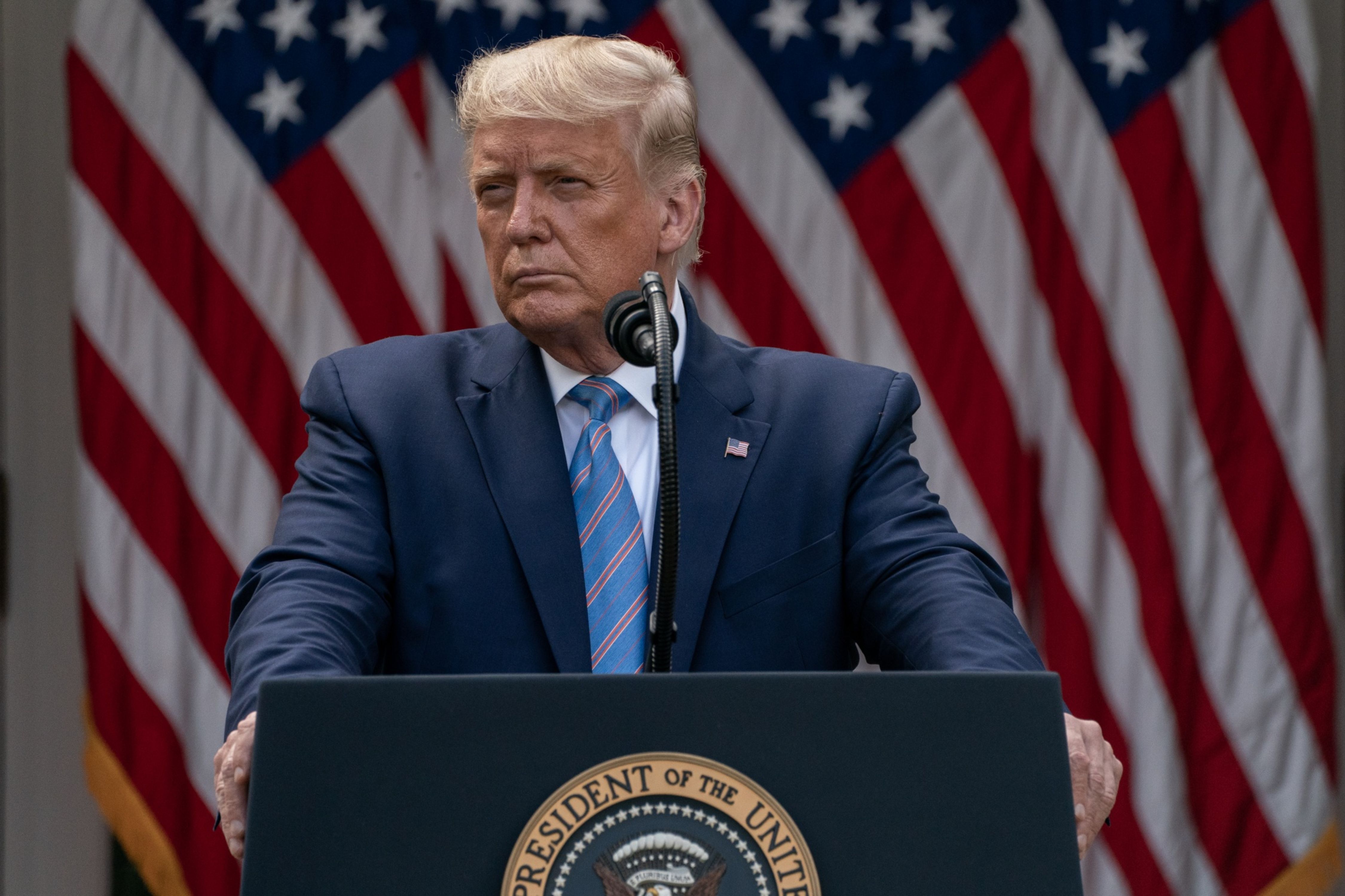
President Donald Trump is imposing tariffs on US trading partners worldwide, his biggest assault yet on a global economic system he has long bemoaned as unfair.
Trump said Wednesday he will apply a minimum 10% tariff on all exporters to the US and slap additional duties on around 60 nations with the largest trade imbalances with the US.
“For years, hard-working American citizens were forced to sit on the sidelines as other nations got rich and powerful, much of it at our expense. But now it's our turn to prosper,” Trump said during an event in the White House Rose Garden.
The higher “reciprocal” rates targeting nations the Trump administration labels the worst offenders are based on a government tally of the levies and non-tariff barriers those countries impose on US goods. Under Trump's plan, those countries facing higher, customized rates will be hit with a levy equal to one-half of that calculated amount.
The baseline import taxes will take effect after midnight Saturday and the higher duties will kick in at 12:01 a.m. on April 9, according to senior administration officials who discussed the plans on the condition of anonymity. Canada and Mexico already face 25% tariffs tied to drug trafficking and illegal migration; those will remain in place and the US's two largest trading partners will not be subject to the new tariff regime as long as the separate tariffs are in effect. Exemptions on goods covered by the North American trade agreement Trump brokered in his first term will stay.
S&P 500 Index futures sank 1.9% and Nasdaq 100 futures slid 2.7% as the full scope of Trump's announcement became evident. Automaker shares traded lower virtually across the board. Ford Motor Co., General Motors Co., Stellantis NV and Tesla Inc. all declined after regular trading in New York.
China will face a 34% rate, while the European Union will have a 20% levy and Vietnam is seeing a 46% tariff, according to White House documents. Other nations slapped with larger tariffs include Japan at 24%, South Korea at 25%, India at 26%, Cambodia at 49% and Taiwan at 32%.
“This is not full reciprocal. This is kind reciprocal,” Trump said.
Mary Lovely, a senior fellow at the Peterson Institute for International Economics, said the tariffs Trump announced Wednesday were “much worse than we feared.” Just how they would be administered was unclear, she said, and there were “huge implications for rerouting of trade” globally.
Trump indicated he would consider lowering rates if other nations remove their trade barriers on US exports.
“I say terminate your own tariffs, drop your barriers, don't manipulate your currencies,” Trump said.
Trump declared a national emergency tied to the US trade deficit, which stood at more than $918 billion for goods and services in 2024, allowing him to use unilateral authority under the International Emergency Economic Powers Act to impose the most sweeping set of tariffs in generations. The administration is aiming revive American manufacturing with its protectionist shift and collect hundreds of billions of dollars in revenue from the new levies to fill government coffers.
The president's move is a historic gamble that is expected to raise the cost of trillions of dollars in goods shipped annually to the US from other countries. It also could ignite a worldwide trade war, marked by tit-for-tat strikes that destabilize supply chains, stoke inflation, embolden America's economic rivals and encourage foreign powers to form new alliances that exclude the US.
That dynamic presents a political problem for Trump: economic hurt from the tariffs could come quickly, while any gain in the form of a restructured US economy could take years or longer to materialize.

-
AI Bias In Investing Cannot Be Eliminated, But It Can Be Governed

Framing is a particularly important example as identical financial information presented in terms of gains rather than losses can lead an LLM to reach a different assessment.
-
Joining The Dots | Dark Skies, Steady Diya: Why Hope Holds This Diwali
With war, a weak rupee and foreign outflows weighing on sentiment, policymakers at the NDTV World Summit and market veterans at NDTV Profit Ignite: Diwali Edition offered the same advice: stay invested and filter out the noise.
-
The Curious Case of Equitas Small Finance Bank And A CEO Who Quit For Stock
PN Vasudevan believes persistent investor concerns over a perceived conflict of interest had become a governance overhang on Equitas Small Finance Bank's stock, even as the lender improved profitability and asset quality.
-
Talking Points This Week: AI Cash Burn, A Tiger Comeback And An India That Still Finds Its Own Path
India is not immune to higher oil or tighter global liquidity, yet its earnings base is broader, its domestic policy levers are still available.
-
Foreign Investors Own Half Of HDFC Bank and ICICI Bank. An LTCG Cut Could Matter Most Here
Foreign portfolio investors have US$115 billion parked in HDFC Bank, ICICI Bank. If the government cuts long-term capital gains tax, Jefferies says returning foreign money could land here first.
-
'Never Seen This Level Of Negativity': Sandeep Tandon Says The Next Rally May Be Closer Than You Think
Veteran investor Sandeep Tandon says foreign selling is easing, large-caps are due a comeback and mid-caps are crowded, while he turns positive on gold, power and pharma this Diwali.
-
Indians Stay With Family, Not In Hotels | The Reason Why
India still lacks enough clean, reliable and affordable hotels for budget-conscious travellers.
-
The Economic Imperative: Analysing The Material Driving Force Behind India-Canada Strategic Reset
This economic complementarity is further reinforced by deep institutional investment ties and talent mobility, which form the bedrock of the bilateral framework.
-
Medicine Pricing: Where Must Profit Stop?
India must confront excessive margins, hidden incentives and regulatory gaps that threaten the integrity of medicine.
-
Why Amazon And Flipkart Are Struggling To Beat Meesho In India's Smaller Cities
With 274 million users and lowest-cost logistics, Meesho is defending its value commerce crown against giants like Amazon and Flipkart.










