Trump Reciprocal Tariffs: These Indian Sectors Are At Highest Risk
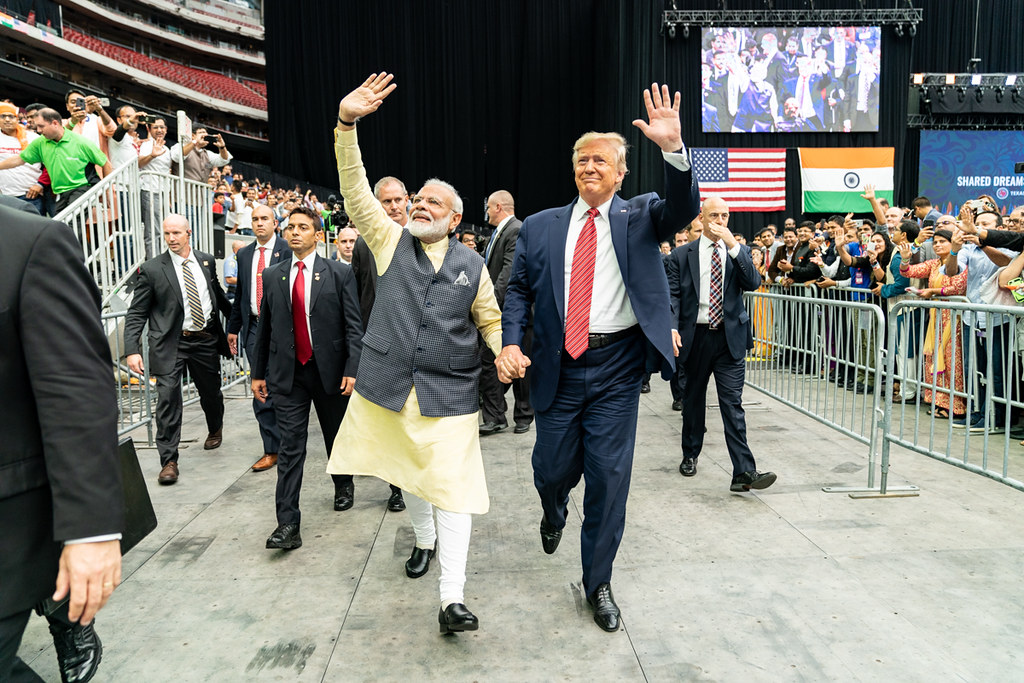
US President Donald Trump's tariff threats have dominated headlines ever since he took office earlier this year. His first much-hyped "reciprocal tariffs" announced in February are expected to kick in on April 2.
This policy is set to have significant negative implications for India due to the existing trade dynamics. The most vulnerable sectors as per analysts are seafood, iron and steel, nuclear reactors, pharma products, gems and jewellery and electrical machinery.
India US Trade Relations
The United States is one of India's largest trading partners. India exported and imported goods worth $81 billion and $44 billion respectively from the US in 2024. The US' share as part of India's total export bill has also increased over the years, from 12% in FY13 to 17.7% in FY24.
As per Emkay, a potential reciprocal tariff of 10% on a country-wise basis could lead to a $6 billion loss to India's exports. This is 0.16% of India's GDP. On the extreme end, a 25% reciprocal tariff could lead to a $31 billion loss to India's exports. This is 2.1% of India's GDP.
India Charges Higher Tariffs
Despite extensive trade relations between the two countries for around 25 years now, the tariffs charged on imports by the two countries are very different. India charges higher tariff rates on US imports and has one of the largest tariff gaps with the US versus other nations. Of India's total US imports in FY24, 55% were charged a tariff rate of 5% to 10%.
On a weighted average basis, India charges a 12% tariff rate on US imported goods, while US charges India only 3%.
Most Vulnerable Sectors
As per Motilal Oswal, the most vulnerable sectors are seafood, iron and steel, nuclear reactors, pharma products, gems and jewellery and electrical machinery.
Emkay also notes the following sectors as the most exposed to reciprocal tariffs:
Oils, perfumes, cosmetics.
Lac, gums, resins.
Meat preparations.
Carpets.
Furniture, bedding, cushions, lamp.
Footwear.
What India Can Do To Reduce Impact
Higher tariffs on Indian pharma products are unlikely, according to analysts. This is because of India's leverage as the largest exporter of generic drugs in the world. India accounts for 47% of US' generic imports by volume and the low value-high volume nature of India's generic drug exports makes them attractive for the US, and hence difficult to replace, as per Emkay Research. Furthermore, India accounted for over a third of all US FDA authorisations over the past few years
India can strike a deal by doing the following, according to Emkay:
Increase oil and natural gas imports from US.
Increase purchase of defence equipment.
Reduce tariffs on certain agricultural or food commodities.
Let Tesla enter India by reducing tariffs on foreign EVs.

-
Why Swapping Your Old Gold Can Trigger A Rs 5 Lakh Tax Bill, And How You Can Avoid It Legally

Swapping old gold for new is taxed as a sale and a fresh purchase. Getting your own gold remade can cut most of that bill, though it has its own costs.
-
The AI Trade is Done. The Real Opportunity for Investors Starts in 2027 | Unhedged Position
As pureplay AI stocks plunge and circular, capex-led financing unwinds, 2027 is set to be a year of reckoning for AI companies. Yet the bust clears the way for a better opportunity for investors in 2027 -- shifting the spotlight from AI builders to the companies using AI.
-
Leadership As Mission: Why The Age Of AI Demands More Human Leadership
Debjani Ghosh examines how AI is changing leadership, arguing that its success must be measured by its impact on people and the accountability of those guiding its use.
-
We May Need Another Tukaram Mundhe To Fight Air Pollution | The Reason Why
Developers may install basic measures such as sprinklers and green nets, resume work, and continue violating rules when this equipment stops working.
-
Extracting Value From Battery Scrap Could Be Challenging For India | The Reason Why
A discarded lithium-ion battery still contains valuable materials such as lithium, nickel and cobalt. These can be recovered and reused. When such batteries are crushed and shredded, they produce a dark powder called black mass.
-
One El Nino, India Can Handle. Two Could Break The Granary
India's grain stocks can absorb one bad year, but a second El Nino could drain the buffer in two to three years, economists say.
-
India's Troika Of Good Luck | Joining The Dots
As Jensen Huang's exit drags Nvidia down, a cooling AI trade and resilient earnings have revived investor interest in India. A likely RBI rate hike looms.
-
Talking Points This Week: Leadership Shock At Nvidia, Earnings Strength, And The Fog Over Hormuz
The Anthropic IPO pricing and first trading day, Nvidia's upcoming earnings, and any fresh signals from Iran will set the tone for the following week.
-
Signature Play: The Classic Cocktail Is Dead. Or Is It?
Classic cocktails are disappearing from India's cocktail menus. But they're still being ordered, taught to bartenders and borrowed from. So, who's really having the last drink?
-
A New Samvat Wishlist: Inclusive Prosperity And Human Development
India has strengthened its economic foundations through infrastructure, digital access and enterprise. Its next growth chapter must deepen productivity, create better livelihoods and widen participation in prosperity.









