Revenue Department Plans Linking E-Way Bill With FASTag, Logistics Data Bank To Check GST Evasion
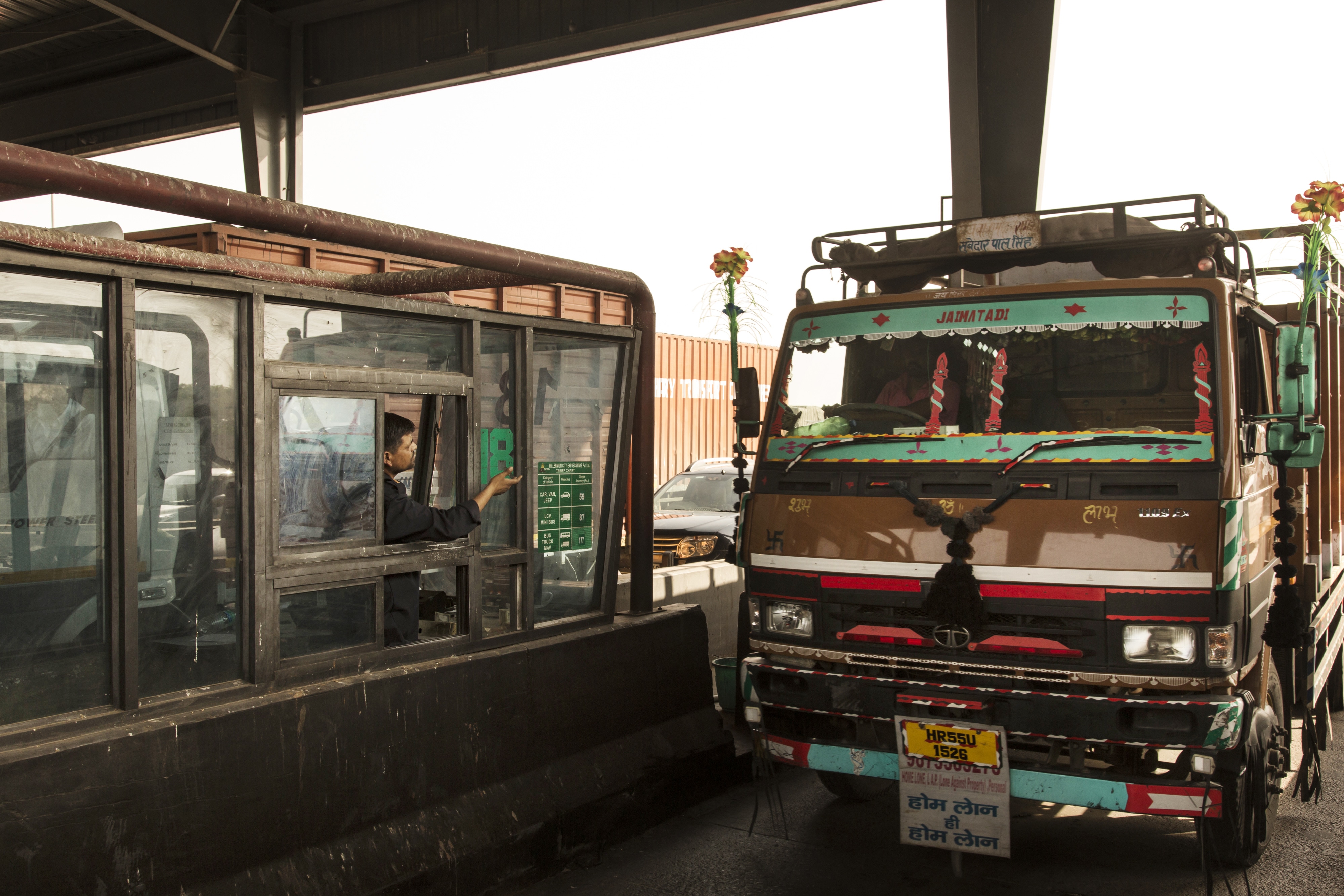
The revenue department is planning to integrate e-way bill with The National Highways Authority of India's FASTag mechanism and Delhi-Mumbai Industrial Corridor's Logistics Data Bank services, to facilitate faster movement of goods and check the Goods and Service Tax evasion.
The proposal, according to officials, will improve operational efficiencies across the country's logistic landscape.
Currently, lack of harmonisation under the "track and trace" mechanism in terms of sharing information among different agencies is affecting the ease of doing business in the country. Besides, it is also impacting the logistic costs of the companies.
The proposal, being worked out by the revenue department, will also help in preventing GST evasion by unscrupulous traders who take advantage of the loopholes in the supply chain, an official told PTI.
Touted as an anti-evasion measure, e-way bill system was rolled out on April 1, for moving goods worth over Rs 50,000 from one state to another. The same for intra or within the state movement was rolled out in a phased manner from April 15.
Transporters of goods worth over Rs 50,000 would be required to present e-way bill during transit to a GST inspector, if asked.
"The integration of the e-way bill system with FASTag and Logistics Data Bank is expected to help boost tax collections by clamping down on trade that currently happens on cash basis," the official said.
NHAI has put in place the FASTag system for collection of toll electronically on national highways. FASTag also offers non-stop movement of vehicles through toll plazas.
Integration of e-way bill with FASTag will help revenue authorities track the movement of vehicles and ensure that they are travelling to the same destination as the transporter or the trader had specified while generating the e-way bill.
It will also help the suppliers locate goods through the e-way bill system. Transporters, too, would be able to track their vehicles through SMS alerts that would be generated at each toll plaza.
Similarly, Delhi-Mumbai Industrial Corridor's container tracking services, also called LDB programme, would be integrated with the e-way bill to improve the logistics ecosystem.
The official said that the implementation of the proposal would require inter-ministerial coordination as integration would have several operational and technical challenges.
The new indirect tax regime GST was rolled out on July 1, 2017. With GST systems now stabilising, the focus of the Central Board of Indirect Taxes and Customs is now on increasing compliance and checking evasion.
The government has also set up the Directorate General of GST Intelligence to investigate cases of tax evasion and conduct search and seizure operations under the GST Act, and erstwhile the Excise and Service Tax Act.

-
Signature Play: The Classic Cocktail Is Dead. Or Is It?

Classic cocktails are disappearing from India's cocktail menus. But they're still being ordered, taught to bartenders and borrowed from. So, who's really having the last drink?
-
A New Samvat Wishlist: Inclusive Prosperity And Human Development
India has strengthened its economic foundations through infrastructure, digital access and enterprise. Its next growth chapter must deepen productivity, create better livelihoods and widen participation in prosperity.
-
Love, Sex Aur Dhokha: The Audacious Plot To Spy On Jensen Huang
A Taipei dinner, a Singapore chip buyer and a suspected Chinese asset: inside the alleged spy operation that got close to NVIDIA's Jensen Huang.
-
Ten Things I Learnt This Samvat
Patience can be a trap. Cheap stocks can stay cheap. Leverage can wipe you out. What did Samvat 2082 teach us? Niraj Shah writes on 10 lessons from the year gone by.
-
Talking Points This Week: Tech Nerves, FII Buying, And A Faraway Banking Shock
The global markets are not shining this Diwali. The exception in the large markets is, India.
-
Midterm Rally Lasted A Day. The Hard Reality Of A Divided US May Last Two Years | Opinion
Between a contested AI boom, a debt ceiling that arrives in 2027 and a president with every incentive to act alone, the next two years may prove more volatile than the first day's rally suggests.
-
Blue Wave Will Derail the AI Trade but Won't Dismantle the AI Era | Unhedged Position
The Democrats' sweep of the US Congress will see politics collide with economic forces both over the long and short term.
-
It's Time To Take The GST Council's Bet On Trust Global
Payment records can prove India's services exports, and clear, proportionate rules can bring foreign digital sellers into the tax net.
-
Opinion | India at 38: From Innovation Overperformer to Innovation Powerhouse
India now has 453 VC-backed deep science startups, 18 of them late-stage, after 117 percent growth since 2020. Laurus Labs, at USD 9.3 billion, is the most valuable deep science company in any middle-income economy outside China.









