RBI Revises Guidelines For Banks Issuing Irrevocable Payment Commitments Under T+1 Settlement
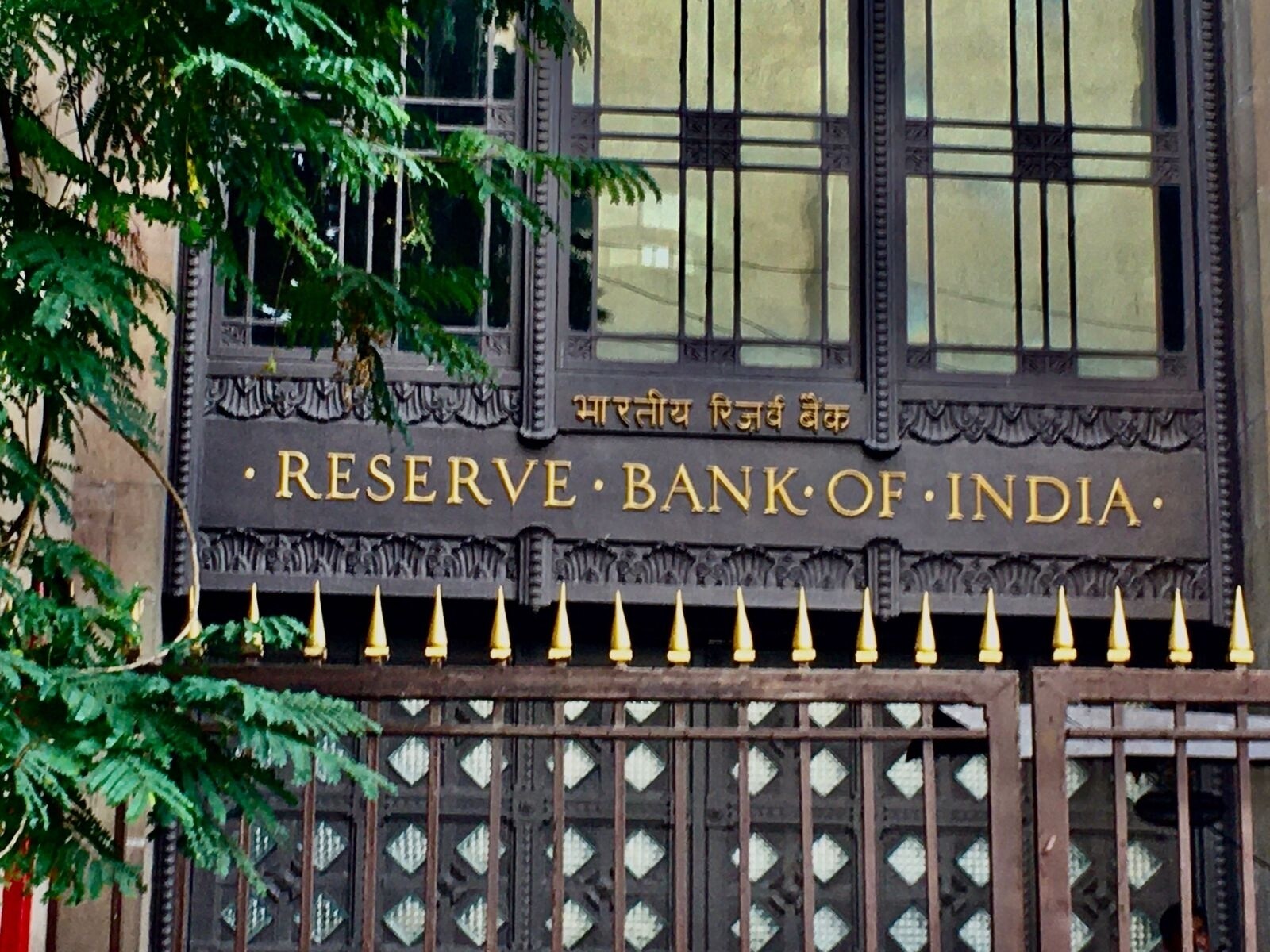
The Reserve Bank of India has issued instructions for custodian banks who issue irrevocable payment commitments to stock exchanges, on behalf of mutual funds and foreign institutional investors. The changes in the directions are based on T+1 settlement for equities.
Irrevocable payment commitments are defined as an obligation on the part of credit institutions to pay their contributions in the future, through a contract signed between the financial arrangement and an institution that opts for the IPC.
Under the guidelines, RBI states that the custodian banks, who receive securities as payout in settlement, can only issue IPCs.
However, if the transactions are pre-funded—meaning the settlement is through clearing rupee funds available in the customer's account or in case of foreign exchange deals, the bank's nostro account has been credited before the issuance of the IPC—the clause is not applicable.
A Nostro account is one that a bank holds with an overseas lender, which is denominated in the currency of that country. Such accounts help banks facilitate fund flows for international trade.
Further, the maximum intraday risk to the custodian banks issuing IPCs would be considered as capital market exposure at 30% of the settlement amount, unlike 50% earlier. This is based on the assumption of 20% downward price movement of the equities on T+1, with an additional margin of 10% for further downward movement of price, the RBI said.
If the margin is paid in cash, the banks' exposure will be cut by the amount of margin paid. In cases where the margin is paid by permitted securities to mutual funds or foreign portfolio investors, the exposure will be reduced by the amount of margin, after adjusting for a haircut as prescribed by the exchange on the securities accepted as margin.
Banks will also have to maintain capital on the outstanding exposure if the transaction is not settled intraday under the T+1 settlement cycle.
The underlying exposure of banks to their counterparties will be subject to RBI's large exposure framework, which caps the sum of all exposure values of a bank to a single counterparty to 20% of the lender's available eligible capital base at all times.
In exceptional cases, bank boards can permit an additional 5% exposure, the central bank had said. For counterparty groups that are connected, the sum of all exposure values of an individual bank cannot exceed 25% of the lender's available eligible capital base at all times, RBI had said.
The RBI's revised instructions for T+1 settlement cycle come into force with immediate effect.

-
We May Need Another Tukaram Mundhe To Fight Air Pollution | The Reason Why

Developers may install basic measures such as sprinklers and green nets, resume work, and continue violating rules when this equipment stops working.
-
Extracting Value From Battery Scrap Could Be Challenging For India | The Reason Why
A discarded lithium-ion battery still contains valuable materials such as lithium, nickel and cobalt. These can be recovered and reused. When such batteries are crushed and shredded, they produce a dark powder called black mass.
-
One El Nino, India Can Handle. Two Could Break The Granary
India's grain stocks can absorb one bad year, but a second El Nino could drain the buffer in two to three years, economists say.
-
India's Troika Of Good Luck | Joining The Dots
As Jensen Huang's exit drags Nvidia down, a cooling AI trade and resilient earnings have revived investor interest in India. A likely RBI rate hike looms.
-
Talking Points This Week: Leadership Shock At Nvidia, Earnings Strength, And The Fog Over Hormuz
The Anthropic IPO pricing and first trading day, Nvidia's upcoming earnings, and any fresh signals from Iran will set the tone for the following week.
-
Signature Play: The Classic Cocktail Is Dead. Or Is It?
Classic cocktails are disappearing from India's cocktail menus. But they're still being ordered, taught to bartenders and borrowed from. So, who's really having the last drink?
-
A New Samvat Wishlist: Inclusive Prosperity And Human Development
India has strengthened its economic foundations through infrastructure, digital access and enterprise. Its next growth chapter must deepen productivity, create better livelihoods and widen participation in prosperity.
-
Love, Sex Aur Dhokha: The Audacious Plot To Spy On Jensen Huang
A Taipei dinner, a Singapore chip buyer and a suspected Chinese asset: inside the alleged spy operation that got close to NVIDIA's Jensen Huang.
-
Ten Things I Learnt This Samvat
Patience can be a trap. Cheap stocks can stay cheap. Leverage can wipe you out. What did Samvat 2082 teach us? Niraj Shah writes on 10 lessons from the year gone by.
-
Talking Points This Week: Tech Nerves, FII Buying, And A Faraway Banking Shock
The global markets are not shining this Diwali. The exception in the large markets is, India.









