India Seeks to Deepen Forex Markets With Onshore NDFs
(Bloomberg) -- India announced steps to deepen its foreign exchange market by allowing local residents trade currency derivatives contracts popular in the offshore market, according to the central bank.
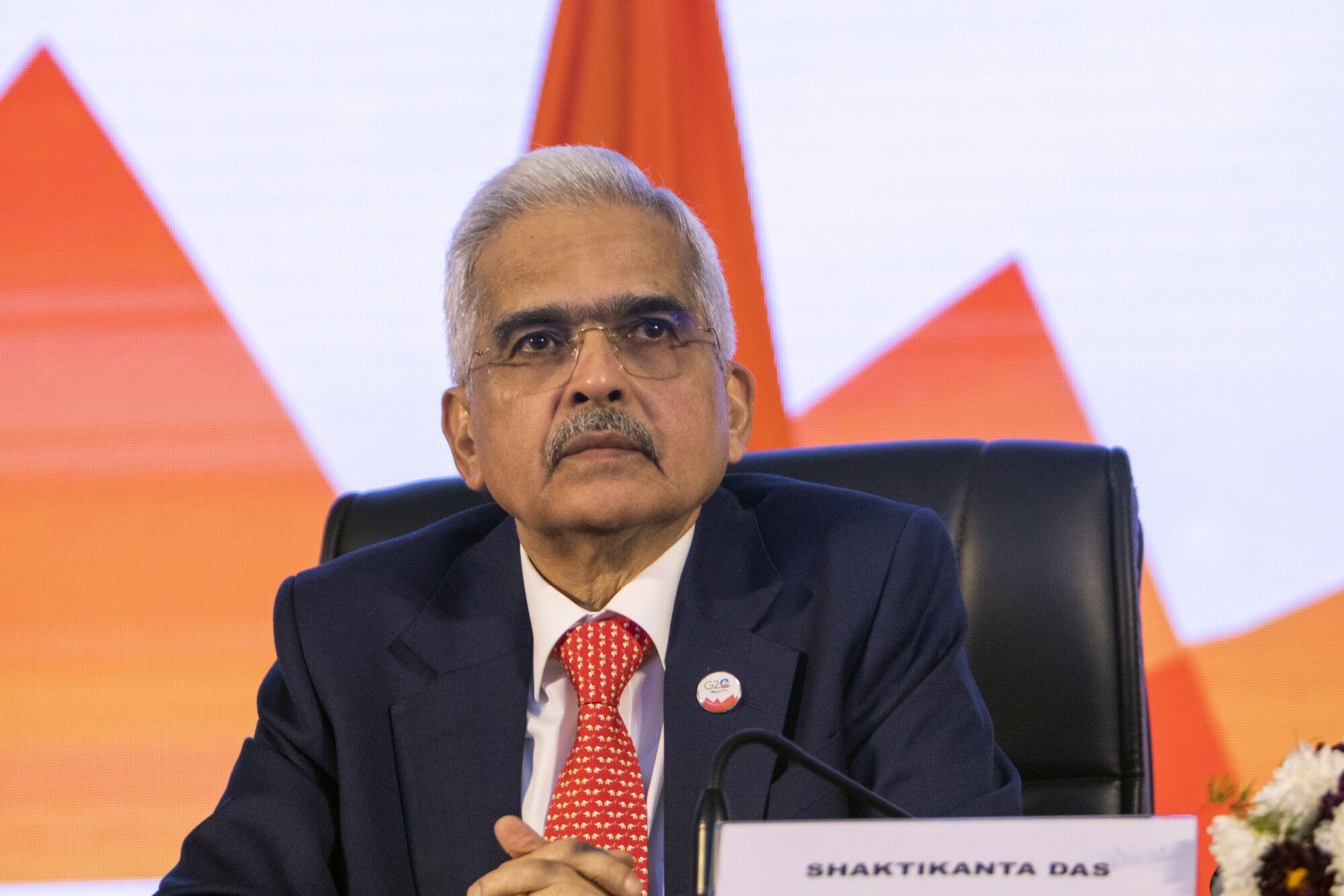
Local lenders with a so-called IFSC Banking Unit — basically having a unit in the International Financial Services Centre currently in GIFT City in the western state of Gujarat — will be permitted to offer non-deliverable forwards to residents onshore, Reserve Bank of India Governor Shaktikanta Das said in his policy speech Thursday. That will enable banks to offer enhanced currency hedging opportunities to their customers.
Banks were earlier allowed to trade such contracts with foreign entities and between themselves in the IFSC in 2020, according to the RBI. The current move widens it to include local players.
“What this will do is boost the onshore-offshore arbitrage in a big way,” said Anindya Banerjee, currency strategist at Kotak Securities Ltd. “The secondary impact is on hedging, this will now give options to the corporates that they can simply hedge and not take or give delivery.”

The rupee rose 0.1% to 81.92 per dollar after falling by a similar margin earlier.
The banks will have the flexibility of settling their transactions with non-residents and with each other in foreign currency or in rupees while transactions with residents will be mandatorily settled in rupees, the RBI said.
The move is another example of India's continued financialization — the growing sophistication of financial markets in the world's fastest-growing major economy. India began liberalizing its economy in the 1990s but has kept a relatively tight rein on currency trading for both local and foreign investors.
Non-deliverable forwards, or NDFs, are derivatives that allow investors hedge exposure to illiquid currencies by agreeing to settle the difference between contract prices and spot rates. They are usually executed offshore.
Valuable Tool
In Asia, domestic NDFs, or DNDFs are only used in volume in Indonesia as a monetary policy tool, while secondary market trading is in the development stage, according to a IMF working paper. In the Philippines, the central bank maintains a little-used DNDF facility, it said.
“It also presents opportunities for the central bank to smooth FX volatility - if the RBI begins intervening in domestic NDF markets,” said Maximillian Lin, Asia rates and currency strategist at Credit Suisse Group AG in Singapore. “That could prove to be a valuable tool for the RBI to maintain USD/INR stability.”
India's Central Bank Unexpectedly Holds Rate; Bonds Rally
The RBI unexpectedly left interest rates unchanged Thursday as the global banking crisis added uncertainty to its economic outlook, though it pledged to hike again if needed.
--With assistance from Malavika Kaur Makol and Divya Patil.
(Updates with analysts comment in the tenth paragraph, updates prices)
More stories like this are available on bloomberg.com
©2023 Bloomberg L.P.

-
The Economic Imperative: Analysing The Material Driving Force Behind India-Canada Strategic Reset

This economic complementarity is further reinforced by deep institutional investment ties and talent mobility, which form the bedrock of the bilateral framework.
-
Medicine Pricing: Where Must Profit Stop?
India must confront excessive margins, hidden incentives and regulatory gaps that threaten the integrity of medicine.
-
Why Amazon And Flipkart Are Struggling To Beat Meesho In India's Smaller Cities
With 274 million users and lowest-cost logistics, Meesho is defending its value commerce crown against giants like Amazon and Flipkart.
-
High US Salaries, No Green Card Certainty: The Financial Calculation Facing Indian H-1B Families
The suspension of PERM processing at eight technology employers does not cancel existing H-1B visas. What it does is force a question many Indian families have been avoiding: is the US salary worth tying your career and family plans to one employer?
-
Swiggy vs Eternal: Food Delivery's Two Rivals Are No Longer In The Same Race
Eternal is building a private AI assistant, dark.ai. Swiggy is still working out how to make Instamart pay, with an operating loss of Rs 895 crore in the July-September quarter while Blinkit stayed profitable.
-
Where You Live Shapes How You Get To Work | The Reason Why
Two-wheelers are the most popular way to get to work in India, accounting for nearly 43% of workplace commutes.
-
Unhedged Position: Can India See An Indonesia-Style Time Correction?
The Nifty is trading below levels it first clocked in 2024. Is there, then, as I have suggested in the headline, potential that the current time correction drags on painfully for the next three-five, even ten years?
-
Navigating Friction And Energy Realities: An Analysis Of Marco Rubio's October Visit To India
Occurring at a critical juncture marked by stalled trade negotiations and escalating geopolitical pressures over global energy supplies, the visit offers a profound window into modern US-India relations.
-
India Exports Capital. Why Not Export Trusteeship?
The big question, then, is whether India can build an institution that global borrowers, investors, banks, and lawyers can trust, even without an Indian connection.
-
France's Economy & Politics Are In Crisis | The Reason Why
Let's look at how the French economy and politics evolved under Nicolas Sarkozy, Franois Hollande and Emmanuel Macron.










