RBI Monetary Policy Expectations: Changes To CPI, GDP Growth Projections Unlikely
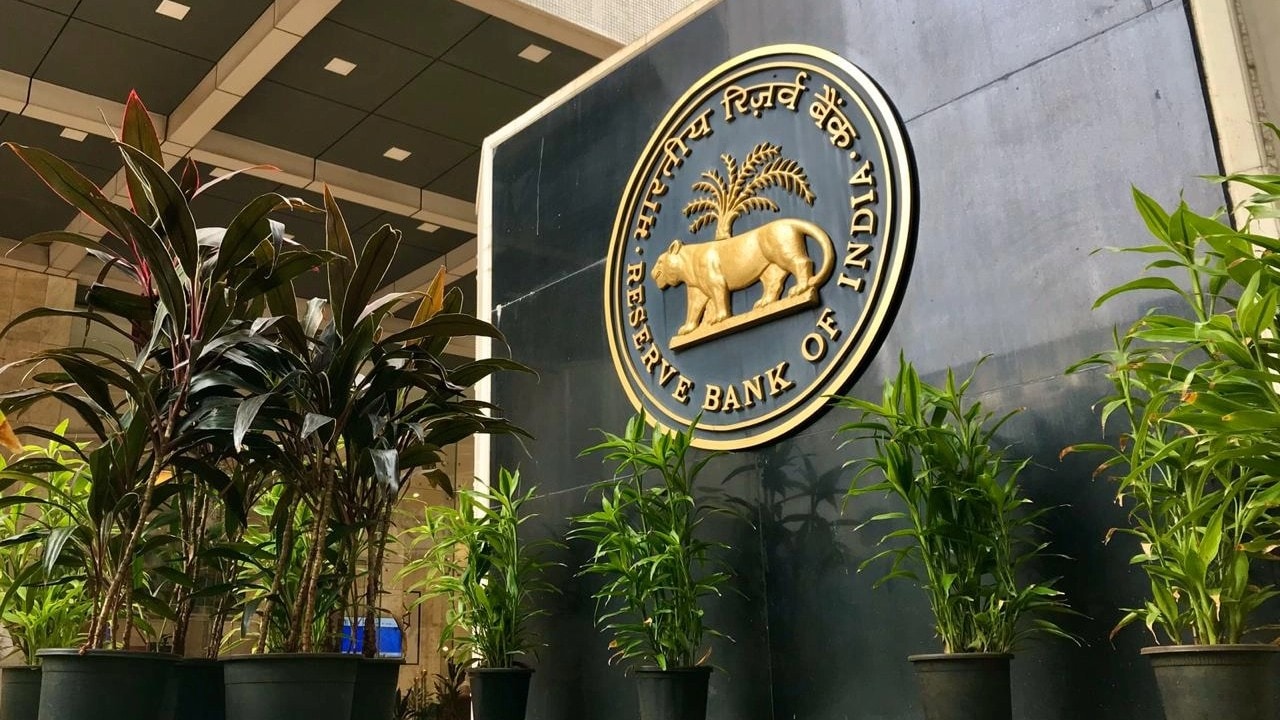
The Reserve Bank of India is unlikely to tinker with projections for consumer price-indexed inflation and GDP growth in the upcoming policy as it awaits more data, according to a person at the central bank with knowledge of the matter.
The RBI has projected consumer inflation at 5.3% for fiscal 2023–24 as it awaits cues from monsoon trends and external factors like crude oil production, the person said on the condition of anonymity.
If statistical adjustments, including conversations with the National Statistical Office on the free food grain programme, play out positively, then the actual consumer price index may be lower than projected, the person said. But it may not be appropriate to lower estimates just yet with so many variables still unknown, the person said.
According to the RBI's projections, the CPI is seen at 5% in April–June, 5.4% in July–September, 5.4% in October–December, and 5.6% in January–March 2024, with the risks evenly balanced.
The RBI and the NSO had discussed the need to find a better methodology to handle anomalies in data, such as the free food grain programme, the person quoted above said.
In January and February, the CPI inflation was at 6.52% and 6.44%, respectively, well above the 5.72% in December.
This was largely on account of the NSO taking out the free food grain programme from the calculations and redistributing its weight across all other CPI constituents, according to the person quoted above. However, as these constituents had an upward bias, the methodology led to a higher CPI print.
The conversation between the RBI and the NSO is on in this regard; there is a need to ensure the CPI prints reflect rises or falls in inflation accurately, the person said.
GDP Growth Estimates
The RBI is also expected to maintain its growth forecast of 6.4% for fiscal 2024 when it announces its latest projections along with the Monetary Policy Committee's decision on Thursday. The RBI will stick to a 6.4% GDP growth forecast as there is no case to revisit that projection yet, the person quoted earlier said.
According to the February policy, the RBI estimates the gross domestic product will grow 6.4% for 2023–24. It estimates that the April–June GDP growth will be 7.8%, with July–September at 6.2%, October–December at 6.0%, and 5.8% for January–March 2024. The risks are broadly balanced, with the RBI flagging the pickup in domestic business activity and credit growth and the revival in demand in constant-intensive sectors as positives. However, it mentioned the slowdown in the global economy and its impact on exports as a downside risk.
The World Bank and the Asian Development Bank lowered their 2023–24 GDP projections for India on Tuesday. According to the World Bank, India's GDP is now expected to grow at 6.3%, down from the 6.6% it had projected in December. The ADB has reduced its GDP growth projection to 6.4%, sharply lower than its previous estimate of 7.2%.
The GDP and CPI projections from the RBI are central to the MPC's deliberations on future monetary policy actions. This is especially true for the CPI, as the inflation-targeting mandate of the MPC specifically states that retail inflation must be maintained in a 2–6% band, with 4% as the mid-point.
In 2022, when inflation exceeded the upper band of 6% for three consecutive quarters, the RBI had to write a letter to the government explaining the failure to stick to the mandate.

-
The Economic Imperative: Analysing The Material Driving Force Behind India-Canada Strategic Reset

This economic complementarity is further reinforced by deep institutional investment ties and talent mobility, which form the bedrock of the bilateral framework.
-
Medicine Pricing: Where Must Profit Stop?
India must confront excessive margins, hidden incentives and regulatory gaps that threaten the integrity of medicine.
-
Why Amazon And Flipkart Are Struggling To Beat Meesho In India's Smaller Cities
With 274 million users and lowest-cost logistics, Meesho is defending its value commerce crown against giants like Amazon and Flipkart.
-
High US Salaries, No Green Card Certainty: The Financial Calculation Facing Indian H-1B Families
The suspension of PERM processing at eight technology employers does not cancel existing H-1B visas. What it does is force a question many Indian families have been avoiding: is the US salary worth tying your career and family plans to one employer?
-
Swiggy vs Eternal: Food Delivery's Two Rivals Are No Longer In The Same Race
Eternal is building a private AI assistant, dark.ai. Swiggy is still working out how to make Instamart pay, with an operating loss of Rs 895 crore in the July-September quarter while Blinkit stayed profitable.
-
Where You Live Shapes How You Get To Work | The Reason Why
Two-wheelers are the most popular way to get to work in India, accounting for nearly 43% of workplace commutes.
-
Unhedged Position: Can India See An Indonesia-Style Time Correction?
The Nifty is trading below levels it first clocked in 2024. Is there, then, as I have suggested in the headline, potential that the current time correction drags on painfully for the next three-five, even ten years?
-
Navigating Friction And Energy Realities: An Analysis Of Marco Rubio's October Visit To India
Occurring at a critical juncture marked by stalled trade negotiations and escalating geopolitical pressures over global energy supplies, the visit offers a profound window into modern US-India relations.
-
India Exports Capital. Why Not Export Trusteeship?
The big question, then, is whether India can build an institution that global borrowers, investors, banks, and lawyers can trust, even without an Indian connection.
-
France's Economy & Politics Are In Crisis | The Reason Why
Let's look at how the French economy and politics evolved under Nicolas Sarkozy, Franois Hollande and Emmanuel Macron.










