Public Sector Banks Write Off A Fourth Of Their Bad Loans In FY19
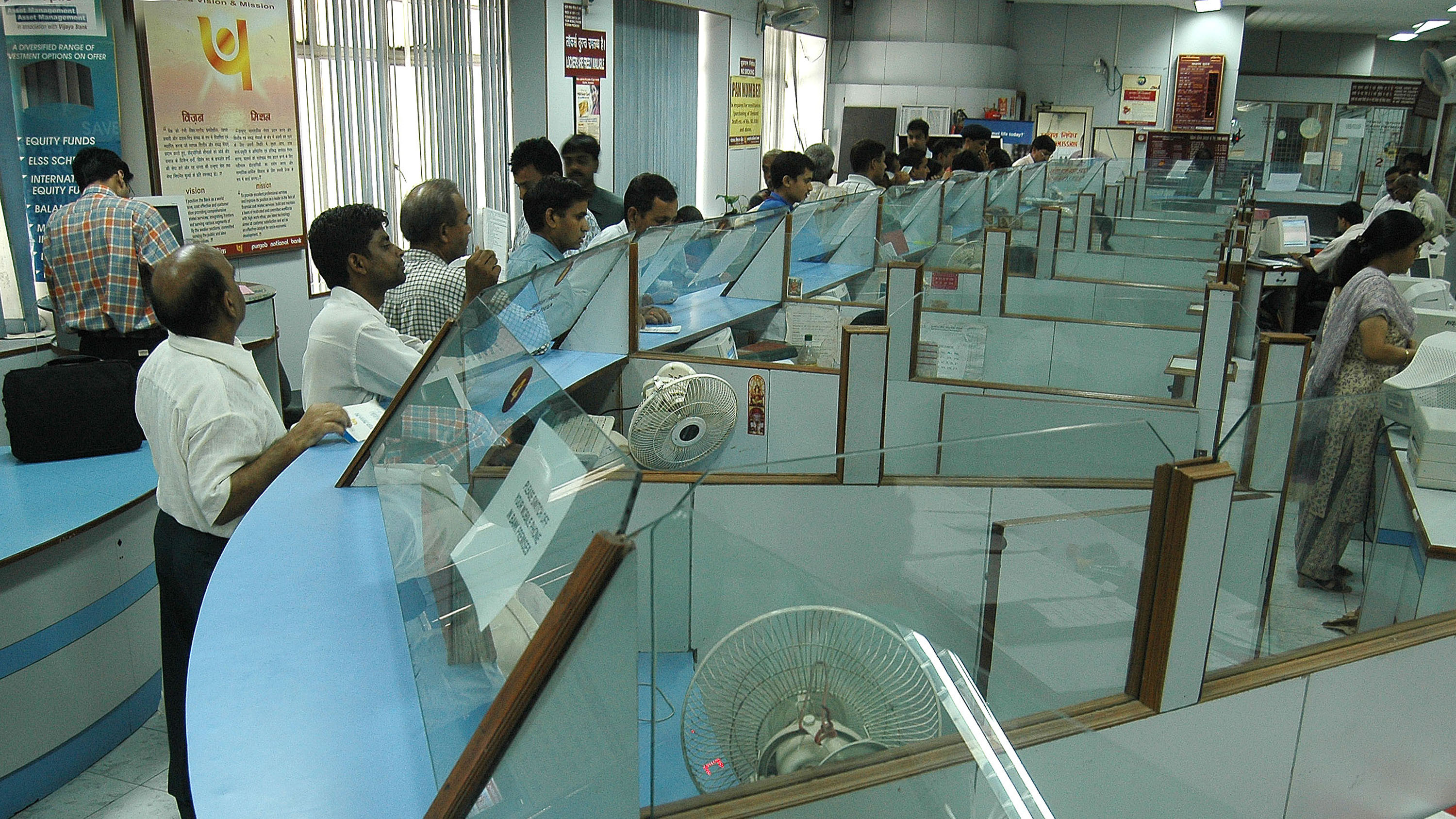
Public sector banks have written off bad loans worth Rs 1.94 lakh crore in the year ended March 2019, according to data compiled by BloombergQuint.
Such write-offs, referred to by banks as technical write-offs, allow banks to clean up their books after these loans are fully provided for. However, they also suggest a low probability of recovery from these loans.
The quantum of loans written off in FY19 accounted for nearly 25 percent of the total gross non-performing assets of these banks in the same period. These write-offs, along with lower accretion of fresh bad loans and some recoveries via the Insolvency and Bankruptcy Code, helped public sector banks report a 12 percent drop in bad loans in FY19, BloombergQuint reported earlier this week.
For the year ended March 2018, public sector banks had reported write-offs worth Rs 1.25 lakh crore, or 14 percent of their bad loan book.
The analysis did not include loans written off by Punjab & Sind Bank, Dena Bank and Vijaya Bank. While Punjab & Sind Bank did not report the amount of loans it had written off, Dena Bank and Vijaya Bank are yet to report their financial results for the January-March quarter.
Why ‘Write Off' Bad Loans?
India's largest lender, State Bank of India, accounted for nearly Rs 59,000 crore of the write-offs. This was higher than the Rs 40,000-crore write-offs that the bank made in the year before that, representing about 18 percent of the gross NPAs as on March 31, 2018.
SBI Chairman Rajnish Kumar said the large quantum of write-offs in FY19 was due to three large corporate accounts—Essar Steel Ltd., Bhushan Power & Steel Ltd. and Alok Industries Ltd. These three accounts added about Rs 17,000 crore to the written-off pool. All three accounts are in the final stages of resolution under the IBC but have seen problems owing to judicial delays.
This is only an accounting entry and does not mean that the bank will not follow up on recovering these loans, Kumar had told BloombergQuint in an interview. Kumar said the benefit of moving accounts off the balance sheet, or “below the line” is that the provisions held against the account can be written back to the profit pool, once the recovery in the account is complete.
Write-off by banks, particularly those of corporate loans, often generate controversy because they are incorrectly interpreted as loan waivers. Kumar said the terminology around such write-offs needs to be changed.
If out of this Rs 11,000 crore we recover only Rs 9,000 crore, then the remaining amount is the actual write-off in the account. I think we need to find a better word to explain technically written off accounts.Rajnish Kumar, Chairman, SBI
Another senior banker, speaking on conditions of anonymity, said if a bank were to continue holding the asset on its balance sheet, the provision will have to be renewed every year, since it is part of a reserve they hold against bad and doubtful debts. A technical write-off allows banks to appropriate fully against an asset, which is a one time impact on its earnings.
Large public sector banks such Bank of Baroda, Punjab National Bank and IDBI Bank Ltd., which all reported losses in the January-March quarter also reported a large quantum of write-offs.
The Message In Write-Offs
While banks are perfectly justified in writing off loans which they have provided for, the need for such write-offs suggests that the resolution and recovery of bad loans is slow. Typically, write-offs will happen only after accounts have been classified as bad for some time and the prospects of immediate recovery are uncertain.
In the current context, recoveries have been delayed due to the extension of timelines under the IBC.
For instance, the Essar Steel resolution process has gone beyond the 500-day mark, even though the IBC mandates a 270-day period for such a process. Similarly, the National Company Law Appellate Tribunal is yet to announce its final decision regarding JSW Steel Ltd. taking over the assets of Bhushan Power & Steel. The Ahmedabad bench of the National Company Law Tribunal is also yet to approve a bid submitted by Reliance Industries Ltd. and JM Financial ARC for Alok Industries Ltd.
Banks are confident that the recoveries in these accounts will come in during the current financial year, which will aid them in writing back provisions held against these accounts. This, the bankers say, will aid profitability in FY20.
Analysts, however, are cautious.
“We would take some of this optimism on recovery with a pinch of salt. The recovery on some of the bad loans looks difficult. In cases where there was bad underwriting or where the owners had not put in enough equity, banks are likely to take large haircuts and the eventual recovery will be lower,” said Lalitabh Shrivastawa, banking analyst at Sharekhan by BNP Paribas. “For other accounts where there are judicial delays it will be with lower haircuts, since there is some visibility on recovery,” he said.

-
Getting To Work Costs Women More | The Reason Why

It is not just about women paying more than men. It is about women paying much more in cities than in villages.
-
AI Bias In Investing Cannot Be Eliminated, But It Can Be Governed
Framing is a particularly important example as identical financial information presented in terms of gains rather than losses can lead an LLM to reach a different assessment.
-
Joining The Dots | Dark Skies, Steady Diya: Why Hope Holds This Diwali
With war, a weak rupee and foreign outflows weighing on sentiment, policymakers at the NDTV World Summit and market veterans at NDTV Profit Ignite: Diwali Edition offered the same advice: stay invested and filter out the noise.
-
The Curious Case of Equitas Small Finance Bank And A CEO Who Quit For Stock
PN Vasudevan believes persistent investor concerns over a perceived conflict of interest had become a governance overhang on Equitas Small Finance Bank's stock, even as the lender improved profitability and asset quality.
-
Talking Points This Week: AI Cash Burn, A Tiger Comeback And An India That Still Finds Its Own Path
India is not immune to higher oil or tighter global liquidity, yet its earnings base is broader, its domestic policy levers are still available.
-
Foreign Investors Own Half Of HDFC Bank and ICICI Bank. An LTCG Cut Could Matter Most Here
Foreign portfolio investors have US$115 billion parked in HDFC Bank, ICICI Bank. If the government cuts long-term capital gains tax, Jefferies says returning foreign money could land here first.
-
'Never Seen This Level Of Negativity': Sandeep Tandon Says The Next Rally May Be Closer Than You Think
Veteran investor Sandeep Tandon says foreign selling is easing, large-caps are due a comeback and mid-caps are crowded, while he turns positive on gold, power and pharma this Diwali.
-
Indians Stay With Family, Not In Hotels | The Reason Why
India still lacks enough clean, reliable and affordable hotels for budget-conscious travellers.
-
The Economic Imperative: Analysing The Material Driving Force Behind India-Canada Strategic Reset
This economic complementarity is further reinforced by deep institutional investment ties and talent mobility, which form the bedrock of the bilateral framework.
-
Medicine Pricing: Where Must Profit Stop?
India must confront excessive margins, hidden incentives and regulatory gaps that threaten the integrity of medicine.










