MPC Preview: Rupee’s Slump Complicates RBI’s Path To Rate Cut
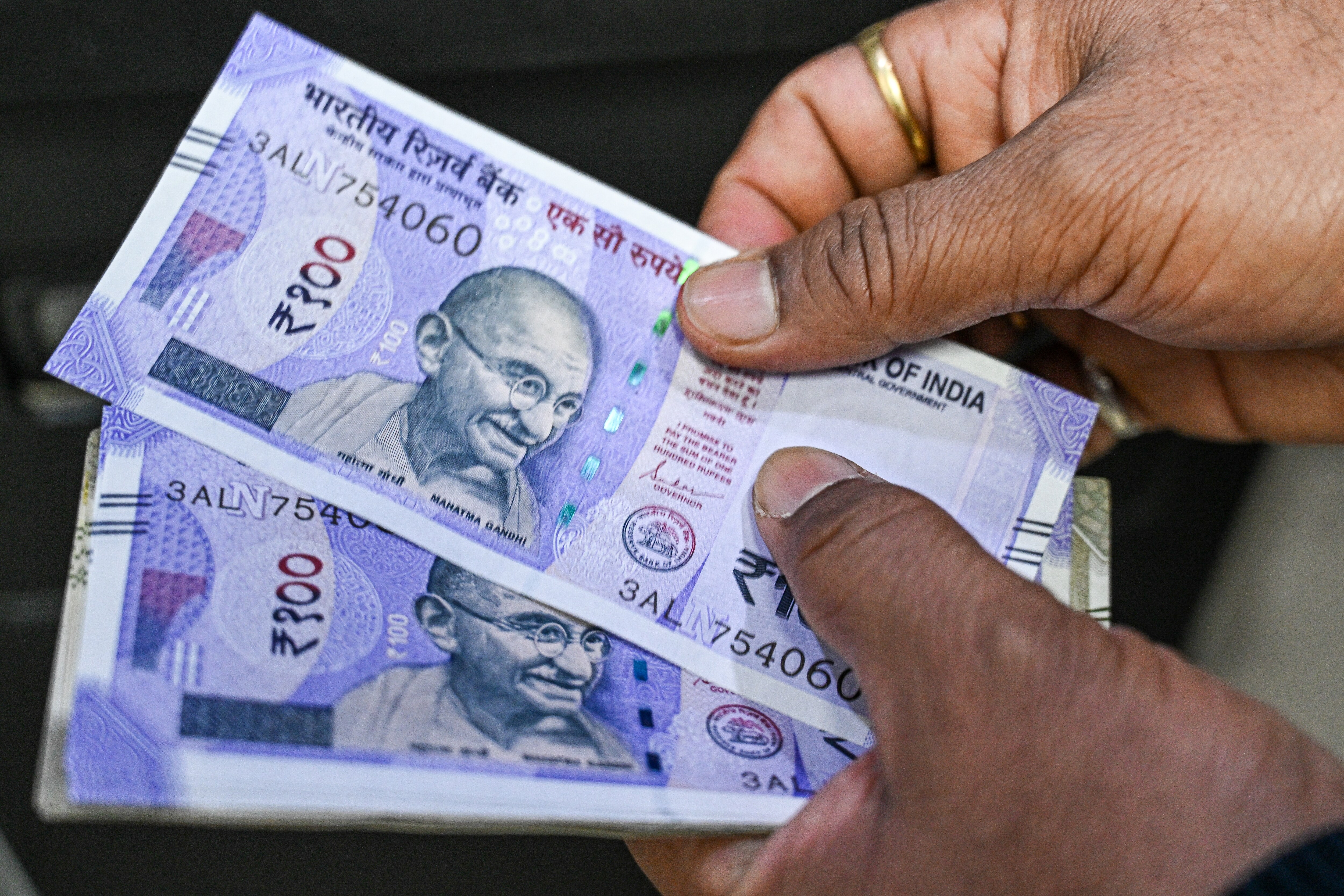
The Reserve Bank of India's last interest rate decision of the year is proving to be one of its trickiest, with policymakers having to weigh up record low inflation against a plunging currency and 8%-plus economic growth.
A majority of the 44 economists surveyed by Bloomberg expect the central bank to cut its benchmark repurchase rate by a quarter point to 5.25% on Friday given inflation is well below the 4% target. But with the economy expanding at a rapid clip and the rupee dropping to a record low below 90 to the dollar, there are plenty of reasons for the RBI to pause as well — as forecast by Citigroup Inc., Standard Chartered Plc and State Bank of India.
After keeping rates unchanged in the past two policy meetings, Governor Sanjay Malhotra opened the door to rate cuts last month, saying there was “definitely scope” for rates to come down. Since then, however, official data showed the economy is proving resilient in the face of high US tariffs, expanding at a faster-than-expected pace last quarter, while the rupee has plummeted.
As a result, rate cut expectations “appear to have faded,” and the RBI seems to be entering a phase of prolonged pause, said Soumya Kanti Ghosh, chief economic adviser at State Bank of India and a member of the Prime Minister's Economic Advisory Council.

The rupee's slide since the last MPC meeting is making Friday's decision more difficult to predict. The RBI has gone from vigorous defense of the currency to allowing it to breach 90 to the dollar this week amid uncertainty about a US-India trade deal. That makes this week's policy decision a “nail biter,” Nomura Holdings economists wrote in a note.
The rupee has slumped 4.8% against the dollar this year, making it Asia's worst performing currency. It strengthened to 89.9362 per dollar in afternoon trade on Thursday after closing at 90.1913 Wednesday.
Some analysts like Kunal Sodhani, head of treasury at Shinhan Bank in Mumbai, argue that an interest rate cut would potentially add further pressure on the currency and may prompt the RBI to keep interest rates steady. Others like Pranjul Bhandari at HSBC Plc, say a gradually weakening rupee is “the best shock absorber for high tariffs.”
Here are some of the key things to watch out for in Malhotra's televised speech at 10 a.m. local time on Friday:
Growth, Inflation Forecasts
The RBI will likely revise both its inflation and growth forecasts for the current financial year through March, economists said.
Inflation projections may be lowered to about 1.8%-2% to reflect softer-than-expected prints recently, according to Indranil Pan, an economist at Yes Bank Ltd. Inflation slid to 0.25% in October, the lowest since the current series began in 2012. The RBI has consistently overestimated inflation this year, with its projections well above market consensus as well, putting its forecasting model under scrutiny.
GDP forecasts may be raised by around 20-40 basis points from the current 6.8% estimate, Pan said.
Rupee's Plunge
The rupee has borne the brunt of the punitive US tariffs and equity outflows. Traders will watch for the governor's comments on the currency and any steps to boost inflows.

The RBI governor may call for calm and stress that the central bank is not opposed to market forces and acts only to curb volatility, said Dhiraj Nim, a currency strategist at Australia and New Zealand Banking Group in Mumbai. Malhotra is also likely to signal that foreign exchange reserves are adequate to protect the currency.
Bonds and Liquidity
The bond market is pricing in about 19 basis points of further easing over the next two meetings in December and February, according to Nomura.
“Given current pricing and market positioning, we believe risks are skewed towards higher front-end rates this week and following the RBI decision,” said Nathan Sribalasundaram, a rates strategist at Nomura. “Either way, we expect the market to move towards the view that the easing cycle is over.”
Yields, specially at the long end, have risen in recent weeks amid weak demand from long-term investors such as insurance and pension funds. The yield on the 30-year paper is up over 25 basis points since mid-October, while the 10-year yield has risen about 5 basis points.
Traders are also watching for comments on liquidity and potential open market bond purchases. Banking system liquidity has moderated notably since September, thanks to sizable currency intervention by the RBI.
Liquidity could fall as low as 0.2%-0.3% of net deposits by end-March in the absence of any new primary infusion by the RBI, said Madhavi Arora, lead economist at Emkay Global Financial Services Ltd. The RBI may need to inject 2 trillion rupees of liquidity, primarily via OMO purchases over the rest of the fiscal year, she said.

-
The Economic Imperative: Analysing The Material Driving Force Behind India-Canada Strategic Reset

This economic complementarity is further reinforced by deep institutional investment ties and talent mobility, which form the bedrock of the bilateral framework.
-
Medicine Pricing: Where Must Profit Stop?
India must confront excessive margins, hidden incentives and regulatory gaps that threaten the integrity of medicine.
-
Why Amazon And Flipkart Are Struggling To Beat Meesho In India's Smaller Cities
With 274 million users and lowest-cost logistics, Meesho is defending its value commerce crown against giants like Amazon and Flipkart.
-
High US Salaries, No Green Card Certainty: The Financial Calculation Facing Indian H-1B Families
The suspension of PERM processing at eight technology employers does not cancel existing H-1B visas. What it does is force a question many Indian families have been avoiding: is the US salary worth tying your career and family plans to one employer?
-
Swiggy vs Eternal: Food Delivery's Two Rivals Are No Longer In The Same Race
Eternal is building a private AI assistant, dark.ai. Swiggy is still working out how to make Instamart pay, with an operating loss of Rs 895 crore in the July-September quarter while Blinkit stayed profitable.
-
Where You Live Shapes How You Get To Work | The Reason Why
Two-wheelers are the most popular way to get to work in India, accounting for nearly 43% of workplace commutes.
-
Unhedged Position: Can India See An Indonesia-Style Time Correction?
The Nifty is trading below levels it first clocked in 2024. Is there, then, as I have suggested in the headline, potential that the current time correction drags on painfully for the next three-five, even ten years?
-
Navigating Friction And Energy Realities: An Analysis Of Marco Rubio's October Visit To India
Occurring at a critical juncture marked by stalled trade negotiations and escalating geopolitical pressures over global energy supplies, the visit offers a profound window into modern US-India relations.
-
India Exports Capital. Why Not Export Trusteeship?
The big question, then, is whether India can build an institution that global borrowers, investors, banks, and lawyers can trust, even without an Indian connection.
-
France's Economy & Politics Are In Crisis | The Reason Why
Let's look at how the French economy and politics evolved under Nicolas Sarkozy, Franois Hollande and Emmanuel Macron.










