Most States Likely To Meet Capex Targets For FY22: TV Somanathan
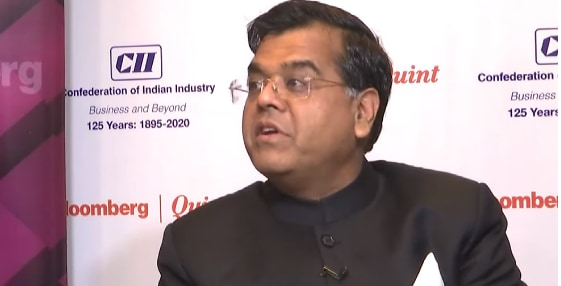
As economic growth recovers after the Covid-19 pandemic, the central government is keen on ramping up capital expenditure by states.
“Most states (are) likely to meet (capex targets) as they're progressive. You can meet it in subsequent quarters and become eligible (for additional borrowings),” Finance and Expenditure Secretary TV Somanathan told BloombergQuint in an interview. “Central capex is almost right on target.”
As many as seven states were eligible for additional borrowing, amounting to Rs 16,691 crore, after Union Finance Minister Nirmala Sitharaman, earlier this month, reviewed capex spending by states for the first half of the ongoing fiscal. The states were Chhattisgarh, Kerala, Madhya Pradesh, Meghalaya, Punjab, Rajasthan and Telangana.
Explaining the allotment based on capex targets, Somanathan said, “The way the target is figured is that, if you meet 15% in Q1, you immediately become eligible. If you meet a certain percentage in Q2, you become eligible as well. And even if you miss those, you can still become eligible in Q3 if you meet the Q3 target... It's a progressive target which you can become eligible for whenever you hit it.”
The government has targeted Rs 5.54 lakh crore of capex in FY22, according to this year's annual budget. That also includes Rs 40,374 crore in loans. Of the remaining amount, the federal government has spent Rs 2.09 lakh crore during the first six months—or around 41% of its target for FY22.
States Being Conservative?
States, according to a CARE Ratings report dated Nov. 24, may increase their capex only in the last quarter of the fiscal. The report attributed the trend to higher levels of fiscal deficit and debt. The 27 states—the report said citing their budget estimates—already have interest commitment amounting to Rs 4.25 lakh crore for FY22.
Many states are driving back allotted money into treasury bills, dialling up the government's balance with the RBI, Somanathan said.
Somanathan termed it a “mismatch between borrowing and expenditure”. “A lot of expenditure is back-loaded this year,” he said. “Some of the money that has been released to the states comes back immediately as investments in treasury bills…”
The government doubled the tax devolution amount to states to Rs 95,082 crore in November to help them meet their infrastructure needs. Capex spends by states is expected to be reviewed the third time this fiscal in March 2022.

-
Your iPhone Costs 12 Grams Of Gold, A Car About 100. What Does Your Life Weigh?

Measured in rupees, almost everything looks more expensive than it did a generation ago. Measured in grams of gold, a lot of it has become cheaper.
-
Gold Is Rs 22,000 Cheaper Than A Month Ago. Should You Buy Amid The Wedding Season?
Gold's potential slide to $3,500 could save around Rs 4,700 per 10 grams, but a soft inflation print could just as easily push prices back up. One way to split the risk is to buy in parts, some now and the rest after the Fed's Dec. 9 decision.
-
AI Agents Are Gaining Power. Who Governs Them?
Artificial intelligence agents promise to transform productivity by moving machines from assisting decisions to executing them. But as organisations delegate greater authority to these AI-agents, they must first establish who controls that authority and who remains accountable when things go wrong.
-
Why Swapping Your Old Gold Can Trigger A Rs 5 Lakh Tax Bill, And How You Can Avoid It Legally
Swapping old gold for new is taxed as a sale and a fresh purchase. Getting your own gold remade can cut most of that bill, though it has its own costs.
-
The AI Trade is Done. The Real Opportunity for Investors Starts in 2027 | Unhedged Position
As pureplay AI stocks plunge and circular, capex-led financing unwinds, 2027 is set to be a year of reckoning for AI companies. Yet the bust clears the way for a better opportunity for investors in 2027 -- shifting the spotlight from AI builders to the companies using AI.
-
Leadership As Mission: Why The Age Of AI Demands More Human Leadership
Debjani Ghosh examines how AI is changing leadership, arguing that its success must be measured by its impact on people and the accountability of those guiding its use.
-
We May Need Another Tukaram Mundhe To Fight Air Pollution | The Reason Why
Developers may install basic measures such as sprinklers and green nets, resume work, and continue violating rules when this equipment stops working.
-
Extracting Value From Battery Scrap Could Be Challenging For India | The Reason Why
A discarded lithium-ion battery still contains valuable materials such as lithium, nickel and cobalt. These can be recovered and reused. When such batteries are crushed and shredded, they produce a dark powder called black mass.
-
One El Nino, India Can Handle. Two Could Break The Granary
India's grain stocks can absorb one bad year, but a second El Nino could drain the buffer in two to three years, economists say.
-
India's Troika Of Good Luck | Joining The Dots
As Jensen Huang's exit drags Nvidia down, a cooling AI trade and resilient earnings have revived investor interest in India. A likely RBI rate hike looms.









