Maharashtra Budget: Government Offers Sops To Realty, Increases Tax On Auto Fuels
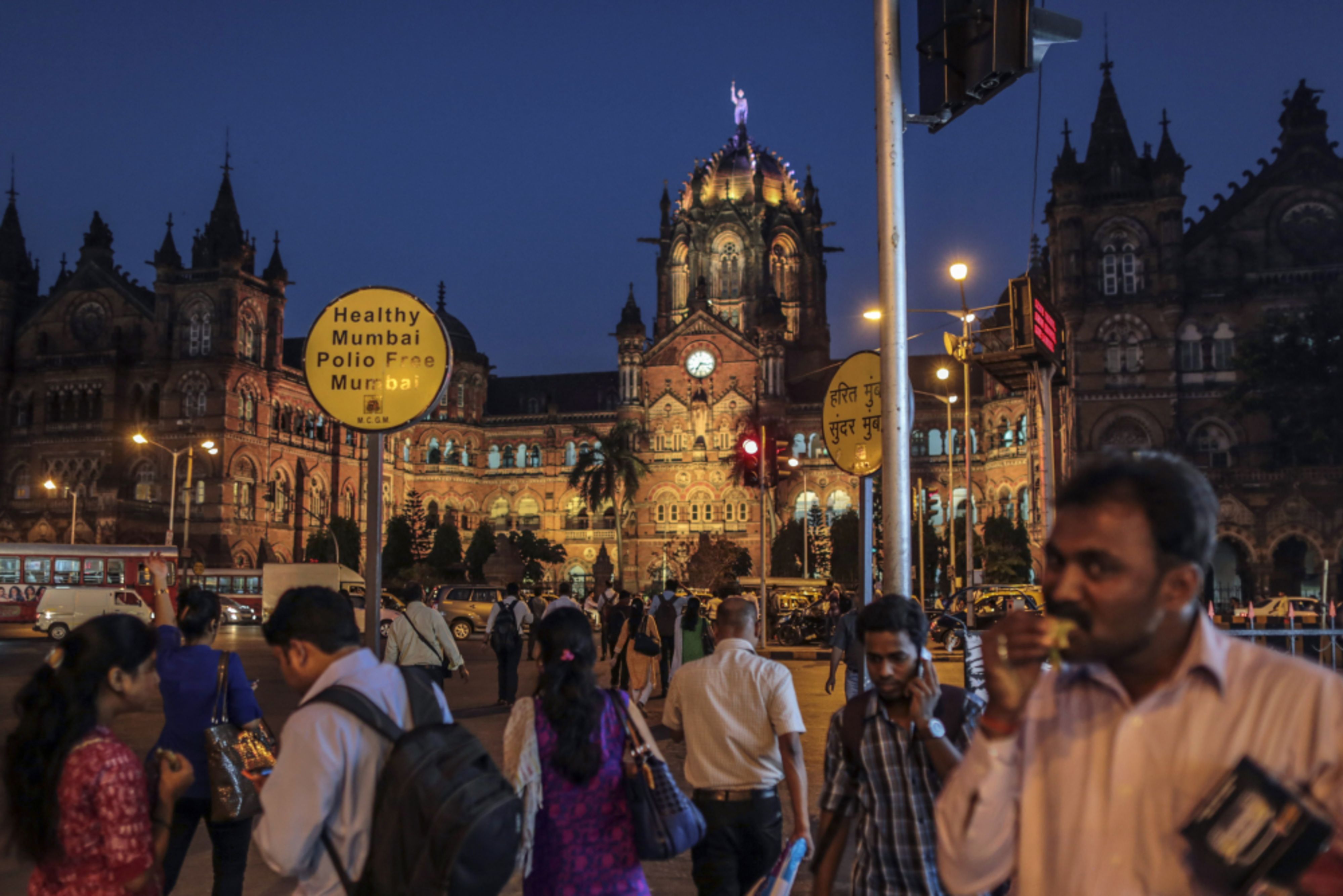
Maharashtra's budget for 2020-21 offers tax sops on real estate registration and electricity even as the fiscal deficit of India's richest state jumped to its highest in at least a decade.
Finance Minister Ajit Pawar, presenting first budget of Shiv Sena-NCP-Congress government in the state, also increase value-added tax on auto fuels by Rs 1 per litre to shore up revenue. He also set aside Rs 23,862.11 crore for agriculture and allied activities as the state continues to battle the agrarian distress.
The state government estimates revenue deficit of Rs 9,511 crore of 0.29 percent of the state gross domestic product in 2020-21. That compares with a revised revenue deficit of Rs 31,443 crore or 1.09 percent in FY20.
- Revenue Expenditure estimate for FY21: Rs 3,56,968 crore
- Revenue Receipt Estimate for FY21: Rs 3,47,457 crore
The budget estimates fiscal deficit at 1.69 percent in FY21. That's lower than the revised estimate of 2.73 percent in 2019-20. According to budget documents, FY20 deficit was the highest since FY09. To be sure, it's still lower than the 3 percent requirement.
Pawar said the economic slowdown has affected Maharashtra as well. He also said the share of central taxes that the Maharashtra expected in accordance with the recommendations of the Fourteenth Finance Commission has come down by Rs 8,453 crore to Rs 36,220 crore in the revised estimates of 2019-20.
Delay in getting the GST compensation from the central government is also making it difficult for timely funding development works, he said. The total outstanding debt and liabilities of the state stood at Rs 4,33,00,901 crore as of January.
The fiscal profile of Maharashtra, the biggest state economy that contributes more than 14 percent to the nation's GDP, has been affected by farm loan waiver and other schemes, Devendra Pant, chief economist at India Ratings, told BloombergQuint. Since FY14, it has had a history of fiscal deficit within the 3 percent. “What it implies is that a large part of deficit and borrowing is used to finance current consumption and capex is less than required.”
“The state should focus on raising revenue so that it can wipe out revenue deficit that will allow them to increase their capital expenditure,” he said. “That will help in the growth of state's economy. Nationally, we are seeing a slowdown in the economy which is also reflected in the growth performance of all most all states.”
Stamp Duty Concession
The state finance minister proposed 1 percent concession in the stamp duty and other related charges applicable on registration of property documents in the Mumbai Metropolitan Region, Pune, Pimpri-Chinchwad and Nagpur for two years. The effective rate will be 5 percent — 4 percent stamp duty and 1 percent metro cess. The move is aimed at countering real estate slowdown.
According to the real estate stakeholder, this deduction will improve the sentiments of the home buyers in both primary as well as secondary market.
The move should push real estate sales, said Niranjan Hiranandani, national president of developers lobby National Real Estate Development Council.
Rajesh Prajapati, managing director of Prajapati Constructions, said, “We expect a significant rise in property transactions not only in the primary market but also in the resale or secondary market. That would increase flow of funds into the real estate sector.”
Power Sops
The minister also proposed reduction in electricity duty on industrial use from 9.3 percent to 7.5 percent of the consumption charges.
The stamp duty and power incentives are expected to cause an yearly revenue shortfall of around Rs 2,500 crore.
To counter that, Pawar proposed to increase value added tax on sale of petrol and diesel by Re 1 per litre. This will bring in additional Rs 1,800 crore, he said.
Other Highlights
- Rs 10,000 crore to complete the incomplete irrigation projects in time bound manner.
- Provision of Rs 200 crore for modernizing bus stations of Maharashtra State Road Transport Corporation.
- Increase in subsidy by 75 paise per unit to powerlooms above 27 horsepower.
- An outlay of Rs 200 crore for Marathwada Water Grid.
- Sports University of international standards to be set up at Shiv Chhatrapati Sports Complex, Pune.
- Establishing a minimum of all-woman police station in each district.

-
The Economic Imperative: Analysing The Material Driving Force Behind India-Canada Strategic Reset

This economic complementarity is further reinforced by deep institutional investment ties and talent mobility, which form the bedrock of the bilateral framework.
-
Medicine Pricing: Where Must Profit Stop?
India must confront excessive margins, hidden incentives and regulatory gaps that threaten the integrity of medicine.
-
Why Amazon And Flipkart Are Struggling To Beat Meesho In India's Smaller Cities
With 274 million users and lowest-cost logistics, Meesho is defending its value commerce crown against giants like Amazon and Flipkart.
-
High US Salaries, No Green Card Certainty: The Financial Calculation Facing Indian H-1B Families
The suspension of PERM processing at eight technology employers does not cancel existing H-1B visas. What it does is force a question many Indian families have been avoiding: is the US salary worth tying your career and family plans to one employer?
-
Swiggy vs Eternal: Food Delivery's Two Rivals Are No Longer In The Same Race
Eternal is building a private AI assistant, dark.ai. Swiggy is still working out how to make Instamart pay, with an operating loss of Rs 895 crore in the July-September quarter while Blinkit stayed profitable.
-
Where You Live Shapes How You Get To Work | The Reason Why
Two-wheelers are the most popular way to get to work in India, accounting for nearly 43% of workplace commutes.
-
Unhedged Position: Can India See An Indonesia-Style Time Correction?
The Nifty is trading below levels it first clocked in 2024. Is there, then, as I have suggested in the headline, potential that the current time correction drags on painfully for the next three-five, even ten years?
-
Navigating Friction And Energy Realities: An Analysis Of Marco Rubio's October Visit To India
Occurring at a critical juncture marked by stalled trade negotiations and escalating geopolitical pressures over global energy supplies, the visit offers a profound window into modern US-India relations.
-
India Exports Capital. Why Not Export Trusteeship?
The big question, then, is whether India can build an institution that global borrowers, investors, banks, and lawyers can trust, even without an Indian connection.
-
France's Economy & Politics Are In Crisis | The Reason Why
Let's look at how the French economy and politics evolved under Nicolas Sarkozy, Franois Hollande and Emmanuel Macron.










