Isabgol Crisis Ahead? How A GST Confusion Could Disrupt Your Daily Fibre
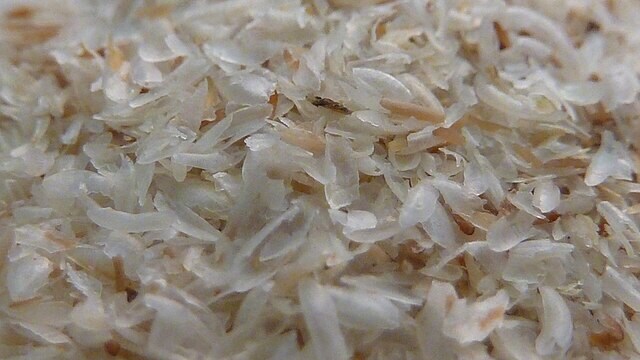
Ambiguity in the classification of Isabgol or psyllium under GST 2.0 has become a looming dark cloud over the heads of thousands of Gujarat farmers after members of the All India Isabgol Processors Association announced that they will halt purchase of seeds from farmers through APMC markets and other sources across India from Oct. 6 onwards, as per Economic Times report.
The members of IPA stated that even after recurring representations since 2017, the government has not issued a clarification on whether 'fresh' and 'dry' Isabgol seeds come under the category of taxable GST goods or can be treated as agricultural products, the report added.
Impact On Fibre Diet?
Isabgol, known as psyllium husk, is a natural source of soluble fibre used in food and health products. It helps regulate digestion by absorbing water and adding bulk to stool, making it a common ingredient in laxatives and high-fibre supplements.
If processors stop purchasing seeds, production of husk could slow down, leading to reduced supply for food and pharmaceutical companies. This could affect the availability of fibre-based products such as health drinks, biscuits, and dietary supplements.
A prolonged disruption might also lead to higher prices for processed Isabgol products in the retail market. However, short-term household use is unlikely to be immediately affected.
Export Strain And Market Impact
The industry, which exports psyllium husk worth more than Rs 3,500 crore per annum, mainly to the US, wishes that the government would stop collecting GST on isabgol seeds, according to ET.
"With tariffs imposed by the US government already hurting our shipments, the prolonged uncertainty over GST has made operations unsustainable", President of IPA, Ashwin Nayak told TOI.
He added that procurement cannot be resumed until government clarifies the category for Isabgol seeds. The confusion and vagueness in the classification has resulted in massive obstruction of funds in GST, building financial stress on top of eroding the industry's competitive position in the export market, TOI cited the processors as saying.
Due to an absence of buyers in the market, Isabgol farmers might face great difficulties in selling their harvest as a consequence of the IMA's decision, the industry players warned.
Moreover, India, which was thus far well positioned in the global market for its psyllium husk exports may also get displaced.
The IPA members told TOI that they have been propelled to take this decision collectively and unanimously after exploring and expending all the routes to have a discussion on the matter with the GST council and authorities.

-
The Economic Imperative: Analysing The Material Driving Force Behind India-Canada Strategic Reset

This economic complementarity is further reinforced by deep institutional investment ties and talent mobility, which form the bedrock of the bilateral framework.
-
Medicine Pricing: Where Must Profit Stop?
India must confront excessive margins, hidden incentives and regulatory gaps that threaten the integrity of medicine.
-
Why Amazon And Flipkart Are Struggling To Beat Meesho In India's Smaller Cities
With 274 million users and lowest-cost logistics, Meesho is defending its value commerce crown against giants like Amazon and Flipkart.
-
High US Salaries, No Green Card Certainty: The Financial Calculation Facing Indian H-1B Families
The suspension of PERM processing at eight technology employers does not cancel existing H-1B visas. What it does is force a question many Indian families have been avoiding: is the US salary worth tying your career and family plans to one employer?
-
Swiggy vs Eternal: Food Delivery's Two Rivals Are No Longer In The Same Race
Eternal is building a private AI assistant, dark.ai. Swiggy is still working out how to make Instamart pay, with an operating loss of Rs 895 crore in the July-September quarter while Blinkit stayed profitable.
-
Where You Live Shapes How You Get To Work | The Reason Why
Two-wheelers are the most popular way to get to work in India, accounting for nearly 43% of workplace commutes.
-
Unhedged Position: Can India See An Indonesia-Style Time Correction?
The Nifty is trading below levels it first clocked in 2024. Is there, then, as I have suggested in the headline, potential that the current time correction drags on painfully for the next three-five, even ten years?
-
Navigating Friction And Energy Realities: An Analysis Of Marco Rubio's October Visit To India
Occurring at a critical juncture marked by stalled trade negotiations and escalating geopolitical pressures over global energy supplies, the visit offers a profound window into modern US-India relations.
-
India Exports Capital. Why Not Export Trusteeship?
The big question, then, is whether India can build an institution that global borrowers, investors, banks, and lawyers can trust, even without an Indian connection.
-
France's Economy & Politics Are In Crisis | The Reason Why
Let's look at how the French economy and politics evolved under Nicolas Sarkozy, Franois Hollande and Emmanuel Macron.










