India’s Exports May Take A $30 Billion Hit On Red Sea Threats
(Bloomberg) -- India may see around $30 billion shaved off its total exports in the current fiscal year, as threats to cargo vessels in the Red Sea lead to a surge in container shipping rates and prompt exporters to hold back on shipments.
The initial assessment, conducted by the Research and Information System for Developing Countries, a New Delhi-based thinktank, would mean a 6.7% drop in Indian exports, based on last fiscal year's $451 billion total.
“The crisis in the Red Sea would indeed impact India's trade and may lead to further contraction,” said Sachin Chaturvedi, the director general of the thinktank.
The government hasn't released any official estimates on the impact of the Red Sea crisis on Indian exports.
The number of ships passing through the Suez Canal is down about 44% compared to the average for the first half of December, according to Clarkson Research Services Ltd, a unit of the world's largest ship broker. Vessels with a combined tonnage of about 2.5 million gross tons passed through in the week to Jan. 3, compared with about 4m tons at the start of last month, they said.
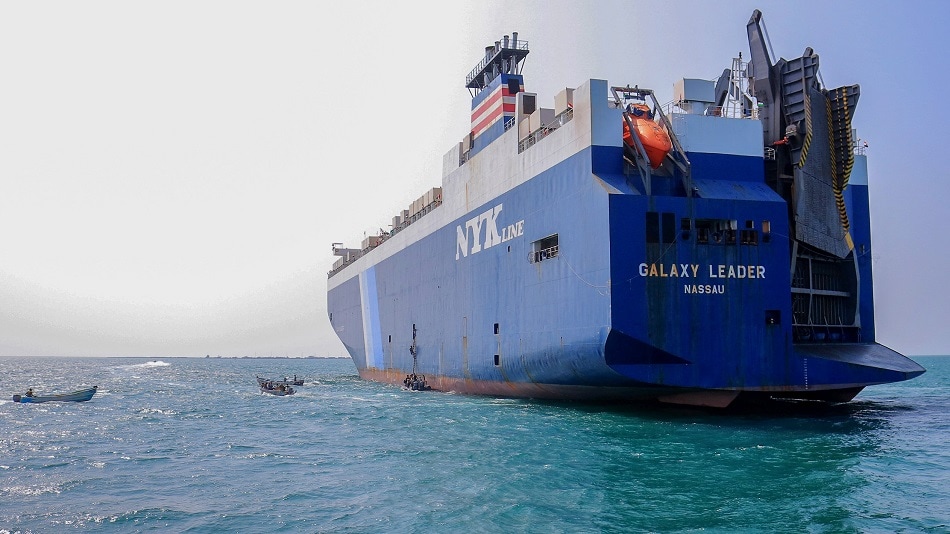
Yemen's Iran-backed Houthi militants have targeted vessels transiting through the Red Sea with missiles in recent weeks. The Houthis say they are going after any vessels that have a connection with Israel.
For India, the Red Sea is a major route for shipping to Europe, the US East Coast, the Middle East and African countries. Prime Minister Narendra Modi's government is in discussions with export promotion councils to find ways to protect trade transiting through the route, according to two officials familiar with the matter.
Last week, India sent a warship to the Arabian Sea where a Liberian-flagged vessel said it was hijacked near Somalia's coast. The Indian Navy said it “successfully rescued” the ship.
The threats have pushed Indian exporters to hold back around 25% of the outbound shipments transiting through the Red Sea, according to Ajay Sahai, director general of the Federation of Indian Export Organizations, which falls under India's Trade Ministry.
“In many cases, both buyers and exporters are also renegotiating contracts to adjust to surging freight charges,” he said.
The spot rate for shipping goods in a 40-foot container from Asia to northern Europe now tops $4,000, a 173% jump from just before the diversions started in mid-December, Freightos.com, a cargo booking and payment platform, said Wednesday. Rates from Asia to North America's East Coast have risen 55% to $3,900 for a 40-foot container.
India usually exports a variety of goods including petroleum products, cereals, and chemicals using the Red Sea route. Exports in the current fiscal year are already flagging with a 6.5% contraction in the April to November period from a year ago, according to government data.
The Red Sea disruption could hit margins for India's oil and auto sectors, Madhavi Arora, a lead economist with Emkay Global Financial Services Ltd, wrote in a note published Dec. 22. But the bigger concern could be inflation, which has been above the central bank's comfort zone of 4% since the end of 2019.
“Higher global freight and insurance rates, possible upside risk to oil and global trade and re-emergence of potential supply chain would mean cost push inflation pressures,” she said.
--With assistance from Alex Longley.
More stories like this are available on bloomberg.com
©2024 Bloomberg L.P.

-
Indians Are Travelling, But Not Every Journey Is A Holiday | The Week In Whys

Pilgrims, patients and working women are the real travellers, and the system hasn't quite caught up with them.
-
Getting To Work Costs Women More | The Reason Why
It is not just about women paying more than men. It is about women paying much more in cities than in villages.
-
AI Bias In Investing Cannot Be Eliminated, But It Can Be Governed
Framing is a particularly important example as identical financial information presented in terms of gains rather than losses can lead an LLM to reach a different assessment.
-
Joining The Dots | Dark Skies, Steady Diya: Why Hope Holds This Diwali
With war, a weak rupee and foreign outflows weighing on sentiment, policymakers at the NDTV World Summit and market veterans at NDTV Profit Ignite: Diwali Edition offered the same advice: stay invested and filter out the noise.
-
The Curious Case of Equitas Small Finance Bank And A CEO Who Quit For Stock
PN Vasudevan believes persistent investor concerns over a perceived conflict of interest had become a governance overhang on Equitas Small Finance Bank's stock, even as the lender improved profitability and asset quality.
-
Talking Points This Week: AI Cash Burn, A Tiger Comeback And An India That Still Finds Its Own Path
India is not immune to higher oil or tighter global liquidity, yet its earnings base is broader, its domestic policy levers are still available.
-
Foreign Investors Own Half Of HDFC Bank and ICICI Bank. An LTCG Cut Could Matter Most Here
Foreign portfolio investors have US$115 billion parked in HDFC Bank, ICICI Bank. If the government cuts long-term capital gains tax, Jefferies says returning foreign money could land here first.
-
'Never Seen This Level Of Negativity': Sandeep Tandon Says The Next Rally May Be Closer Than You Think
Veteran investor Sandeep Tandon says foreign selling is easing, large-caps are due a comeback and mid-caps are crowded, while he turns positive on gold, power and pharma this Diwali.
-
Indians Stay With Family, Not In Hotels | The Reason Why
India still lacks enough clean, reliable and affordable hotels for budget-conscious travellers.
-
The Economic Imperative: Analysing The Material Driving Force Behind India-Canada Strategic Reset
This economic complementarity is further reinforced by deep institutional investment ties and talent mobility, which form the bedrock of the bilateral framework.










