India Rice Farmers to Maintain Acreage on Normal Rain Forecast
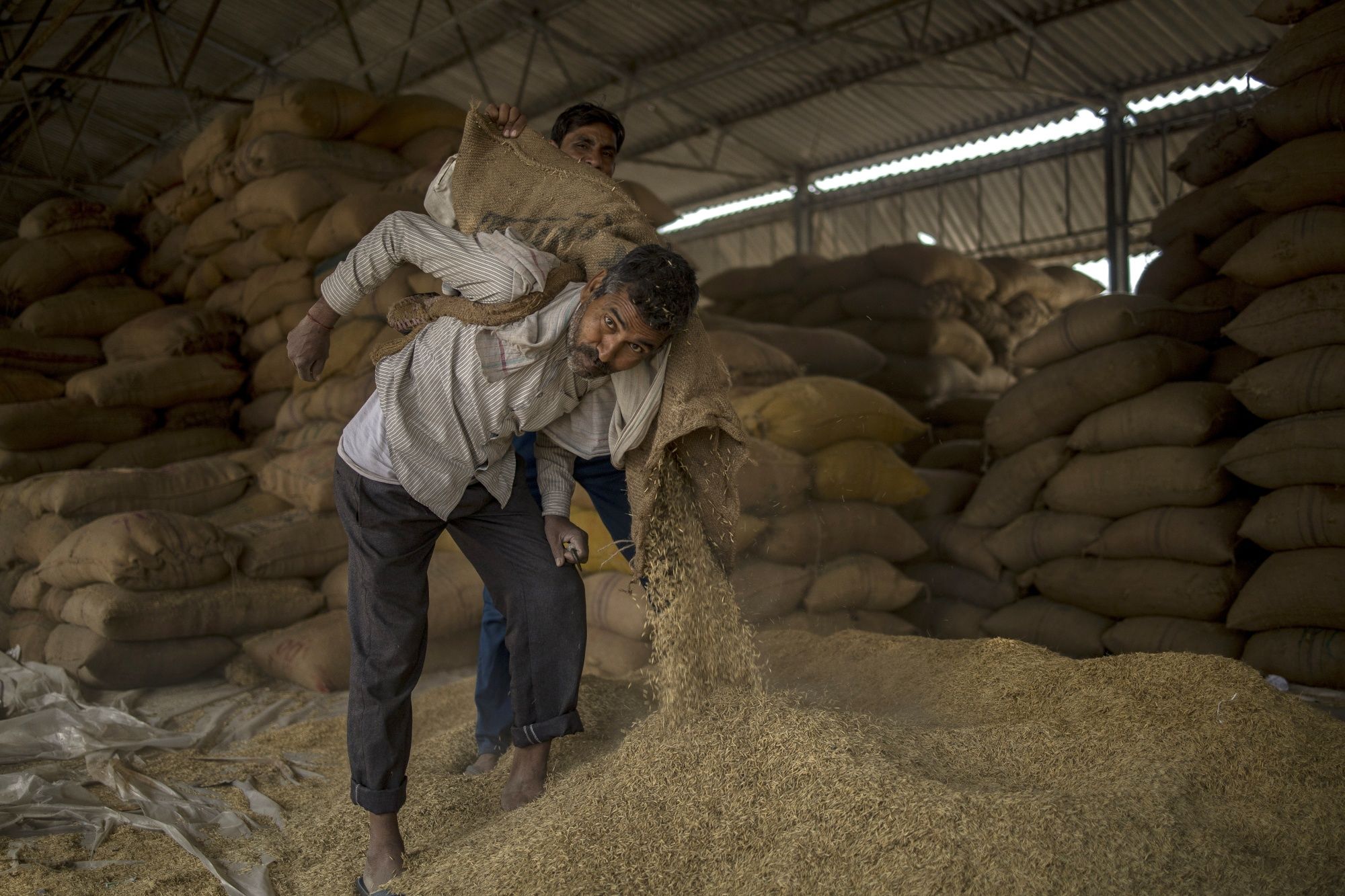
(Bloomberg) -- Rice farmers in India, the top exporter, will be working full tilt this growing season to take advantage of a good monsoon and prospects that the government will boost grain purchases to safeguard food security.
Rice has come into focus recently on worries that India may restrict exports of the crop next, after similar moves in wheat and sugar. Ample production will ensure the country has enough rice supplies and allay concern about curbs on overseas sales, which could have a devastating impact on global food security.
Charanjit Singh Gill, a farmer in Punjab -- a region known as the country's food bowl -- said he will keep planting rice as it's the best option during the rainy season. Rice in most Asian farms requires large amounts of water to grow.
“I expect the government will buy more rice this year from us as they have to ensure the country's food security,” Gill said.

India is likely to see plentiful monsoon rains, which will spur farm production and overall economic growth. The government plans to distribute more rice to the needy after its wheat purchases for the food aid program fell by more than half due to lower output and as private traders offered better rates to farmers.
A record-shattering heat wave in March and April damaged wheat yields across the South Asian nation, prompting authorities to restrict wheat exports in a bid to secure India's own supplies. The government is worried about inflation with food costs surging globally as the war in Ukraine chokes critical crop supplies.
Anil Kalyan, 58, a farmer in Haryana, said he has prepared his rice nursery and plans to grow the crop on his entire 40 acres (16 hectares) of land this year.
More Demand
“There will be more demand for rice this year and prices will rise because of the shortage of wheat in the country,” Kalyan said. There are no issues with the availability of fertilizers at the moment, he added.
Indian farmers planted rice on 41.15 million hectares of land during the monsoon season last year, up from 40.01 million hectares a year earlier, according to the farm ministry.
While rice acreage and production are expected to be stable or slightly higher this year, growers say, it may not remain the case for the years to come. It all depends on prices and the availability of water.
Trinadha Reddy, 65, a farmer in Andhra Pradesh, said he's able to sow rice on his 10-acre farm on time as water supplies through a canal improved this year. However he plans to shift to oil palm from next year as prices have stayed high and India doesn't produce enough vegetable oils to meet its own demand.
Farmer Gill in Punjab echoed this sentiment. “If we get better prices for other crops then we will think about shifting from rice,” he said. “Ideally we should be reducing the area for rice because of a shortage of water.”
More stories like this are available on bloomberg.com
©2022 Bloomberg L.P.

-
Talking Points This Week: Leadership Shock At Nvidia, Earnings Strength, And The Fog Over Hormuz

The Anthropic IPO pricing and first trading day, Nvidia's upcoming earnings, and any fresh signals from Iran will set the tone for the following week.
-
Signature Play: The Classic Cocktail Is Dead. Or Is It?
Classic cocktails are disappearing from India's cocktail menus. But they're still being ordered, taught to bartenders and borrowed from. So, who's really having the last drink?
-
A New Samvat Wishlist: Inclusive Prosperity And Human Development
India has strengthened its economic foundations through infrastructure, digital access and enterprise. Its next growth chapter must deepen productivity, create better livelihoods and widen participation in prosperity.
-
Love, Sex Aur Dhokha: The Audacious Plot To Spy On Jensen Huang
A Taipei dinner, a Singapore chip buyer and a suspected Chinese asset: inside the alleged spy operation that got close to NVIDIA's Jensen Huang.
-
Ten Things I Learnt This Samvat
Patience can be a trap. Cheap stocks can stay cheap. Leverage can wipe you out. What did Samvat 2082 teach us? Niraj Shah writes on 10 lessons from the year gone by.
-
Talking Points This Week: Tech Nerves, FII Buying, And A Faraway Banking Shock
The global markets are not shining this Diwali. The exception in the large markets is, India.
-
Midterm Rally Lasted A Day. The Hard Reality Of A Divided US May Last Two Years | Opinion
Between a contested AI boom, a debt ceiling that arrives in 2027 and a president with every incentive to act alone, the next two years may prove more volatile than the first day's rally suggests.
-
Blue Wave Will Derail the AI Trade but Won't Dismantle the AI Era | Unhedged Position
The Democrats' sweep of the US Congress will see politics collide with economic forces both over the long and short term.
-
It's Time To Take The GST Council's Bet On Trust Global
Payment records can prove India's services exports, and clear, proportionate rules can bring foreign digital sellers into the tax net.
-
Opinion | India at 38: From Innovation Overperformer to Innovation Powerhouse
India now has 453 VC-backed deep science startups, 18 of them late-stage, after 117 percent growth since 2020. Laurus Labs, at USD 9.3 billion, is the most valuable deep science company in any middle-income economy outside China.









