India Approves Ordinance To Allow Farmers To Freely Sell Produce
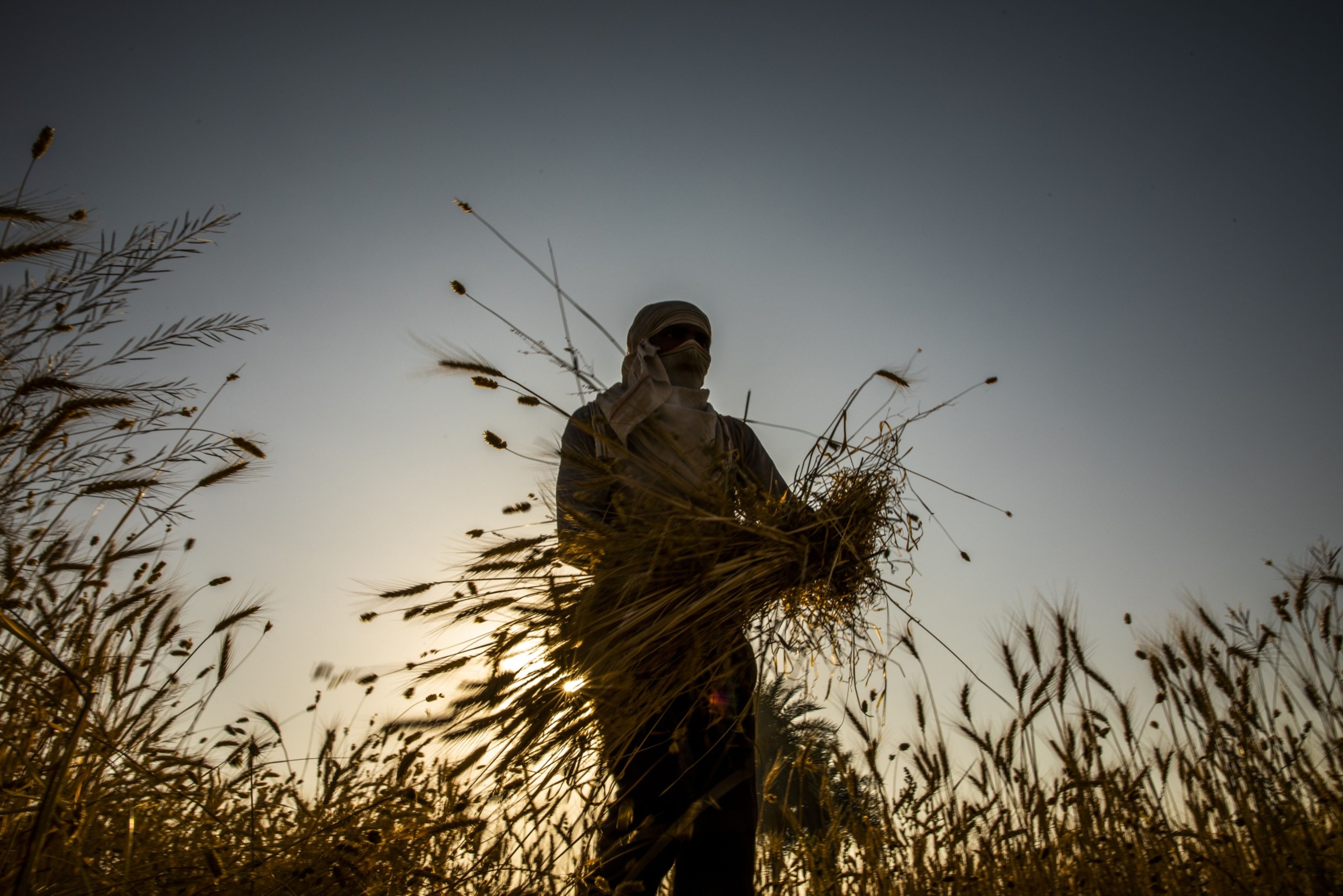
India approved an ordinance to ensure a barrier-free trade in agricultural produce, a move that's aimed at increasing farmers' income at a time Asia's third-largest economy is gradually reopening after a more than two-month lockdown to contain the coronavirus.
The cabinet chaired by Prime Minister Narendra Modi approved the Farming Produce Trade and Commerce (Promotion and Facilitation) Ordinance, 2020 that aims at promoting inter- and intra-state trade outside the markets notified under State Agricultural Produce Marketing legislations. It will help farmers with surplus produce to get better prices, according to a government statement.
The move is part of the government's ‘Atmanirbhar Bharat Abhiyan'. Last month, Finance Minister Nirmala Sitharaman announced a Rs 20-lakh-crore post-pandemic financial package, equivalent to 10% of the nation's GDP, to help revive the economy that's headed for its first full-year contraction in more than four decades.
“States APMC Act would continue but the areas that do not come under APMC, be it farmer's house, companies, processing industry, Farmer Produce Organizations can go to his house and buy the produce,” said Narendra Singh Tomar, minister of Agriculture and Farmers' Welfare. Outside APMC mandis, there will be a trading area, and no tax of any form will be levied on sale and purchases, he said.
Besides, a trader or entity, Farmer Produce Organizations, and cooperative sector holding a PAN card “can definitely” buy farmers' produce, Tomar said. That's aimed at preventing legal roadblocks and ‘Inspector Raj'.
But it isn't clear whether holding a PAN card will be mandatory to buy the produce.
The buyers, Tomar said, will have to pay farmers immediately or within three days. After the delivery, the buyer will have to give a receipt mentioning goods procured, and details of when the payment will be made.
The disputes between traders and farmers have been kept out of courts' ambit, Tomar said, adding the sub-divisional magistrate will hear the matter and settle it within 30 days. In case of an unsatisfactory order, a farmer can approach the collector.
The ordinance also proposes an online platform for a seamless trade. Any individual can create the electronic market but the rules will be formulated by the central government. The central government, according to Tomar, will take action if any online platform is found in any form of wrongdoing.
Among other decisions, the cabinet approved an ordinance to facilitate legal framework for farmers to engage with processors, aggregators, retailers, and exporters.
The Farmers (Empowerment and Protection) Agreement on Price Assurance and Farm Services Ordinance, 2020 will provide a framework to offer risk mitigation for farmers, assured returns and quality standardisation.
Besides, the Essential Commodities Act will be amended to remove commodities like cereals, pulses, oilseeds, edible oils, onion and potatoes from the list of essential commodities. Such products will be deregulated, helping farmers to better realise prices.

-
Signature Play: The Classic Cocktail Is Dead. Or Is It?

Classic cocktails are disappearing from India's cocktail menus. But they're still being ordered, taught to bartenders and borrowed from. So, who's really having the last drink?
-
A New Samvat Wishlist: Inclusive Prosperity And Human Development
India has strengthened its economic foundations through infrastructure, digital access and enterprise. Its next growth chapter must deepen productivity, create better livelihoods and widen participation in prosperity.
-
Love, Sex Aur Dhokha: The Audacious Plot To Spy On Jensen Huang
A Taipei dinner, a Singapore chip buyer and a suspected Chinese asset: inside the alleged spy operation that got close to NVIDIA's Jensen Huang.
-
Ten Things I Learnt This Samvat
Patience can be a trap. Cheap stocks can stay cheap. Leverage can wipe you out. What did Samvat 2082 teach us? Niraj Shah writes on 10 lessons from the year gone by.
-
Talking Points This Week: Tech Nerves, FII Buying, And A Faraway Banking Shock
The global markets are not shining this Diwali. The exception in the large markets is, India.
-
Midterm Rally Lasted A Day. The Hard Reality Of A Divided US May Last Two Years | Opinion
Between a contested AI boom, a debt ceiling that arrives in 2027 and a president with every incentive to act alone, the next two years may prove more volatile than the first day's rally suggests.
-
Blue Wave Will Derail the AI Trade but Won't Dismantle the AI Era | Unhedged Position
The Democrats' sweep of the US Congress will see politics collide with economic forces both over the long and short term.
-
It's Time To Take The GST Council's Bet On Trust Global
Payment records can prove India's services exports, and clear, proportionate rules can bring foreign digital sellers into the tax net.
-
Opinion | India at 38: From Innovation Overperformer to Innovation Powerhouse
India now has 453 VC-backed deep science startups, 18 of them late-stage, after 117 percent growth since 2020. Laurus Labs, at USD 9.3 billion, is the most valuable deep science company in any middle-income economy outside China.









