Shaktikanta Das To IMF: Don’t Let U.S. Label Others Currency Manipulators
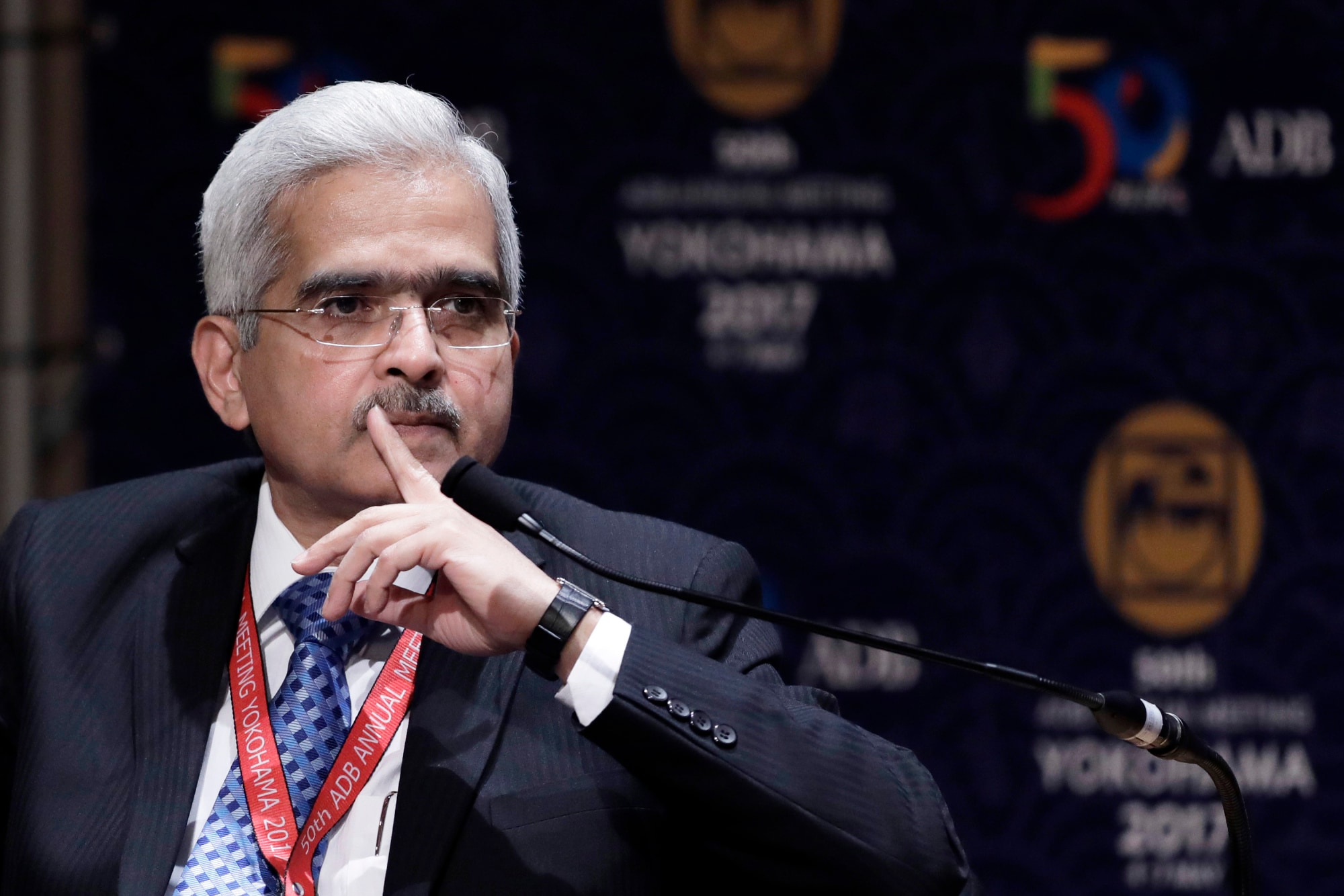
Reserve Bank of India Governor Shaktikanta Das said the International Monetary Fund mustn't allow the U.S. to bilaterally label countries as “currency manipulators”.
The IMF is the only organisation with the authority to give such labels, Das said in his speech at the launch of a book on India's relations with the fund over 25 years by IAS officer V Srinivas. “A question that crops up is why has labelling become a bilateral prerogative when a multilateral institutional architecture exists for the purpose?”
He said the IMF releases a report on consultations with member countries every year, which undertakes in-depth assessment of members' economic developments and policies, including exchange rate policies. The consultation report also brings up any event of exchange rate misalignment and multiple currency practices are brought up candidly, Das said. Given this multilateral framework, the overlay of bilateral labelling raises questions, including the role of the IMF itself, he said.
That comes as the Donald Trump administration said it will expand the number of countries it scrutinises for currency manipulation, Bloomberg reported in May, citing people familiar with the matter. The U.S. maintains a watchlist of its trade partners that manipulate foreign exchange policies to gain export advantages, from which India was removed early this year.
Das said it's important to look at the context in which emerging market economies have been functioning in the past few years to understand the challenges they're facing.
The nature of shocks faced by these economies, according to Das, have moved from balance of payment strains to full-blown economic crises. Moreover, emerging market economies have also been facing the brunt of spillovers since the global financial crisis, which have amplified sudden surges and sudden stops or reversals in capital flows. To insure themselves against such shocks, emerging market economies have been building up their reserves, which have come at a cost, he said.
“The global order today faces several challenges that will test the skills of the international organisations as well as those of national monetary and fiscal authorities,” Das said. “International coordination has become somewhat weaker in the very recent years. Many advanced economies have been pursuing low interest rate policies for long without perhaps adequate recognition of their adverse impacts.”
A return to lower interest rates in advanced economies poses challenges as leverage has already built up in emerging market economies and the needed deleveraging isn't complete in many European economies, the central bank governor said. Net private capital flows to emerging markets in the form of direct and portfolio investments also nearly doubled in the post-crisis period, he said, adding this has posed risks to some of these economies.
The world, according to Das, will be looking at IMF to come up with solutions for these problems. However, solutions are turning more difficult to come by as the global economy seems to be moving into a new and unsettling phase in an environment of stressed trade negotiations, rising geopolitical confrontation, and limited policy space and high debt levels in several economies, he said.
“Prudent policies are critical to growth with macro-economic stability,” Das said. “Globally, we need to focus on policy space, judiciously use it and simultaneously undertake structural reforms to improve productivity, innovation and job creation. The coming year will test IMF for its policy advice in these areas.”

-
Gold Is Rs 22,000 Cheaper Than A Month Ago. Should You Buy Amid The Wedding Season?

Gold's potential slide to $3,500 could save around Rs 4,700 per 10 grams, but a soft inflation print could just as easily push prices back up. One way to split the risk is to buy in parts, some now and the rest after the Fed's Dec. 9 decision.
-
AI Agents Are Gaining Power. Who Governs Them?
Artificial intelligence agents promise to transform productivity by moving machines from assisting decisions to executing them. But as organisations delegate greater authority to these AI-agents, they must first establish who controls that authority and who remains accountable when things go wrong.
-
Why Swapping Your Old Gold Can Trigger A Rs 5 Lakh Tax Bill, And How You Can Avoid It Legally
Swapping old gold for new is taxed as a sale and a fresh purchase. Getting your own gold remade can cut most of that bill, though it has its own costs.
-
The AI Trade is Done. The Real Opportunity for Investors Starts in 2027 | Unhedged Position
As pureplay AI stocks plunge and circular, capex-led financing unwinds, 2027 is set to be a year of reckoning for AI companies. Yet the bust clears the way for a better opportunity for investors in 2027 -- shifting the spotlight from AI builders to the companies using AI.
-
Leadership As Mission: Why The Age Of AI Demands More Human Leadership
Debjani Ghosh examines how AI is changing leadership, arguing that its success must be measured by its impact on people and the accountability of those guiding its use.
-
We May Need Another Tukaram Mundhe To Fight Air Pollution | The Reason Why
Developers may install basic measures such as sprinklers and green nets, resume work, and continue violating rules when this equipment stops working.
-
Extracting Value From Battery Scrap Could Be Challenging For India | The Reason Why
A discarded lithium-ion battery still contains valuable materials such as lithium, nickel and cobalt. These can be recovered and reused. When such batteries are crushed and shredded, they produce a dark powder called black mass.
-
One El Nino, India Can Handle. Two Could Break The Granary
India's grain stocks can absorb one bad year, but a second El Nino could drain the buffer in two to three years, economists say.
-
India's Troika Of Good Luck | Joining The Dots
As Jensen Huang's exit drags Nvidia down, a cooling AI trade and resilient earnings have revived investor interest in India. A likely RBI rate hike looms.
-
Talking Points This Week: Leadership Shock At Nvidia, Earnings Strength, And The Fog Over Hormuz
The Anthropic IPO pricing and first trading day, Nvidia's upcoming earnings, and any fresh signals from Iran will set the tone for the following week.









