How Rupee Swings Impact The RBI’s Dividend To The Government
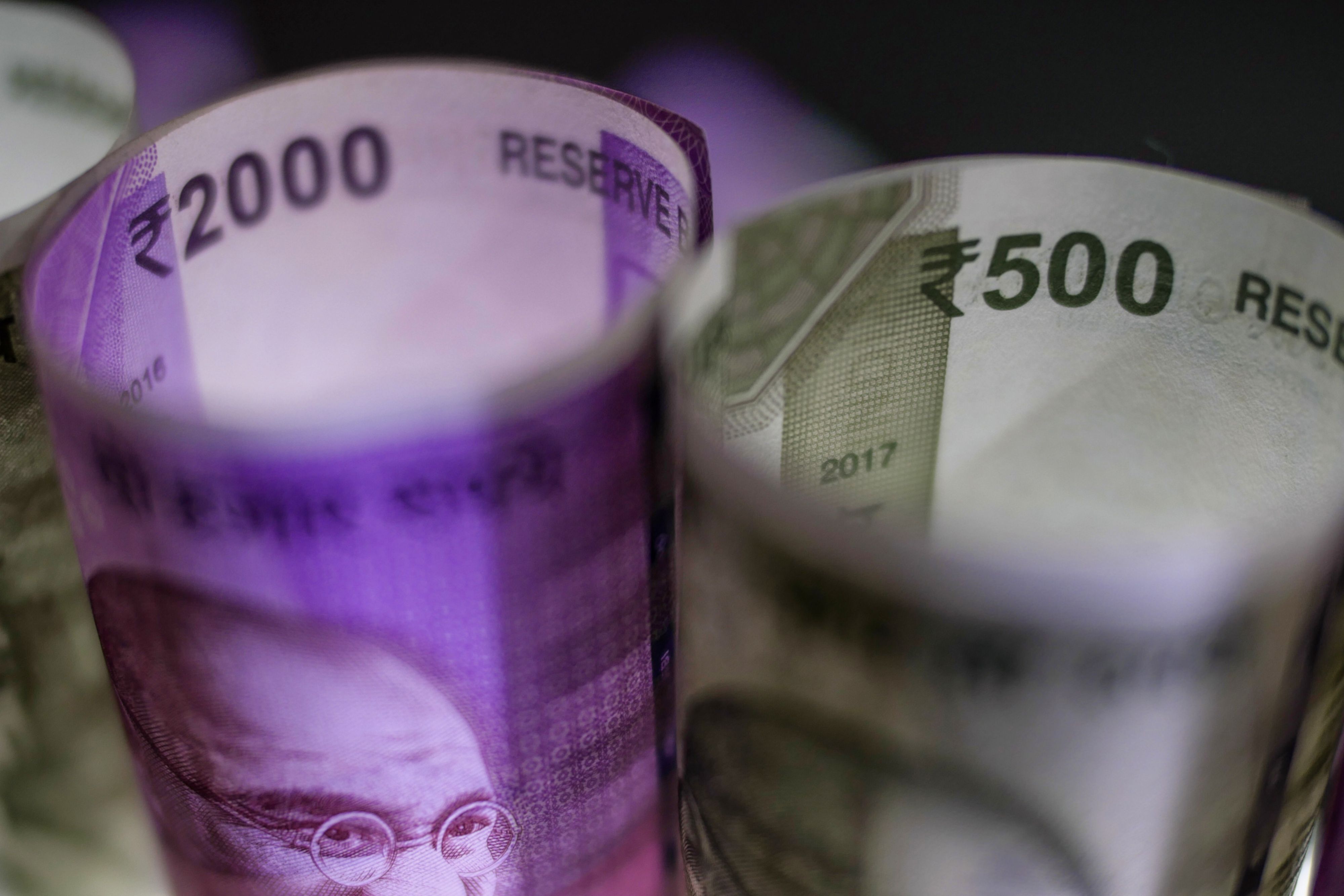
The swings in the rupee impact corporate balance sheets of all hues — importers, exporters, overseas borrowers. The currency also impacts the Reserve Bank of India's balance sheet and the dividend it pays out to the government. More so now than before.
The RBI adopted a new economic capital framework in 2019. As part of that, the central bank committed to hold retained earnings of at least 5.5% of assets. Alongside that framework, the central bank adopted a significantly different method of accounting for its currency and gold sales.
Starting FY19, the RBI decided, on the recommendation of committees that had looked into the matter, that any sales of foreign currency would be compared with the weighted average holding cost of the currency, and this difference is taken to the RBI's income statement as realised profit (or loss). Until then, the central bank would compare any sales to the weekly revaluation rate, leaving little in terms of profit or loss to be transferred.
The changes adopted by the RBI mean that the movement in the rupee may have a greater bearing on the central bank's dividend transfer to the government.
How Does It Stack Up For FY21?
The rupee's movement will impact the central bank's balance sheet in two ways, explained Ananth Narayan, senior India analyst at the Observatory Group, in notes dated March 11 and March 31.
Narayan explained:
- First, a lower value of the U.S. dollar against the Indian rupee would reduce the rupee equivalent of the RBI's foreign currency assets.
- In turn, this would reduce the requirement for retained earnings, and hence allow for a higher dividend to the government.
- At the same time, a lower value of the U.S. dollar against the Indian rupee would also reduce the RBI's currency revaluation reserves and test the RBI's ability to meet the required total economic capital.
- However, just a move in the currency is not a material factor.
If USD-INR were to move from the current 73.00 to 71.50, other things being equal, we estimate that the RBI would only be able to pay an additional dividend of around Rs 5,200 crore to the government. We find it difficult to believe that the RBI would engineer such a change in the currency — with the attendant market volatility — for such a meager outcome.Ananth Narayan, Senior India Analyst, Observatory Group
The second manner in which the currency impacts the balance sheet may be more material.
Given the changes in foreign exchange accounting adopted by the RBI since 2019, every $10 billion of foreign currency sales by the RBI at around the current market would allow it to recognise an estimated additional Rs 17,000 crore, Narayan estimated.
Again, as a base case, we are firmly inclined to believe that the RBI foreign currency intervention would not be guided by such cynical considerations, especially if that entailed injecting volatility into currency markets. At the same time, we cannot rule out the possibility that the RBI may be more willing to offer U.S. dollars in the market — especially in the wake of any currency volatility — till the end of March.Ananth Narayan, Senior India Analyst, Observatory Group
Between July 2020 and January 2021, the RBI sold about $35 billion in gross U.S. dollar sales. However, the split of such dollar sales between Indian Rupee and other currencies is unclear, Narayan said.
The Indian currency held steady through the year as the central bank bought dollars to absorb large equity inflows. On Tuesday, the rupee weakened by 1% to close at a one-month low of 73.38 against the dollar.

-
Signature Play: The Classic Cocktail Is Dead. Or Is It?

Classic cocktails are disappearing from India's cocktail menus. But they're still being ordered, taught to bartenders and borrowed from. So, who's really having the last drink?
-
A New Samvat Wishlist: Inclusive Prosperity And Human Development
India has strengthened its economic foundations through infrastructure, digital access and enterprise. Its next growth chapter must deepen productivity, create better livelihoods and widen participation in prosperity.
-
Love, Sex Aur Dhokha: The Audacious Plot To Spy On Jensen Huang
A Taipei dinner, a Singapore chip buyer and a suspected Chinese asset: inside the alleged spy operation that got close to NVIDIA's Jensen Huang.
-
Ten Things I Learnt This Samvat
Patience can be a trap. Cheap stocks can stay cheap. Leverage can wipe you out. What did Samvat 2082 teach us? Niraj Shah writes on 10 lessons from the year gone by.
-
Talking Points This Week: Tech Nerves, FII Buying, And A Faraway Banking Shock
The global markets are not shining this Diwali. The exception in the large markets is, India.
-
Midterm Rally Lasted A Day. The Hard Reality Of A Divided US May Last Two Years | Opinion
Between a contested AI boom, a debt ceiling that arrives in 2027 and a president with every incentive to act alone, the next two years may prove more volatile than the first day's rally suggests.
-
Blue Wave Will Derail the AI Trade but Won't Dismantle the AI Era | Unhedged Position
The Democrats' sweep of the US Congress will see politics collide with economic forces both over the long and short term.
-
It's Time To Take The GST Council's Bet On Trust Global
Payment records can prove India's services exports, and clear, proportionate rules can bring foreign digital sellers into the tax net.
-
Opinion | India at 38: From Innovation Overperformer to Innovation Powerhouse
India now has 453 VC-backed deep science startups, 18 of them late-stage, after 117 percent growth since 2020. Laurus Labs, at USD 9.3 billion, is the most valuable deep science company in any middle-income economy outside China.









