How India Retaliated To Curb Trade With China After Deadly Border Scuffle
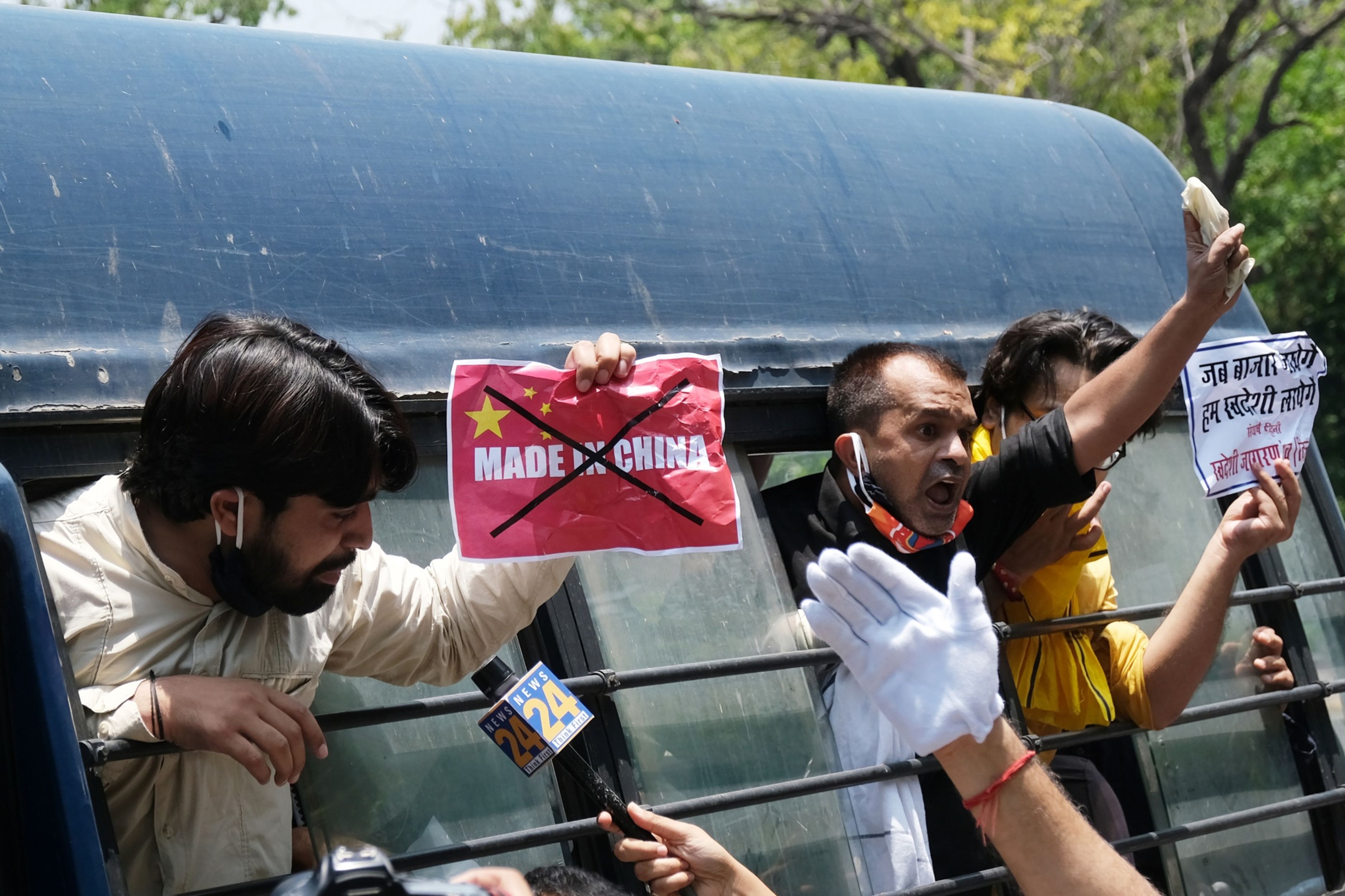
India's move to restrict companies based in neighbouring nations from commercial coal mining is the latest step aimed at China amid a border standoff.
Entities from countries that share a border with India can invest in commercial coal mining only after the government's approval, the Ministry of Coal said on Aug. 3.
This came after India restricted vendors based in bordering countries from supplying goods and services to government departments citing national security. It also barred companies from these nations from bidding for public private partnership projects, and ordered states to follow the directive.
A border scuffle left 20 Indian and an unknown number of Chinese troops dead in June, triggering calls for boycotting Chinese goods. The two economies, however, are intertwined. China supplies two-thirds of bulk drugs used by Indian pharma companies, Chinese firms have invested billions of dollars in local startups and dominate the domestic smartphone market. And India runs a trade deficit with its neighbour that accounts of 14% of the nation's imports.
Here's what the Indian government has done to curb trade with China so far:
Curbs On Television Imports
Last week, the government restricted import of colour televisions to promote domestic manufacturing and reduce imports of non-essential items from countries like China. The Directorate General of Foreign Trade, an arm of the Commerce and Industry ministry, amended the import policy for colour televisions from ‘free' to ‘restricted'. Now, importing TVs will need a licence from the DGFT.
Apps Banned
India banned 59 Chinese apps including TikTok and Camscanner under Section 69A of the Information Technology Act (Procedure and Safeguards for Blocking of Access of Information by Public) Rules 2009, citing threat to national security. The government cited concerns on data security and privacy of 130 crore Indians.
Country Of Origin Tag
The government's procurement portal made it mandatory for sellers to mention the country of origin on products they wish to sell through the platform, a move aimed at discouraging the use of Chinese products and promoting local alternatives. The Department for Promotion of Industry and Internal Trade also told e-commerce companies to start prominently displaying “country of origin" for all goods sold online in India.
Duty Hikes
India extended safeguard taxes on imports of solar cells and modules for a third year starting July 30. Power Minister Raj Kumar Singh also said that the country will stop power equipment imports from China.
India also imposed anti-dumping duty on:
- Digital printing plates from China, Japan, Korea, Taiwan and Vietnam for five years after an investigation by Directorate General of Trade Remedies.
- Aniline—used for dyes, drugs, among others—originating from China for a period of six months.
- Fluoroelastomers or synthetic rubber originating from China for three months.
- Steel and fibre glass measuring tapes and their parts from China for five years.
Even prior to the border tensions, India placed curbs on investments in domestic companies by peers from neighbouring nations including China to prevent opportunistic takeovers as the new coronavirus outbreak brought down valuations. Now, a foreign investor from any country that shares a land border with India can only invest with the government's approval.

-
The Economic Imperative: Analysing The Material Driving Force Behind India-Canada Strategic Reset

This economic complementarity is further reinforced by deep institutional investment ties and talent mobility, which form the bedrock of the bilateral framework.
-
Medicine Pricing: Where Must Profit Stop?
India must confront excessive margins, hidden incentives and regulatory gaps that threaten the integrity of medicine.
-
Why Amazon And Flipkart Are Struggling To Beat Meesho In India's Smaller Cities
With 274 million users and lowest-cost logistics, Meesho is defending its value commerce crown against giants like Amazon and Flipkart.
-
High US Salaries, No Green Card Certainty: The Financial Calculation Facing Indian H-1B Families
The suspension of PERM processing at eight technology employers does not cancel existing H-1B visas. What it does is force a question many Indian families have been avoiding: is the US salary worth tying your career and family plans to one employer?
-
Swiggy vs Eternal: Food Delivery's Two Rivals Are No Longer In The Same Race
Eternal is building a private AI assistant, dark.ai. Swiggy is still working out how to make Instamart pay, with an operating loss of Rs 895 crore in the July-September quarter while Blinkit stayed profitable.
-
Where You Live Shapes How You Get To Work | The Reason Why
Two-wheelers are the most popular way to get to work in India, accounting for nearly 43% of workplace commutes.
-
Unhedged Position: Can India See An Indonesia-Style Time Correction?
The Nifty is trading below levels it first clocked in 2024. Is there, then, as I have suggested in the headline, potential that the current time correction drags on painfully for the next three-five, even ten years?
-
Navigating Friction And Energy Realities: An Analysis Of Marco Rubio's October Visit To India
Occurring at a critical juncture marked by stalled trade negotiations and escalating geopolitical pressures over global energy supplies, the visit offers a profound window into modern US-India relations.
-
India Exports Capital. Why Not Export Trusteeship?
The big question, then, is whether India can build an institution that global borrowers, investors, banks, and lawyers can trust, even without an Indian connection.
-
France's Economy & Politics Are In Crisis | The Reason Why
Let's look at how the French economy and politics evolved under Nicolas Sarkozy, Franois Hollande and Emmanuel Macron.










