GST: Prior Registration, E-Way Bill For Goods Worth Rs 50,000 Or More In Transit
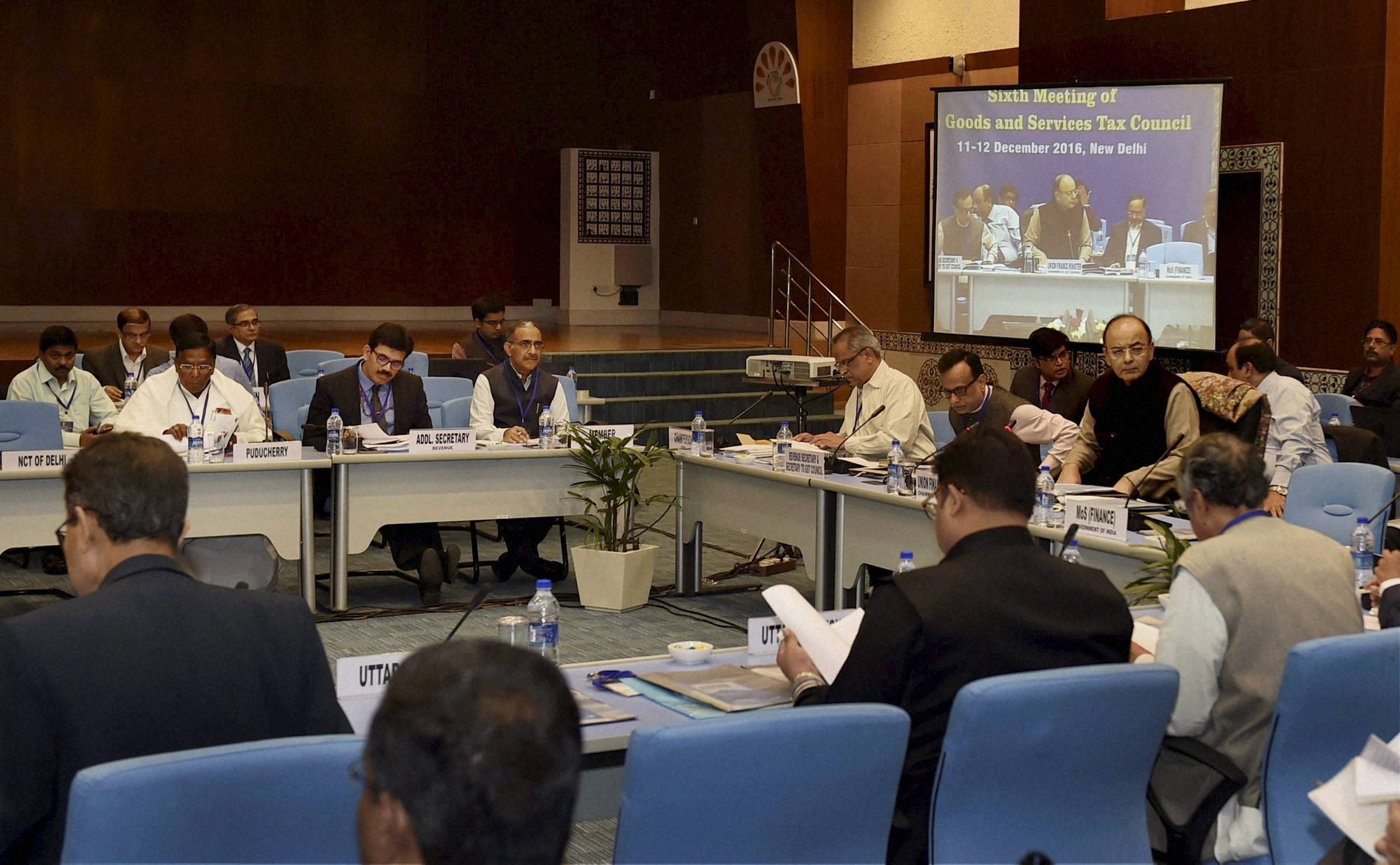
Moving goods worth more than Rs 50,000 under Goods and Services Tax regime will require prior online registration of the consignment and securing an ‘e-way bill' that tax officials can inspect anytime during the transit to check tax evasion.
The Central Board of Excise and Customs (CBEC) has issued draft rules on Electronic Way (e-way) bill that require registered entities to furnish, in a prescribed format, GST-Network (GSTN) website information relating to any goods worth more than Rs 50,000 they intend to move within a state or outside.
GSTN will generate e-way bills that will be valid for 1-15 days, depending on distance to be travelled – one day being for 100 kilometres and 15 days for more than 1,000 km transit.
“Upon generation of the e-way bill on the common portal, a unique e-way bill number (EBN) shall be made available to the supplier, the recipient and the transporter on the common portal”, stated the draft norms.
The person in-charge of conveyance will be required to carry the invoice or bill of supply or delivery challan, and a copy of the e-way bill or the e-way bill number, either physically or mapped to a Radio Frequency Identification Device (RFID) embedded on to the conveyance.
The rules authorise the tax commissioner or an officer empowered by him on his behalf to intercept any conveyance to verify the e-way bill or the number in physical form for all inter-state and intra-state movement of goods.
Physical verification of conveyances can be carried out on specific information of evasion of tax, as per the rules.
The officer will be required to submit a summary report of every inspection of goods in transit within 24 hours and the final report within three days of inspection.
"Where a vehicle has been intercepted and detained for a period exceeding 30 minutes, the transporter may upload the said information in (prescribed form) on the common (GSTN) portal," said the guidelines.
Nangia & Co Director (Indirect Taxation) Rajat Mohan believes that the e-way bill will give respite to countless transporters as now any transporter whose vehicle has been intercepted and detained for a period exceeding 30 minutes, he may upload the said information on the GSTN portal.
Analysts said this provision will act as a two-way sword as now accountability of the tax officer intercepting the vehicle will increase, but at the same time it will give opportunity to the transporter to file complaint.
"I believe electronic way bills would be the final nail in the coffin for people dealing in black markets or in the unorganised sector," Mohan said.
These e-way bills will also come with a mechanism for self-check where every registered supplier will have to pre-inform the government about the location of goods to be transported, which will also be re-confirmed by the transporter, he added.
Although the draft e-way rules did not specify what documents will have to be filled in the bill, experts said the consigner will have to give the name and address of both the sender and receiver of the goods.
Also, they will be required to give description of the goods, its valuation and weight.
The government has already come out with nine set of GST rules earlier this month and today unveiled two set of rules for 'assessment and audit' and 'electronic way bills'.
Mohan said the government is eyeing world-class implementation of GST.
"A country like India where per capital GDP is still comparable to countries like Nigeria and the Philippines, Ease of Doing Business Index 2017 still says we are at 130th position in the world. With such background, is it economically viable and beneficial to implement GST in highly automated environment? Does infrastructure at Indian tier-II and tier-III cities ready to implement GST?" Mohan wondered.

-
AI Bias In Investing Cannot Be Eliminated, But It Can Be Governed

Framing is a particularly important example as identical financial information presented in terms of gains rather than losses can lead an LLM to reach a different assessment.
-
Joining The Dots | Dark Skies, Steady Diya: Why Hope Holds This Diwali
With war, a weak rupee and foreign outflows weighing on sentiment, policymakers at the NDTV World Summit and market veterans at NDTV Profit Ignite: Diwali Edition offered the same advice: stay invested and filter out the noise.
-
The Curious Case of Equitas Small Finance Bank And A CEO Who Quit For Stock
PN Vasudevan believes persistent investor concerns over a perceived conflict of interest had become a governance overhang on Equitas Small Finance Bank's stock, even as the lender improved profitability and asset quality.
-
Talking Points This Week: AI Cash Burn, A Tiger Comeback And An India That Still Finds Its Own Path
India is not immune to higher oil or tighter global liquidity, yet its earnings base is broader, its domestic policy levers are still available.
-
Foreign Investors Own Half Of HDFC Bank and ICICI Bank. An LTCG Cut Could Matter Most Here
Foreign portfolio investors have US$115 billion parked in HDFC Bank, ICICI Bank. If the government cuts long-term capital gains tax, Jefferies says returning foreign money could land here first.
-
'Never Seen This Level Of Negativity': Sandeep Tandon Says The Next Rally May Be Closer Than You Think
Veteran investor Sandeep Tandon says foreign selling is easing, large-caps are due a comeback and mid-caps are crowded, while he turns positive on gold, power and pharma this Diwali.
-
Indians Stay With Family, Not In Hotels | The Reason Why
India still lacks enough clean, reliable and affordable hotels for budget-conscious travellers.
-
The Economic Imperative: Analysing The Material Driving Force Behind India-Canada Strategic Reset
This economic complementarity is further reinforced by deep institutional investment ties and talent mobility, which form the bedrock of the bilateral framework.
-
Medicine Pricing: Where Must Profit Stop?
India must confront excessive margins, hidden incentives and regulatory gaps that threaten the integrity of medicine.
-
Why Amazon And Flipkart Are Struggling To Beat Meesho In India's Smaller Cities
With 274 million users and lowest-cost logistics, Meesho is defending its value commerce crown against giants like Amazon and Flipkart.










