GST: Handicrafts May Not Remain Exempt, Biscuits Likely To Be Taxed At 18%
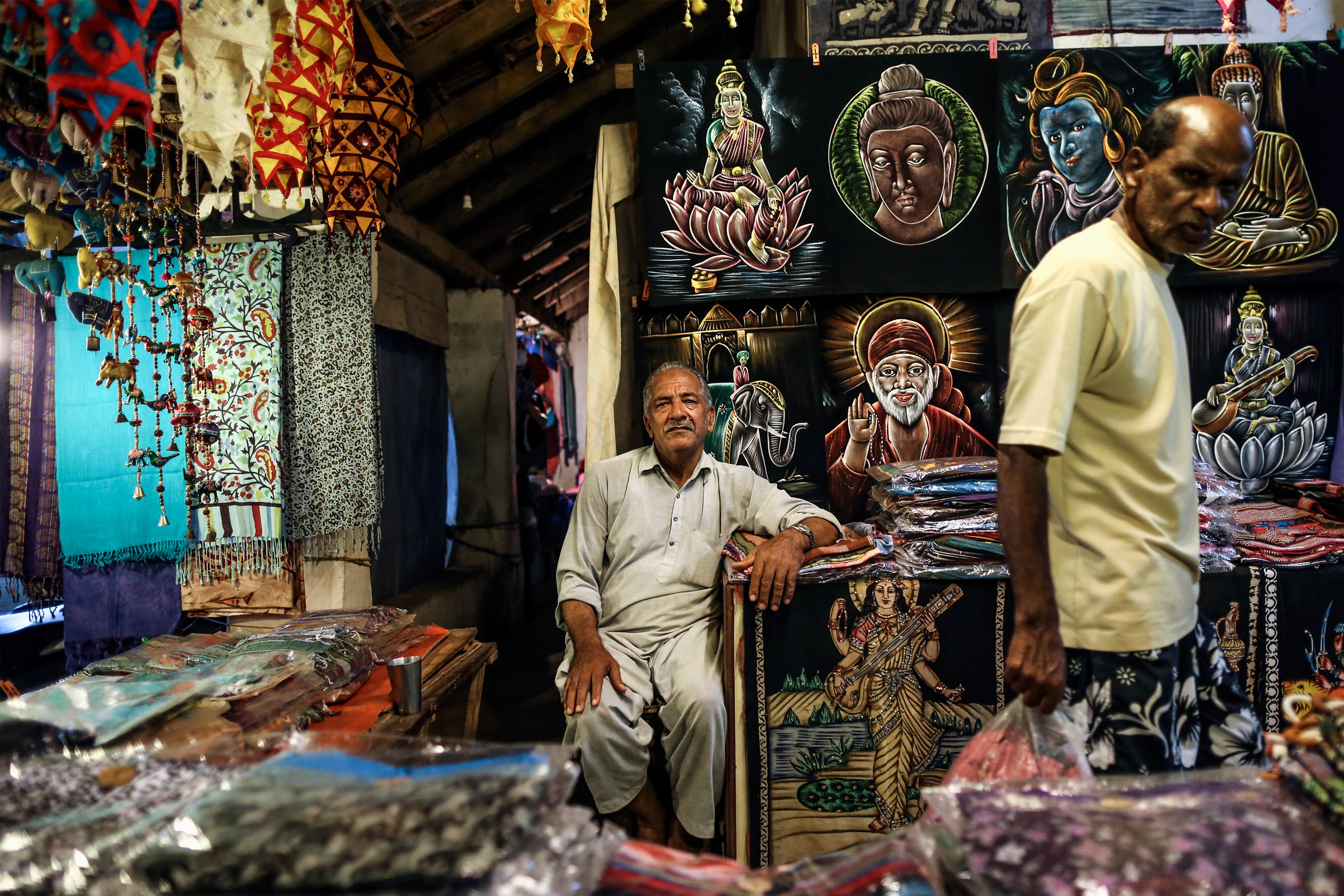
Handicrafts may no longer remain exempt from tax as a committee suggesting rates to the Goods and Services Tax (GST) Council has proposed to bring such items under the tax net, a senior finance ministry official told BloombergQuint.
Currently, the Centre does not levy any excise duty on handicrafts and some states exempt such goods.
The committee has also proposed to tax handmade furniture at the highest 28 percent tax rate, bringing it on a par with furniture. It is difficult to differentiate if an item like furniture is handmade or not, the official said requesting anonymity.
The tax rate on furniture, handmade or machine-made, should be kept the same, agreed Amit Sarkar, partner and head of indirect tax at BDO India LLP, a tax advisory. Handicrafts by definition are labour-intensive and cannot be made at a massive scale, so taxing such items at 28 percent is justified, he said.
The rate on handmade furniture might differ from other handicraft products, another finance ministry official said.
The GST Council is yet to finalise rates on biscuits, cigarettes, beedis, textile, footwear, precious metals and power-driven agricultural products. The fitment committee comprising state and central government officials is expected to propose the rates to the council, which will take a final decision in its next meeting on June 3.
Also Read: GST Council May Reconsider Steep Levy On Hybrid Cars
Biscuits At 18%?
While the council seeks to tax branded biscuits costing less than Rs 100 per kg at 18 percent, the industry is lobbying for 12 percent to claim a tax advantage to the tune of Rs 900-1,000 crore, the first official quoted above said. Biscuit manufacturers claim that they are largely consumed by the poor, he said.
Biscuits costing less than Rs 100 per kg account for nearly half of the overall biscuit market worth Rs 35,000-40,000 crore, the official said.
Unbranded biscuits costing less than Rs 100 per kg may be taxed at 12 percent, the second official cited above said.
Currently, biscuits below Rs 100 per kg do not attract central excise, but value-added tax (VAT) in states varies from 4.5-14.5 percent, said Bipin Sapra, partner, indirect tax at EY India.
For biscuits above Rs 100 per kg, the Centre levies 6 percent excise, while VAT ranges from 6-14.5 percent, Mayank Shah, category head of biscuits at Parle Products Ltd., told BloombergQuint.
Sapra said there should be a uniform rate for both branded and unbranded biscuits. As the rate on biscuits in the pre-GST regime is considerably variable, so taxing them a lower slab will make more sense, he said.
Also Read: GST To Draw Indian Businesses Into Digital Economy
Gold May Be Taxed At 5%
The GST Council may push for 5 percent tax on gold as it believes the yellow metal is not an item of mass consumption, and sees no merit in having a special or lower rate for the precious metal.
A special rate will complicate the rate structure, and there is no justification to tax the commodity at a lower rate, the first official quoted above said.

Kerala Finance Minister Thomas Isaac had told BloombergQuint after the GST Council's last meeting in Srinagar that he doesn't “see any good reason why gold should be taxed at a subsidised rate of 1-2 percent. I don't see any ethical or economic reason why gold should not be taxed at least at 5 percent”.
If gold is taxed at 5 percent, the tax incidence on imported gold will be around 15 percent (import duty of 10 percent + 5 percent GST rate), Sarkar from BDO India said.
For locally produced gold, an excise duty of 8 percent and a value added tax of 2 percent is levied in all states except Kerala, which charges VAT at 5 percent.
“By reducing the tax rate (for domestically produced gold), significant amount of value addition in gold will now get captured by better compliance,” Sarkar said.
Also Read: Tax Rates Before And After GST

-
Signature Play: The Classic Cocktail Is Dead. Or Is It?

Classic cocktails are disappearing from India's cocktail menus. But they're still being ordered, taught to bartenders and borrowed from. So, who's really having the last drink?
-
A New Samvat Wishlist: Inclusive Prosperity And Human Development
India has strengthened its economic foundations through infrastructure, digital access and enterprise. Its next growth chapter must deepen productivity, create better livelihoods and widen participation in prosperity.
-
Love, Sex Aur Dhokha: The Audacious Plot To Spy On Jensen Huang
A Taipei dinner, a Singapore chip buyer and a suspected Chinese asset: inside the alleged spy operation that got close to NVIDIA's Jensen Huang.
-
Ten Things I Learnt This Samvat
Patience can be a trap. Cheap stocks can stay cheap. Leverage can wipe you out. What did Samvat 2082 teach us? Niraj Shah writes on 10 lessons from the year gone by.
-
Talking Points This Week: Tech Nerves, FII Buying, And A Faraway Banking Shock
The global markets are not shining this Diwali. The exception in the large markets is, India.
-
Midterm Rally Lasted A Day. The Hard Reality Of A Divided US May Last Two Years | Opinion
Between a contested AI boom, a debt ceiling that arrives in 2027 and a president with every incentive to act alone, the next two years may prove more volatile than the first day's rally suggests.
-
Blue Wave Will Derail the AI Trade but Won't Dismantle the AI Era | Unhedged Position
The Democrats' sweep of the US Congress will see politics collide with economic forces both over the long and short term.
-
It's Time To Take The GST Council's Bet On Trust Global
Payment records can prove India's services exports, and clear, proportionate rules can bring foreign digital sellers into the tax net.
-
Opinion | India at 38: From Innovation Overperformer to Innovation Powerhouse
India now has 453 VC-backed deep science startups, 18 of them late-stage, after 117 percent growth since 2020. Laurus Labs, at USD 9.3 billion, is the most valuable deep science company in any middle-income economy outside China.









