GST Council Meet: India Forms Panel To Study Natural Disaster Cess
The Indian government has set up a a seven-member committee to debate a national disaster cess.
The panel will look into the “modalities for revenue mobilisation in case of natural calamities and disasters”, the finance ministry said in a media statement. Bihar Deputy Chief Minister Sushil Kumar Modi will be heading the panel, it added.
The other members are:
- Himanta Biswa Sarma, Finance Minister, Assam
- T.M. Thomas Isaac, Finance Minister, Kerala
- Sudhir Mungantiwar, Finance & Excise Minister, Maharashtra
- Sashi Bhusan Behera, Finance & Excise Minister, Odisha
- Manpreet Singh Badal, Finance Minister, Punjab
- Prakash Pant, Finance Minister, Uttarakhand
The release added the the group of ministers will submit their report by Oct. 31.
Earlier today, Finance Minister Arun Jaitley had said that the committee will have representation from the north-eastern states, coastal states and hilly states, which are relatively prone to disasters. “The view we take today will set a precedent for the country for a very long time,” he had said in a press conference after the 30th Goods and Services Tax Council meeting, adding that it was important to not implement a cess in haste.
The committee will suggest guidelines for such a cess with two factors in mind, said Jaitley. They are:
- Whether the tax should be levied pan-India, and if so, should it be on luxury and sin goods.
- If there should be a distinction for natural calamities where the National Disaster Relief Fund is deemed sufficient.
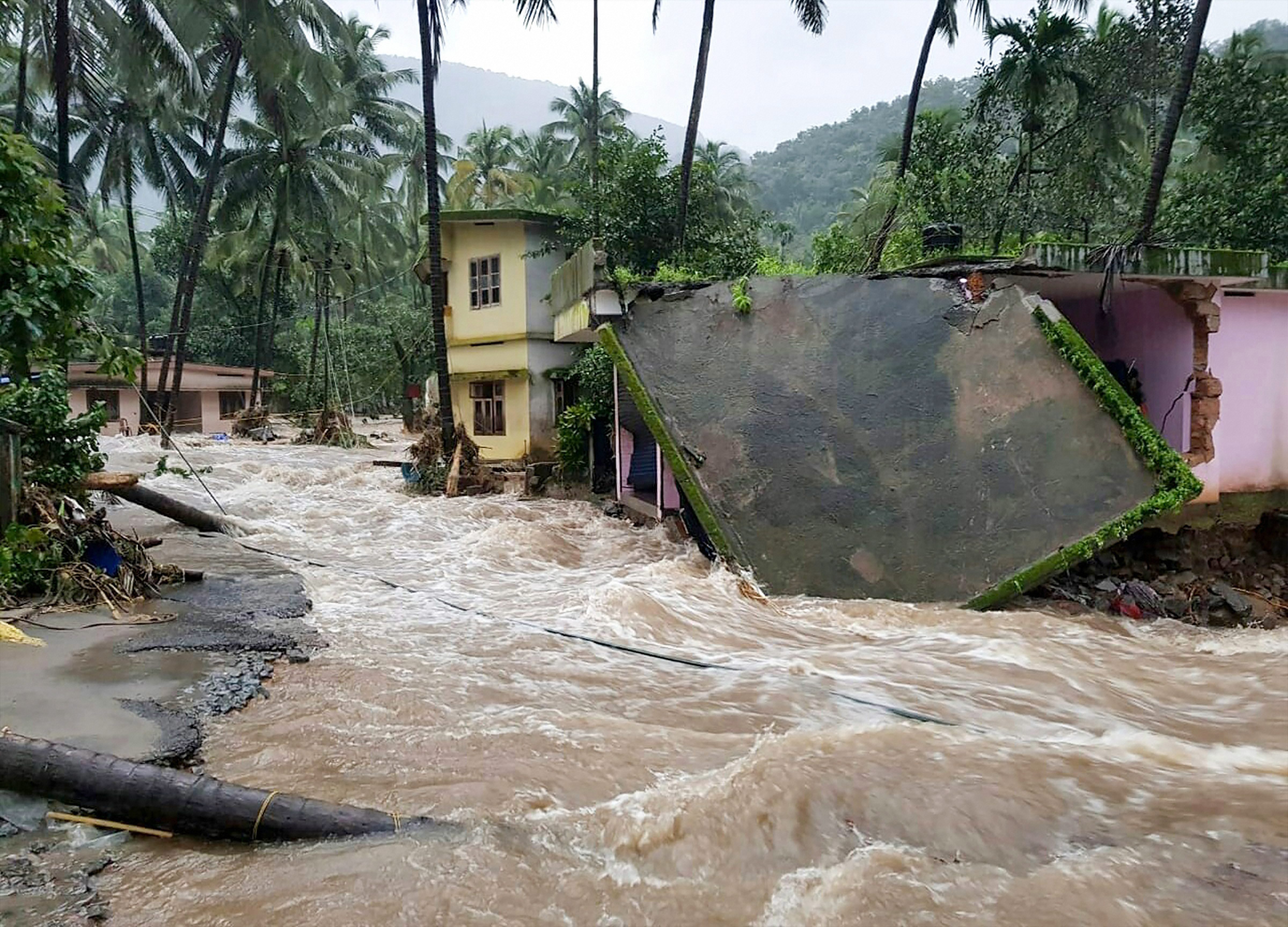
This comes after Kerala was affected by its worst flood in nearly a century. State Finance Minister Thomas Isaac had asked the central government to allow it to increase its share of the GST on some items or impose a national-level cess on select commodities to fund rehabilitation.
Six States Report Revenue Surplus
The matter of helping states bridge revenue shortfall that they are currently reporting was also discussed at the meeting. Six states, mostly consumption-led, are reporting revenue surplus in April-Aug. 2018 period, Jaitley told reporters.
The states are:
- Mizoram.
- Nagaland.
- Manipur.
- Arunachal Pradesh.
- Sikkim.
- Andhra Pradesh.
The remaining 25 states are reporting a revenue shortage ranging from 3 percent to 42 percent. Telangana and Puducherry reported the least and maximum revenue shortage, respectively.
Revenue Secretary Hasmukh Adhia visited five states that were reporting revenue shortfall— the gap between the anticipated 14 percent increase in states' revenue and its actual indirect tax collections—and submitted a report on his findings at the meeting.
The central government compensates states for any shortfall they report in indirect taxes subsumed under GST, keeping the base year as 2015-16, and calculating a 14 percent increase every year for first five years of the implementation of the new indirect tax.
One of the reasons states are reporting the shortfall is they had special powers to levy taxes like purchase tax or entry tax which inflated their tax base in 2015-16, Jaitley told reporters. As these taxes got subsumed under GST, they are facing difficulty in meeting the projected 14 percent increase in indirect taxes.
While the overall tax collection trends are positive, there is continued pressure on the government to boost its revenue, said Archit Gupta, founder of ClearTax, a taxation and financial solutions firm. “It remains to be seen how that plays out on annual return and reconciliation compliances and if it leads to heightened scrutiny for businesses.”
The panel that will study ‘Modalities for Revenue Mobilisation in case of Natural Calamities and Disasters' will be headed by Bihar Deputy Chief Minister Sushil Modi and comprises the finance ministers of Assam, Kerala, Maharashtra, Odisha, Punjab and Uttarakhand as members. The panel must submit its report by Oct. 31.

-
Talking Points This Week: Leadership Shock At Nvidia, Earnings Strength, And The Fog Over Hormuz

The Anthropic IPO pricing and first trading day, Nvidia's upcoming earnings, and any fresh signals from Iran will set the tone for the following week.
-
Signature Play: The Classic Cocktail Is Dead. Or Is It?
Classic cocktails are disappearing from India's cocktail menus. But they're still being ordered, taught to bartenders and borrowed from. So, who's really having the last drink?
-
A New Samvat Wishlist: Inclusive Prosperity And Human Development
India has strengthened its economic foundations through infrastructure, digital access and enterprise. Its next growth chapter must deepen productivity, create better livelihoods and widen participation in prosperity.
-
Love, Sex Aur Dhokha: The Audacious Plot To Spy On Jensen Huang
A Taipei dinner, a Singapore chip buyer and a suspected Chinese asset: inside the alleged spy operation that got close to NVIDIA's Jensen Huang.
-
Ten Things I Learnt This Samvat
Patience can be a trap. Cheap stocks can stay cheap. Leverage can wipe you out. What did Samvat 2082 teach us? Niraj Shah writes on 10 lessons from the year gone by.
-
Talking Points This Week: Tech Nerves, FII Buying, And A Faraway Banking Shock
The global markets are not shining this Diwali. The exception in the large markets is, India.
-
Midterm Rally Lasted A Day. The Hard Reality Of A Divided US May Last Two Years | Opinion
Between a contested AI boom, a debt ceiling that arrives in 2027 and a president with every incentive to act alone, the next two years may prove more volatile than the first day's rally suggests.
-
Blue Wave Will Derail the AI Trade but Won't Dismantle the AI Era | Unhedged Position
The Democrats' sweep of the US Congress will see politics collide with economic forces both over the long and short term.
-
It's Time To Take The GST Council's Bet On Trust Global
Payment records can prove India's services exports, and clear, proportionate rules can bring foreign digital sellers into the tax net.
-
Opinion | India at 38: From Innovation Overperformer to Innovation Powerhouse
India now has 453 VC-backed deep science startups, 18 of them late-stage, after 117 percent growth since 2020. Laurus Labs, at USD 9.3 billion, is the most valuable deep science company in any middle-income economy outside China.









