GST Compensation: The Centre Has Pushed States To The Wall, Says West Bengal Finance Minister
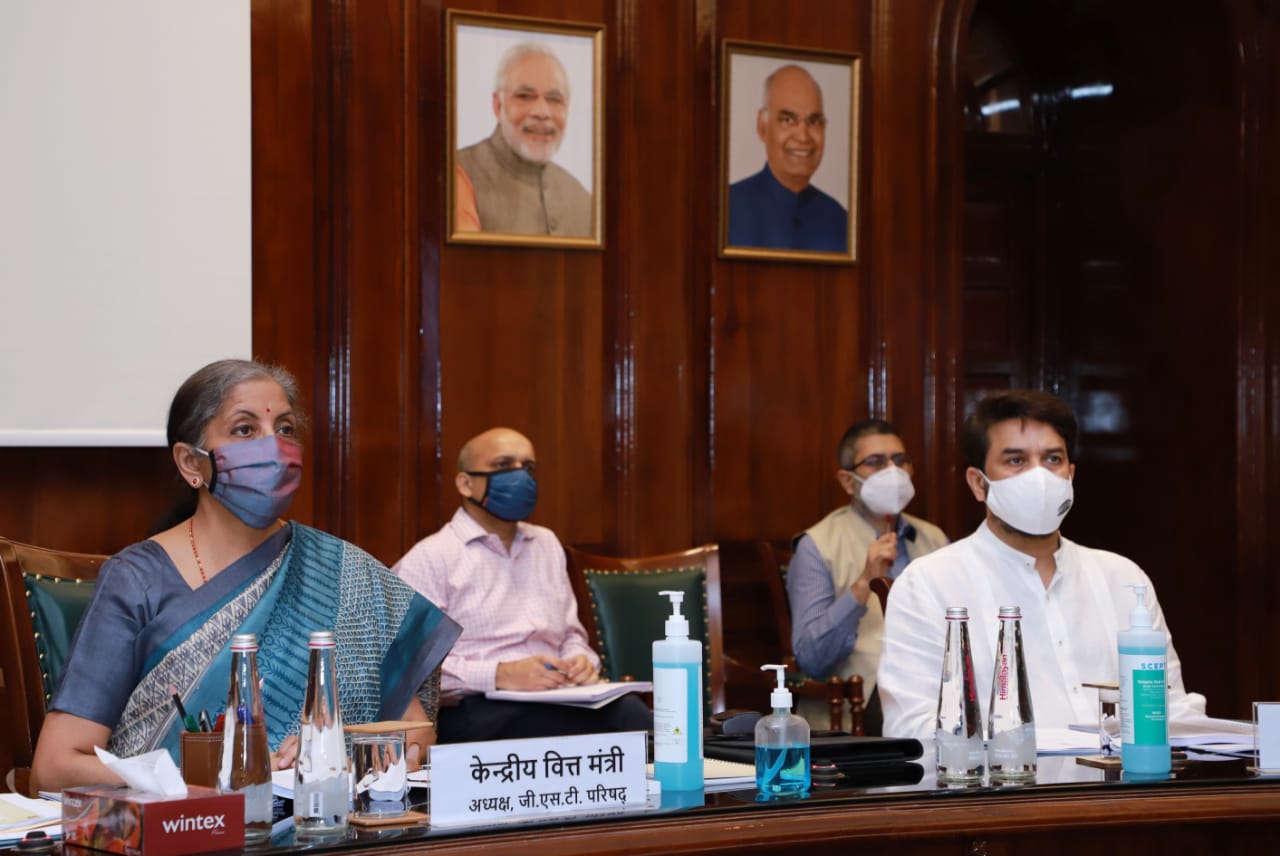
On the night of Oct. 5, states received their first payment of compensation cess for this financial year. A cumulative Rs 20,000 crore was paid out, of which West Bengal got Rs 1,000 crore, less than a tenth of what it estimated at the assured 14% budgeted rate of growth in GST revenue.
The state is among at least 10 others who have opposed the central government's proposal to meet the shortfall in compensation cess. That proposal sets forth two options, both which involve states borrowing to meet a shortfall that they argue the central government is constitutionally mandated to fund.
By not giving us the compensation as was the commitment and trust of the states, the central government has pushed states to the wall, West Bengal Finance Minister Amit Mitra told BloombergQuint, a day after the Oct. 5 GST Council meeting yielded no consensus.
He was responding to a question on whether states had their backs against the wall, given the shortage of funds and time.
Yes. We aren't against the wall, we've been pushed against the wall by not carrying out the commitment made to us. We gave up 70% of our taxes. Then we might as well go back to the VAT regime. 70% taxes we gave up, what for? For the one sentence, one assurance and one trust that we will be paid for five years and shall be paid for five years.Amit Mitra, Finance Minister, West Bengal
Mitra said states had done their part by unanimously agreeing to extend the compensation cess period indefinitely. “The question was two, three years or four years or five years? I intervened and said, it should be as long as it takes for the borrower, we obviously want the centre to borrow, as long as it takes, five years, six years, whatever it is till the principal and interest is completely paid, we should extend the cess.”
The cess is currently being levied for five years, 2017-2022 to raise funds so that the central government may compensate states for any shortfall in revenue on account of the 2017 implementation of GST. That shortfall is to be calculated at the rate of 14% increase over the base year, as per law.
The cess extension enables the central government to borrow with “no fear of servicing the debt or paying the principal,” MItra said.
The states have no capacity to borrow, no central bank window to borrow from nor the lower yield advantage the centre has, Mitra reiterated. “Who has the ability to borrow? Number one, the centre. Number two, does it have a mechanism to borrow from the RBI? Yes. Can the states go to the Reserve Bank and borrow? The answer is no. They have to go to the market, they have to do competitive bidding—31 entities—and they have to borrow. That's number two. Number three, what about the rate of borrowing? The central government can borrow at almost 2% less.”
Union Expenditure Secretary TV Somanathan recently indicated that the central government would backstop states to enable them to borrow en masse, at lower yields. “You could make a special issue of state bonds where the centre gives an undertaking or a letter of comfort that the interest and principle will be serviced from the compensation cess account held by the Government of India,” he'd told BloombergQuint.
Mitra said the central government had made no mention of any letter of comfort to the states. He also objected to its conduct in the past two GST Council meetings. In the first, on Aug. 27, they spent over five hours discussing the matter and then sprung two options on the states, he said. A point made previously by the Kerala Finance Minister as well.
In the meeting on Oct. 5, after six hours of discussion, during which the Union Finance Minister Nirmala Sitharaman listened patiently, the Revenue Secretary suddenly declared the meeting over. “The meeting is closed. The DEA has agreed to facilitate the states in borrowing and the meeting is closed.,” Mitra quoted the secretary as saying.
I was honestly shocked. It has never happened in the GST Council that an official would simply say the meeting is closed when there is a division in the house of almost equal proportion which either has to be re-discussed and a consensus arrived at or you have division, which is called voting.Amit Mitra, Finance Minister, West Bengal
That vote may now take place in the next GST Council meeting, to be held on Oct. 12.
Will the central government's proposals, specifically option 1, prevail with the support of 21 states. Mitra disputed that number, saying at least two states had clarified that they've yet to pick an option. Yet, if it were to come down to a vote next meeting, would the central government win?
“We don't know what the states will do. Maybe the other ministers who were not present (on Monday), it is the physical presence of the ministers that is required. Maybe more will be present, maybe their views will change, maybe the central government will rethink, maybe the arguments made will have some telling effect. I do not want to make a hypothetical case of what will happen.”

-
'Never Seen This Level Of Negativity': Sandeep Tandon Says The Next Rally May Be Closer Than You Think

Veteran investor Sandeep Tandon says foreign selling is easing, large-caps are due a comeback and mid-caps are crowded, while he turns positive on gold, power and pharma this Diwali.
-
Indians Stay With Family, Not In Hotels | The Reason Why
India still lacks enough clean, reliable and affordable hotels for budget-conscious travellers.
-
The Economic Imperative: Analysing The Material Driving Force Behind India-Canada Strategic Reset
This economic complementarity is further reinforced by deep institutional investment ties and talent mobility, which form the bedrock of the bilateral framework.
-
Medicine Pricing: Where Must Profit Stop?
India must confront excessive margins, hidden incentives and regulatory gaps that threaten the integrity of medicine.
-
Why Amazon And Flipkart Are Struggling To Beat Meesho In India's Smaller Cities
With 274 million users and lowest-cost logistics, Meesho is defending its value commerce crown against giants like Amazon and Flipkart.
-
High US Salaries, No Green Card Certainty: The Financial Calculation Facing Indian H-1B Families
The suspension of PERM processing at eight technology employers does not cancel existing H-1B visas. What it does is force a question many Indian families have been avoiding: is the US salary worth tying your career and family plans to one employer?
-
Swiggy vs Eternal: Food Delivery's Two Rivals Are No Longer In The Same Race
Eternal is building a private AI assistant, dark.ai. Swiggy is still working out how to make Instamart pay, with an operating loss of Rs 895 crore in the July-September quarter while Blinkit stayed profitable.
-
Where You Live Shapes How You Get To Work | The Reason Why
Two-wheelers are the most popular way to get to work in India, accounting for nearly 43% of workplace commutes.
-
Unhedged Position: Can India See An Indonesia-Style Time Correction?
The Nifty is trading below levels it first clocked in 2024. Is there, then, as I have suggested in the headline, potential that the current time correction drags on painfully for the next three-five, even ten years?
-
Navigating Friction And Energy Realities: An Analysis Of Marco Rubio's October Visit To India
Occurring at a critical juncture marked by stalled trade negotiations and escalating geopolitical pressures over global energy supplies, the visit offers a profound window into modern US-India relations.










