GST Collections For August At Six-Month High
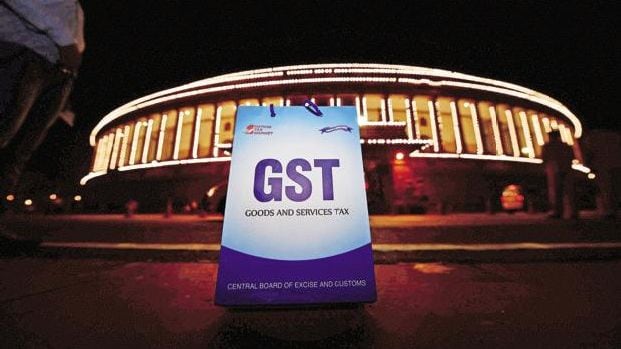
The government's goods and services tax collection rose to the highest in six months as the nation continued to ease lockdown restrictions to revive an economy that's headed for the first full-year contraction in four decades.
GST collections for August, collected in September, stood at Rs 95,480 crore, according to a statement from the Ministry of Finance. That was 10% higher than July and 4% more than the year-ago period.
August's collections include the tax paid by small businesses with turnover of up to Rs 5 crore for May, June and July as the due date was extended till Sept. 15, Sept. 25 and Sept. 29, respectively. The deadlines were extended to provide relief to such businesses as the Covid-19 pandemic ravaged the economy, freezing all activities barring essentials. Tax payment deadline for businesses with turnover above Rs 5 crore, however, was not extended.
Breakup of GST collections for August
- Central GST: Rs 17,741 crore
- State GST: Rs 23,131 crore
- Integrated GST: Rs 47,484 crore
- Compensation cess: Rs 7,124 crore
Integrated GST is settled between states and the central government based on consumption in respective states. After the settlement, central and state GST stood at Rs 39,001 crore and Rs 40,128 crore, respectively.
Some major industrial states have shown positive growth in GST collections which indicates economic recovery is on track, Finance and Revenue Secretary Ajay Bhushan Pandey said in another statement.
With the festive season starting next month, “we're much confident of better recovery in GST collection”, Pandey said.
With a significant part of the economy resuming operations, the GST collections have shown decent growth, said Abhishek Jain, a partner at EY India. The increased revenues provide an “optimistic outlook” for the economy, indicating business operations are returning to normalcy, Jain said.
Rajat Bose, partner at Shardul Amarchand Mangaldas & Co., agreed. Higher GST revenues indicate increased economic activity, he said. “It is expected that the revenue collection should continue to improve as we approach the festive season,” Bose said.
In September, more than of 5.74 crore e-way bills have been generated, showing an increase of 9.7% year-on-year, said Pandey. “These are affirmative signs of economic growth as the business activities are unlocking gradually and despite adverse impact of Covid-19, there are indicators of economic recovery,” Pandey said. About 26.19 lakh e-way bills were generated on Sept. 30, which was the highest number of e-way bills generated on a single day, he said.
Still, Rajat Mohan, partner at AMRG & Associates, feels the marginal 4% year-on-year increase in collections would not be enough for central government to compensate a 14% annual increase promised to state governments, leading to further stress in states' finances.
Compensation cess collections have continued to drop from pre-Covid-19 levels, and has prompted states to urge the central government to compensate them at the earliest as the nationwide lockdown and a fight against the coronavirus dried up their revenue. The central government owes states around Rs 1.50 lakh crore in GST compensation in April-July.

-
'Never Seen This Level Of Negativity': Sandeep Tandon Says The Next Rally May Be Closer Than You Think

Veteran investor Sandeep Tandon says foreign selling is easing, large-caps are due a comeback and mid-caps are crowded, while he turns positive on gold, power and pharma this Diwali.
-
Indians Stay With Family, Not In Hotels | The Reason Why
India still lacks enough clean, reliable and affordable hotels for budget-conscious travellers.
-
The Economic Imperative: Analysing The Material Driving Force Behind India-Canada Strategic Reset
This economic complementarity is further reinforced by deep institutional investment ties and talent mobility, which form the bedrock of the bilateral framework.
-
Medicine Pricing: Where Must Profit Stop?
India must confront excessive margins, hidden incentives and regulatory gaps that threaten the integrity of medicine.
-
Why Amazon And Flipkart Are Struggling To Beat Meesho In India's Smaller Cities
With 274 million users and lowest-cost logistics, Meesho is defending its value commerce crown against giants like Amazon and Flipkart.
-
High US Salaries, No Green Card Certainty: The Financial Calculation Facing Indian H-1B Families
The suspension of PERM processing at eight technology employers does not cancel existing H-1B visas. What it does is force a question many Indian families have been avoiding: is the US salary worth tying your career and family plans to one employer?
-
Swiggy vs Eternal: Food Delivery's Two Rivals Are No Longer In The Same Race
Eternal is building a private AI assistant, dark.ai. Swiggy is still working out how to make Instamart pay, with an operating loss of Rs 895 crore in the July-September quarter while Blinkit stayed profitable.
-
Where You Live Shapes How You Get To Work | The Reason Why
Two-wheelers are the most popular way to get to work in India, accounting for nearly 43% of workplace commutes.
-
Unhedged Position: Can India See An Indonesia-Style Time Correction?
The Nifty is trading below levels it first clocked in 2024. Is there, then, as I have suggested in the headline, potential that the current time correction drags on painfully for the next three-five, even ten years?
-
Navigating Friction And Energy Realities: An Analysis Of Marco Rubio's October Visit To India
Occurring at a critical juncture marked by stalled trade negotiations and escalating geopolitical pressures over global energy supplies, the visit offers a profound window into modern US-India relations.










