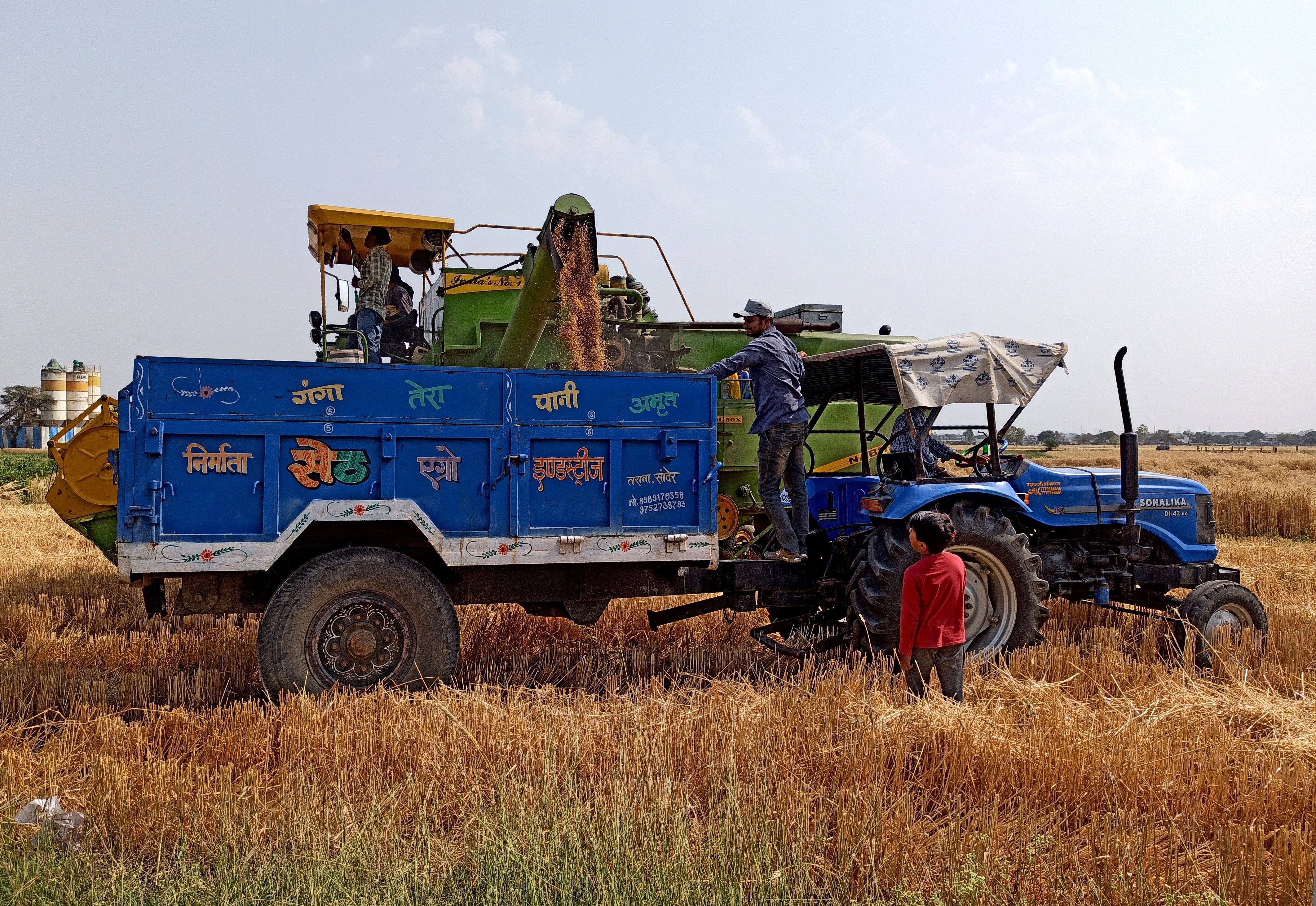
As unseasonal rains lashed across the country in the last weeks of March, the Indian Meteorological Department (IMD) foresees dry spells ahead in April, advising farmers not to delay harvesting rabi crops.
In its monthly outlook for April and seasonal outlook for April to June 2023, the IMD has predicted 'normal to above-normal maximum temperatures' in most parts of the country, signalling the likely end of the unseasonal rains and preparing farmers for drier times.
This is barring some areas in the peninsular, northeast, and northwest regions of India where below-normal maximum temperatures are likely.
The State Agromet Bulletins issued as of April 6 advise farmers to not delay wheat harvesting and storing across states like Uttar Pradesh, Punjab, Haryana, Madhya Pradesh, and Rajasthan.
Impact of March's Unseasonal Rain
The preceding unseasonal rains in March, which were accompanied by thunderstorms, hailstorms, and gusty wind, caused a stir in the major wheat-growing states of Punjab, Haryana, Uttar Pradesh, and Madhya Pradesh, pitting economists on whether they would significantly impact rabi output.
Government estimates place the extent of damage to the wheat crop at about 8–10% while anticipating better yield prospects in late-sown areas to make up for the production loss.
Devendra Pant, chief economist at India Ratings, told BQ that there may be some dent in the rabi harvest, but it is difficult to guess accurately as wheat harvesting time varies from state to state. "States like Madhya Pradesh generally harvest wheat towards the end of March, whereas further north, wheat harvesting is done around Baisakhi," he said.
Laxmi Joshi, an agricultural fellow at the National Council of Applied Economic Research (NCAER), feels the extent of damage to wheat acreage is not much considering the country's total wheat sown area of 34 million hectares this year.
Offering a state-wise observation, Joshi adds, "In Madhya Pradesh and Rajasthan, 80% of the wheat crop has been harvested; therefore, there has not been much damage to the crop in these two states."
Joshi added that in some parts of Madhya Pradesh, the government had begun procurement at the minimum support price, or MSP.
She said, "In Uttar Pradesh, Punjab, and Haryana, about 25% of the area under wheat was sown late, so untimely rains are helpful in these states for crop growth."
According to the second advance estimates of the government, which came out in February, prior to the unseasonal rains, wheat production in the country was estimated at 112.18 million tonnes, higher by 4.44 million tonnes than the production achieved during 2021–22. It must be noted that the area covered has also increased by 4.66 lakh hectares compared to last year.
"April and June are the peak months of wheat and chana procurement in the country, so dry weather in the coming weeks will boost the Centre's wheat procurement operations and push them closer to the targeted 34 million tonnes," Joshi told BQ.
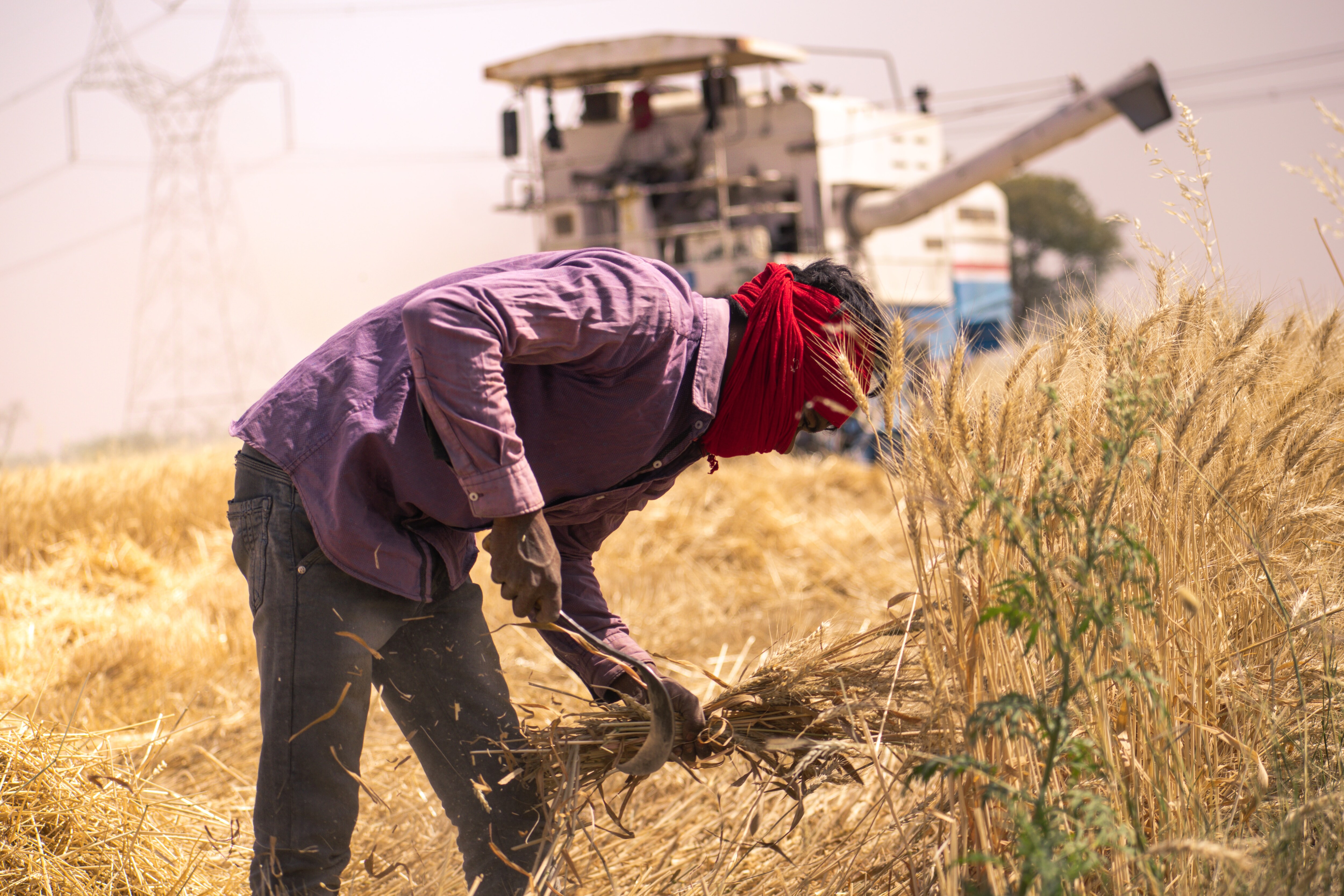
(Source: Anurag Gautam/Unsplash)
Caution: El Nino Ahead
With most weather forecasting agencies predicting a high probability of El Nino, India's experience with El Nino has been associated with poor rainfall and droughts. An analysis of India-specific episodes of El Nino years since 1956 reveals that food grain production declined in 57% of those episodes, according to the latest monthly economic review.
The government too has included the possibility of El Nino impacting the inflation trajectory and listed the precautions it has in place.
N R Bhanumurthy, Vice Chancellor at the BR Ambedkar School of Economics, told BQ that El Nino is one part of a larger risk of slowing agricultural growth that is building in India.
He stated that the phenomenon may cause a setback this year as traditional crops that depend on the monsoon will be hit. Amid the unseasonal rains, Bhanumurthy noted that some states had advised a slight delay in sowing earlier.
As semi-arid regions depend on rain, unlike reservoir water in river belt areas, Bhanumurthy expects this may impact the sowing season for upcoming crops like groundnut, sugarcane, rice, vegetables, and pulses.
Bhanumurthy adds that there have been three straight years of good agricultural production, making it natural to experience a slip in marginal output. Additionally, with the reopening of contact-intensive sectors and the demand for credit reviving across the non-food sectors, he expects this to negatively affect the three factors of production: land, labour, and capital.
A Ray of Hope
There are still two scenarios that could minimize the impact of El Nino in India, according to Pant. The first is improved irrigation over time.
"Although irrigation intensity is still low, it has increased in the last couple of decades, which has insulated Indian agriculture from the vagaries of monsoon rainfall to some extent," he noted.
The other is the possibility of a positive Indian Ocean Dipole (IOD). The IOD is a difference in sea surface temperature over the Arabian Sea and the eastern Indian Ocean, south of Indonesia. A positive IOD for India means greater monsoon rainfall and more active monsoon days.
Pant notes that in past El Nino years, IOD saved the Indian subcontinent from much harsher dry spells as compared to Thailand and Indonesia, whose rainfall was more affected.
"El Nino's impact on rainfall will have a varying impact on agriculture depending on the spread over time—June to September—and over space throughout the Indian subcontinent," he said.
Essential Business Intelligence, Sharp Market Insights, Practical Personal Finance Advice, Daily Fuel, Gold and Silver Prices and Latest Stories — On NDTV Profit.