Economic Survey 2024: Infrastructure Building Needs More Private Sector Financing
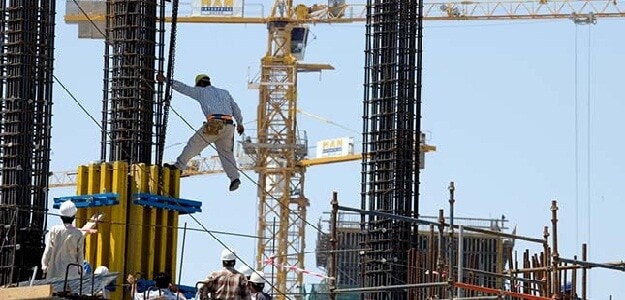
In India's story of infrastructure development, buoyant public sector investment has had a pivotal role to play in funding large scale infrastructure projects, according to the Economic Survey 2024.
However, in order to continue on this path of building quality infrastructure, there is a rising need for higher level of private sector financing and resource mobilisation from new sources, it added.
In order to execute this, not just policy and institutional support from the central government is needed but state and local governments also have a role to play.
There is also a need to improve data capture and reporting mechanisms for investments in infrastructure across instruments and sectors' composition across different projects, on a more granular level.
According to the Economic Survey, capital expenditure of the Union Government increased 2.2 times from fiscal 2021 to fiscal 2024, and that of state governments increased by 2.1 times.
It must be noted that the infrastructure push of the government has led to a rise in capex, the Survey noted.
If one were to see the breakup of this, the gross budgetary support to railways and National Highway Authority of India increased from 36.4% in March 2021 to 42.9% in March 2024.
Here is a quick look at the developments across infra sectors and some challenges that lie ahead:
Road Transport
In fiscal 2024, the sector attracted its highest ever private investment as the latter capitalised on a conducive policy environment, the Economic Survey said. The capital investment by the government and private sector touched about 1% of GDP in fiscal 2024, up from 0.4% in fiscal 2015.
The average pace of construction of national highways also increased by approximately 3 times to 34 km per day in fiscal 2024, from 11.7 km per day in fiscal 2014.
However, continuous ribbon development along national highways is now posing a challenge for the construction of new parallel roads, the survey said. It added that the slow onboarding of digital land records is also leading to land acquisition delays.
Hence, the government has now started the development of access-controlled national highways and is targeting all of them to have a minimum of two lanes.
Rail Transport
According to the Economic Survey, capex on railways increased 77% in the last five years and significant investments went towards construction of new lines, gauge conversation and doubling.
"The fast pace of infrastructure augmentation has been the result of a substantial increase in financial allocation along with close project monitoring and regular follow-up with stakeholders for expeditious land acquisition and clearances," the survey read.
Here, several policy initiatives, like the Amrit Bharat Station Scheme, the Mumbai-Ahmedabad High Speed Rail Project, and Dedicated Freight Corridors, have played an important role.
The government has now planned projects for three major corridors -- high-traffic density corridors; energy, mineral, and cement corridors; and rail sagar corridors to reduce logistics costs and carbon footprints. An important strategy would be to shift from diesel to electric traction.
Civil Aviation
The government's total capex plan for fiscal 2020–2025 stood at Rs 26,000 crore to develop, upgrade, and modernise airports. Of this, the Airport Authority of India has already achieved Rs 23,000 crore during fiscal 2020–2024, showing a growing sector.
During fiscal 2024, new terminal buildings at 21 airports were operationalised, and this led to an overall increase in passenger handling capacity by approximately 6.2 crore passengers per annum. Of the 21 greenfield airports that got in-principle approval, 12 have been operationalised, the survey showed.
While the sector continues to grow, there is a need to augment this capacity by adding more airports and expanding existing ones in the next five years.
A key thing to look out for would be the need to provide adequate long-haul connectivity from India, as a large proportion of Indian international traffic goes through connectivity hubs in the Middle East and Southeast Asia, the survey said.

-
AI Bias In Investing Cannot Be Eliminated, But It Can Be Governed

Framing is a particularly important example as identical financial information presented in terms of gains rather than losses can lead an LLM to reach a different assessment.
-
Joining The Dots | Dark Skies, Steady Diya: Why Hope Holds This Diwali
With war, a weak rupee and foreign outflows weighing on sentiment, policymakers at the NDTV World Summit and market veterans at NDTV Profit Ignite: Diwali Edition offered the same advice: stay invested and filter out the noise.
-
The Curious Case of Equitas Small Finance Bank And A CEO Who Quit For Stock
PN Vasudevan believes persistent investor concerns over a perceived conflict of interest had become a governance overhang on Equitas Small Finance Bank's stock, even as the lender improved profitability and asset quality.
-
Talking Points This Week: AI Cash Burn, A Tiger Comeback And An India That Still Finds Its Own Path
India is not immune to higher oil or tighter global liquidity, yet its earnings base is broader, its domestic policy levers are still available.
-
Foreign Investors Own Half Of HDFC Bank and ICICI Bank. An LTCG Cut Could Matter Most Here
Foreign portfolio investors have US$115 billion parked in HDFC Bank, ICICI Bank. If the government cuts long-term capital gains tax, Jefferies says returning foreign money could land here first.
-
'Never Seen This Level Of Negativity': Sandeep Tandon Says The Next Rally May Be Closer Than You Think
Veteran investor Sandeep Tandon says foreign selling is easing, large-caps are due a comeback and mid-caps are crowded, while he turns positive on gold, power and pharma this Diwali.
-
Indians Stay With Family, Not In Hotels | The Reason Why
India still lacks enough clean, reliable and affordable hotels for budget-conscious travellers.
-
The Economic Imperative: Analysing The Material Driving Force Behind India-Canada Strategic Reset
This economic complementarity is further reinforced by deep institutional investment ties and talent mobility, which form the bedrock of the bilateral framework.
-
Medicine Pricing: Where Must Profit Stop?
India must confront excessive margins, hidden incentives and regulatory gaps that threaten the integrity of medicine.
-
Why Amazon And Flipkart Are Struggling To Beat Meesho In India's Smaller Cities
With 274 million users and lowest-cost logistics, Meesho is defending its value commerce crown against giants like Amazon and Flipkart.










