Economic Survey 2019: Incentivising Dwarf MSMEs To Grow Into Large Firms
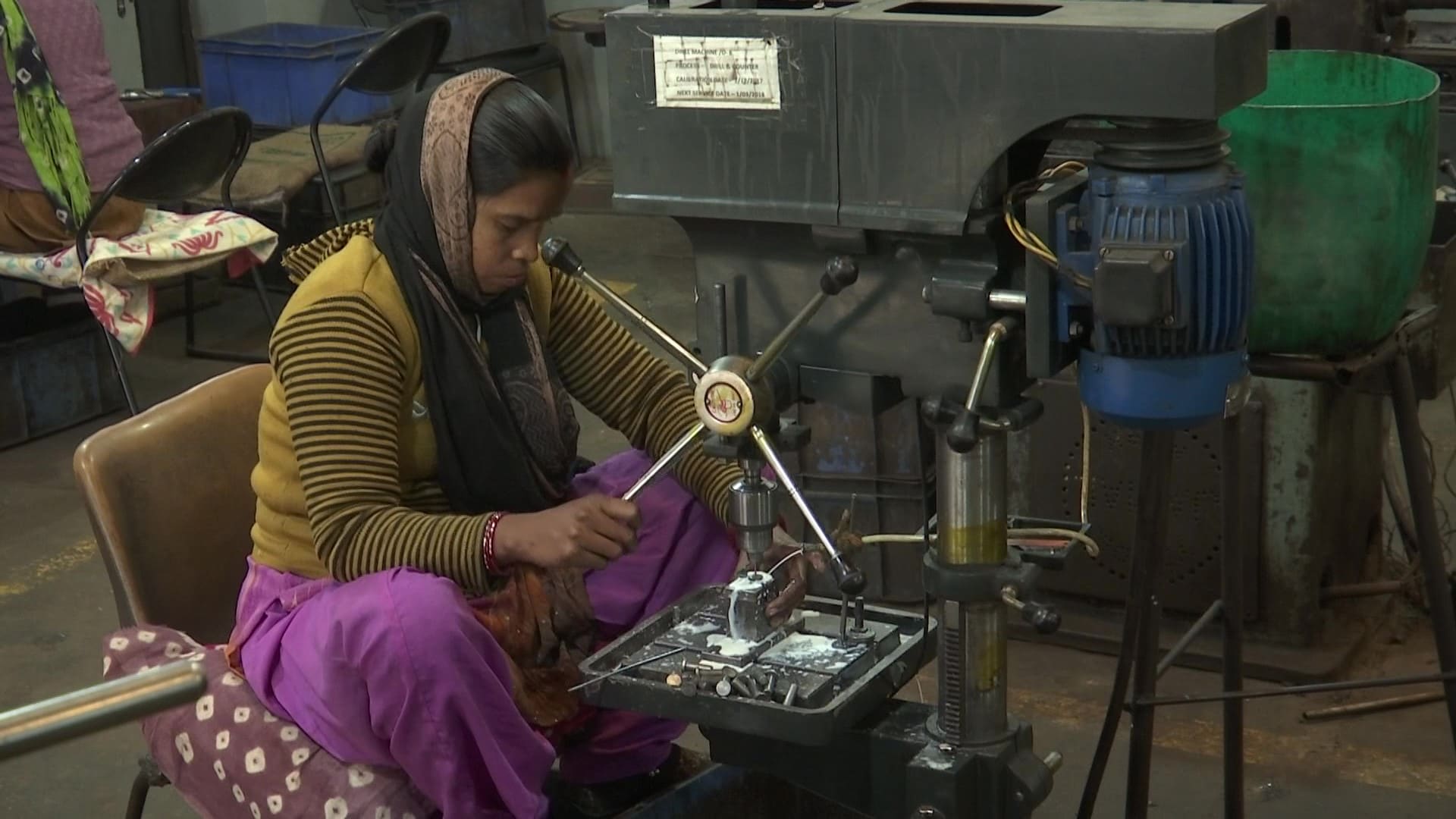
‘Dwarf' micro, small and medium-sized enterprises, that have less than 100 workers, need to be incentivised to grow into larger firms in order to help increase productivity, according to the Economic Survey 2018-19.
Policies over the last seven decades have stifled MSME growth in the economy and has kept these dwarf firms at the same size, the survey pointed out. Nearly half the micro, small and medium-sized enterprises have less than 100 workers and do not contribute much to India's productivity compared to larger firms, it said.
These dwarf MSMEs contribute 8 percent to productivity and account for 14 percent of the employment, according to the economic survey, which was tabled in Parliament by Finance Minister Nirmala Sitharaman on Thursday.

In contrast, large firms with more than 100 employees account for 75 percent of the employment base and contribute close to 90 percent of the productivity, it said. Yet, large firms only make up 15 percent of the total number of enterprises in the country.

Policies must, therefore, focus on unshackling MSMEs, the survey said.
MSMEs that grow not only create greater profits for their promoters but also contribute to job creation and productivity in the economy. Our policies must, therefore, focus on enabling MSMEs to grow by unshackling them.Economic Survey 2019
The survey, however, went on to argue that policies need to differentiate between ‘dwarf firms' and ‘infant firms'. The latter may have greater potential to grow rapidly and hence should be a focus of policies.
Job creation in India “suffers from policies that foster dwarfs, i.e. small firms that never grow, instead of infant firms that have the potential to grow and become giants rapidly, it said. “Size-based incentives that are provided irrespective of firm age and inflexible labour regulation, which contain size-based limitations, contribute to this predicament.”
Krishnamurthy Subramanian, chief economic adviser, made a slew of recommendations for the MSME sector in his first Economic Survey. These include:
- Grandfathering of existing incentives should focus on infant firms and not dwarf firms. Through the use of Aadhaar, the age-based policies can be implemented to ensure removal of the perverse incentives.
- Reorienting priority sector lending guidelines to encourage MSME lending, with a priority to startups and infant firms in high employment elastic sectors.
- Sunset clause for incentives for a period of five to seven years after which the firm should be able to sustain itself.
- Focus on high employment elastic sectors such as manufacturing of plastic products, electronic and optical products, transport equipment, machinery, basic metals and fabricated metal products, chemicals and chemical products, textiles and leather and leather products.
- Focus on service sectors with high-spillover effects, particularly in tourism, through the identification of 10 spots in each of the larger 20 states and five spots in nine smaller states and build necessary road, air infrastructure. This will create a ripple effect for creating jobs and will boost the economic activity. It will also reduce the migration of the rural labour force, which forms a major proportion of the total labour force.

-
The Economic Imperative: Analysing The Material Driving Force Behind India-Canada Strategic Reset

This economic complementarity is further reinforced by deep institutional investment ties and talent mobility, which form the bedrock of the bilateral framework.
-
Medicine Pricing: Where Must Profit Stop?
India must confront excessive margins, hidden incentives and regulatory gaps that threaten the integrity of medicine.
-
Why Amazon And Flipkart Are Struggling To Beat Meesho In India's Smaller Cities
With 274 million users and lowest-cost logistics, Meesho is defending its value commerce crown against giants like Amazon and Flipkart.
-
High US Salaries, No Green Card Certainty: The Financial Calculation Facing Indian H-1B Families
The suspension of PERM processing at eight technology employers does not cancel existing H-1B visas. What it does is force a question many Indian families have been avoiding: is the US salary worth tying your career and family plans to one employer?
-
Swiggy vs Eternal: Food Delivery's Two Rivals Are No Longer In The Same Race
Eternal is building a private AI assistant, dark.ai. Swiggy is still working out how to make Instamart pay, with an operating loss of Rs 895 crore in the July-September quarter while Blinkit stayed profitable.
-
Where You Live Shapes How You Get To Work | The Reason Why
Two-wheelers are the most popular way to get to work in India, accounting for nearly 43% of workplace commutes.
-
Unhedged Position: Can India See An Indonesia-Style Time Correction?
The Nifty is trading below levels it first clocked in 2024. Is there, then, as I have suggested in the headline, potential that the current time correction drags on painfully for the next three-five, even ten years?
-
Navigating Friction And Energy Realities: An Analysis Of Marco Rubio's October Visit To India
Occurring at a critical juncture marked by stalled trade negotiations and escalating geopolitical pressures over global energy supplies, the visit offers a profound window into modern US-India relations.
-
India Exports Capital. Why Not Export Trusteeship?
The big question, then, is whether India can build an institution that global borrowers, investors, banks, and lawyers can trust, even without an Indian connection.
-
France's Economy & Politics Are In Crisis | The Reason Why
Let's look at how the French economy and politics evolved under Nicolas Sarkozy, Franois Hollande and Emmanuel Macron.










