Economic Survey 2019: Lenders Recover Rs 74,497 Crore In 94 IBC Cases

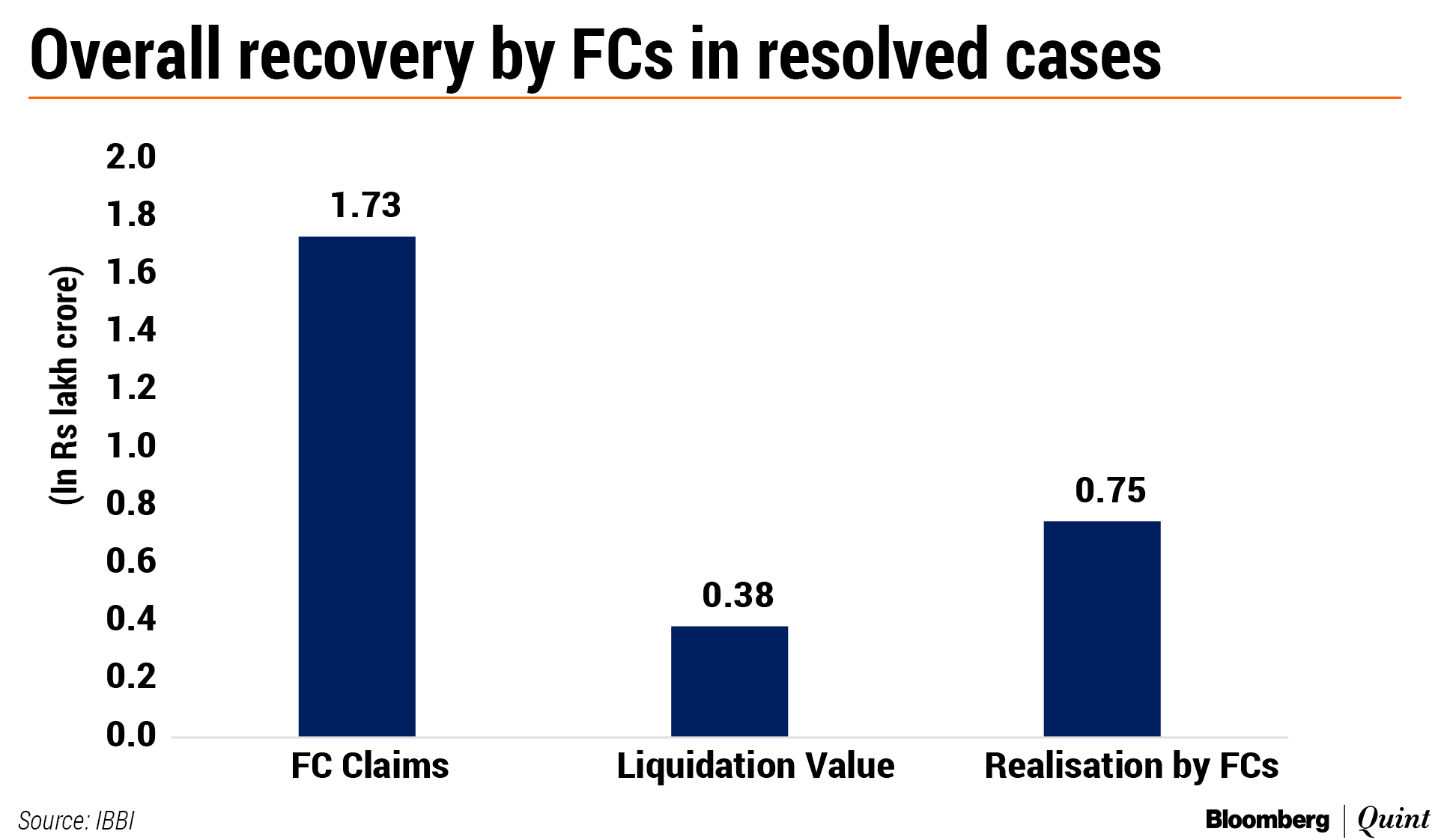
The Insolvency and Bankruptcy Code has achieved resolutions in 94 cases, with financial creditors recovering nearly 43 percent, or around Rs 74,497 crore, in claims as of March 2019, according to the Economic Survey 2019.
The recovery value of Rs 74,497 crore represents nearly double the liquidation value of these 94 cases, the survey showed.
Around 378 companies ended up in liquidation, in which the total claims stood at Rs 2.57 lakh crore as of March 2019, the survey said.
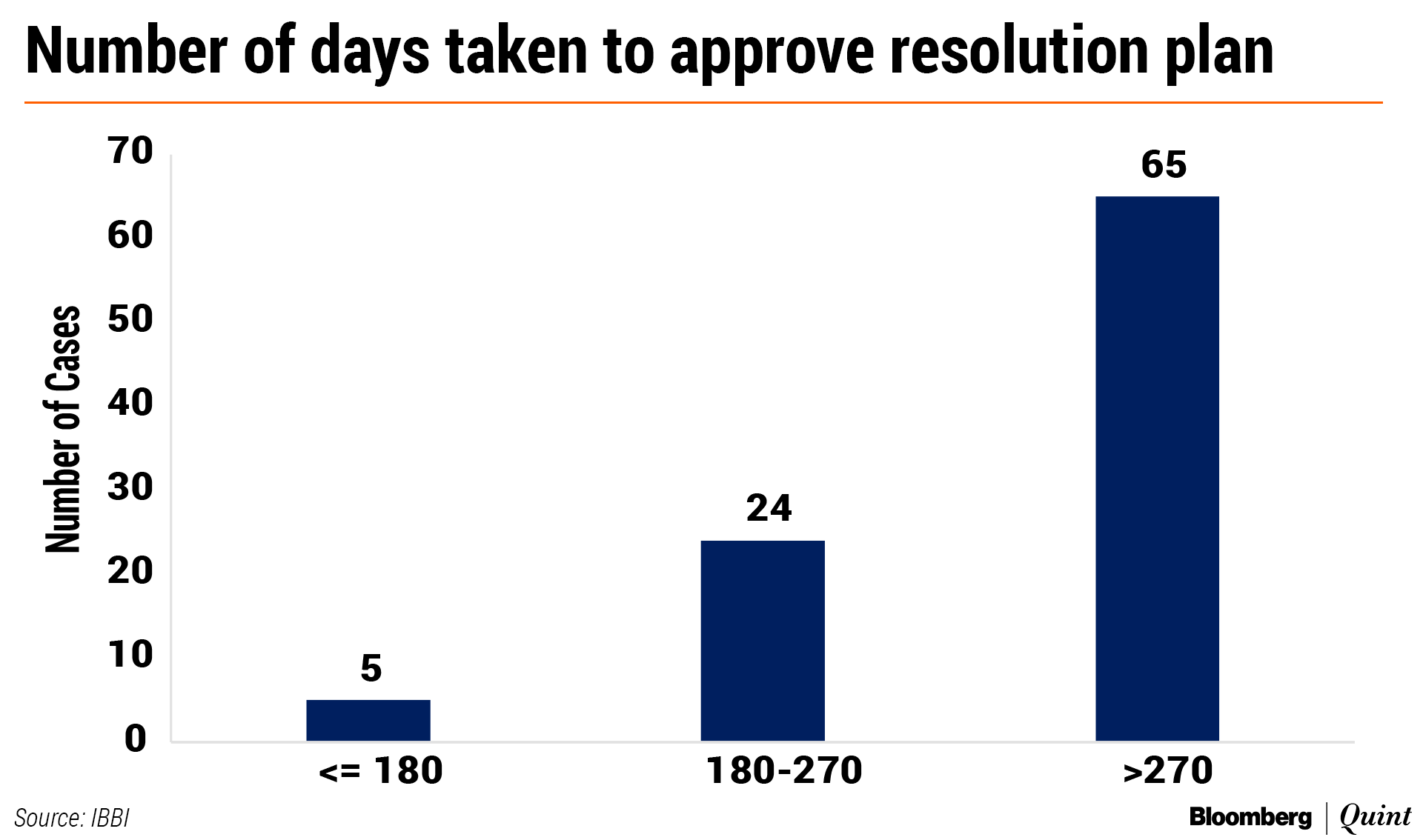
Out of the 94 corporate insolvency resolution plans which ended with a resolution plan, the National Company Law Tribunal approved the final resolution plan in 65 cases after the prescribed 270-day timeline, the survey found.
Over the last few years, the banking sector has been plagued by rising non-performing assets on their balance sheets. The total quantum of gross NPAs for the banking system reached about Rs 12-13 lakh crore as of March 31, 2018, with public sector banks holding around Rs 10.6 lakh crore worth of stressed assets, the survey found.
The introduction of the Insolvency and Bankruptcy Code in 2016, however, helped the banking system recover its outstanding dues from corporate defaulters in a far more efficient and effective manner compared to earlier insolvency, recovery forums, it said.
Previous recovery mechanisms that were available to lenders included the Lok Adalat, Debt Recovery Tribunal and the Sarfaesi Act. But while the average recovery to lenders under these forums was 23 percent, the IBC has improved lender recoveries from stressed accounts to an average of 43 percent, the survey said.
As of February 2019, a total of 14,000 insolvency applications had been filed with the 10 benches of the National Company Law Tribunal across the country. Out of these, the NCLT had ordered the commencement of the corporate insolvency resolution process against 1,858 corporate defaulters as of March 31, 2019.
Out of the total cases admitted for CIRP proceedings under the IBC:
- 152 cases were closed on appeal, review or settlement
- 91 were withdrawn as the corporate defaulter settled their dues with their lenders under Section 12A of the code.
- Around 383 cases of voluntary liquidation were admitted by the NCLT against which dissolution orders were passed in 41 cases.
- A total of 1,143 cases are undergoing CIRP proceedings presently.
The survey said that the IBC has “struck a chord” with the banks and financial institutions, who use the forum as a method to resolve distressed assets and maximise returns, given that 738 cases or 40 percent of cases under IBC were filed by lenders themselves.
Operational creditors have benefited from the IBC, as vendors and suppliers from small and medium enterprises use the legislation to enforce their trade receivables or payments from their corporate buyers, it said.
Around 920, or 50 percent, of the cases admitted under the IBC were filed by operational creditors, the survey found.
The IBC has made a significant impact on the way the default of debts is viewed and treated by promoters and management. It has initiated a cultural shift in the dynamics between lender and borrower, promoter and creditor.Economic Survey 2018-19
Further, 91 cases or nearly 5 percent of the cases admitted were withdrawn under Section 12A of the IBC because lenders and defaulters were able to decide on a resolution plan outside of the process.
This is further indication that promoters feel threatened of losing control of the company and therefore are willing to pay off their debt before insolvency proceedings can be initiated, the survey said.
At the end of February 2019, 6,079 cases involving a total amount of Rs 2.84 lakh crore were withdrawn before the NCLT could admit them for CIRP proceedings, it said.
The survey cited the Reserve Bank of India data stating that Rs 50,000 crore was received by banks from previous NPA accounts and that an additional Rs 50,000 crore worth of accounts were “upgraded” from non-standard to standard assets.
The survey said that the effectiveness of the new insolvency law has improved India's resolving insolvency ranking from 134 in 2014 to 108 in 2019.
Reforms In The Pipeline:
- A draft Cross-Border Insolvency Bill
- Working group under former Securities and Exchange Board of India Chairman UK Sinha for corporate group insolvencies or liquidation proceedings.
- Working group under the chairmanship of P K Malhotra, former law secretary, submitted its report on a framework for individual insolvency or bankruptcy cases
- The survey said that use of technology should be enhanced by insolvency professionals, the Insolvency and Bankruptcy Board of India and the NCLT benches for case management. Tools like data mining are useful tools to assess the impact of the IBC on the ground, it said.

-
Indians Stay With Family, Not In Hotels | The Reason Why

India still lacks enough clean, reliable and affordable hotels for budget-conscious travellers.
-
The Economic Imperative: Analysing The Material Driving Force Behind India-Canada Strategic Reset
This economic complementarity is further reinforced by deep institutional investment ties and talent mobility, which form the bedrock of the bilateral framework.
-
Medicine Pricing: Where Must Profit Stop?
India must confront excessive margins, hidden incentives and regulatory gaps that threaten the integrity of medicine.
-
Why Amazon And Flipkart Are Struggling To Beat Meesho In India's Smaller Cities
With 274 million users and lowest-cost logistics, Meesho is defending its value commerce crown against giants like Amazon and Flipkart.
-
High US Salaries, No Green Card Certainty: The Financial Calculation Facing Indian H-1B Families
The suspension of PERM processing at eight technology employers does not cancel existing H-1B visas. What it does is force a question many Indian families have been avoiding: is the US salary worth tying your career and family plans to one employer?
-
Swiggy vs Eternal: Food Delivery's Two Rivals Are No Longer In The Same Race
Eternal is building a private AI assistant, dark.ai. Swiggy is still working out how to make Instamart pay, with an operating loss of Rs 895 crore in the July-September quarter while Blinkit stayed profitable.
-
Where You Live Shapes How You Get To Work | The Reason Why
Two-wheelers are the most popular way to get to work in India, accounting for nearly 43% of workplace commutes.
-
Unhedged Position: Can India See An Indonesia-Style Time Correction?
The Nifty is trading below levels it first clocked in 2024. Is there, then, as I have suggested in the headline, potential that the current time correction drags on painfully for the next three-five, even ten years?
-
Navigating Friction And Energy Realities: An Analysis Of Marco Rubio's October Visit To India
Occurring at a critical juncture marked by stalled trade negotiations and escalating geopolitical pressures over global energy supplies, the visit offers a profound window into modern US-India relations.
-
India Exports Capital. Why Not Export Trusteeship?
The big question, then, is whether India can build an institution that global borrowers, investors, banks, and lawyers can trust, even without an Indian connection.










