Delhi's Optional Power Subsidy May Not Help, Excise Loss To Hit Budget Estimate
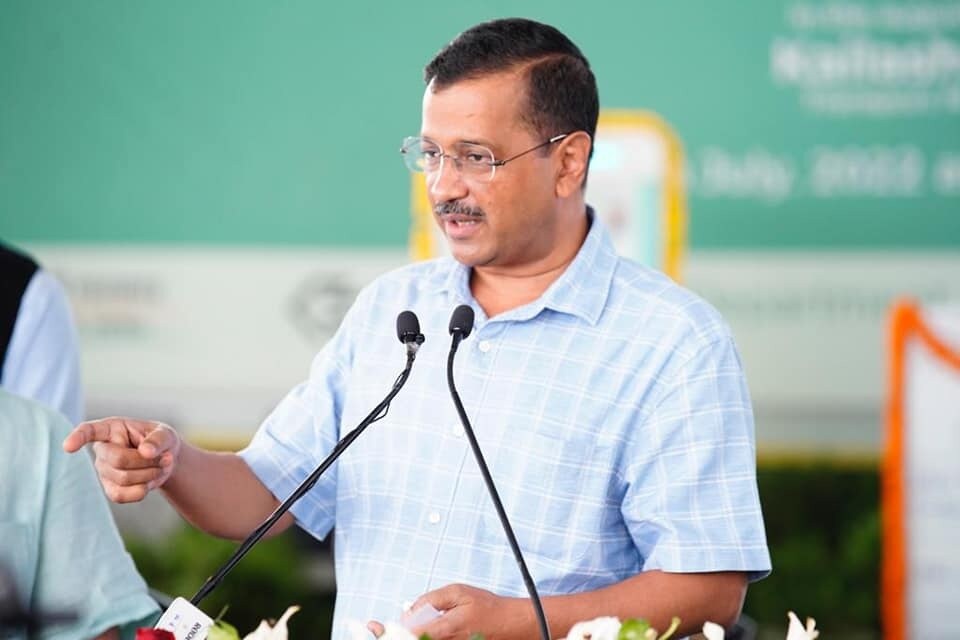
Residents of Delhi have received an SMS from the local power supplier, asking if they wished to continue availing discounted electricity. A web link takes to an online form as part of its voluntary subsidy scheme.
The city government informed the residents to apply before Oct. 31 if they want to continue free electricity up to 200 units a month and a 50% subsidy for up to 400 units. Those who opt out won't get the benefit.
Delhi has a total of 58 lakh domestic power consumers. Of these, 30 lakh get zero bills due to low power consumption; and around 16-17 lakh avail a 50% subsidy. The state has already pledged Rs 3,250 crore towards power distribution subsidy in its annual budget this year.
While the ultimate choice to opt out rests with the citizens of Delhi, Manish Gupta, associate professor at the National Institute of Public Finance and Policy, does not expect many to forgo the benefit.
According to reports, more than 6 lakh residents have already applied for the subsidy in the first three days alone.
"I don't expect the subsidy bill will come down by much, while there might be a marginal effect, it won't be enough to impact the expenditure bill," Gupta told BQ Prime.
Consumers can apply for the Voluntary Subsidy Scheme using from the comfort of their home using online modes. They can also visit the local BSES Customer Care Centre / DSK and the Division Office and submit the subsidy form. pic.twitter.com/46jetKZOKL
September 15, 2022While the state is unlikely to see a decline in power subsidy, its budget estimates face hit.
Delhi's Budgeted Revenue Expectations for FY23
Tax Revenue: Rs 47,700 crore
Non-Tax Revenue: Rs 1,000 crore
Central Grants: Rs 12,589 crore
Non-Debt Capital Receipts: Rs 602 crore
Net Receipts: Rs 61,891 crore
According to PRS legislative research, a major chunk of the state's own tax revenue for this fiscal is estimated to come from the state GST (45%) and state excise duty (16%).
While state GST revenues have grown 21% from last year's revised estimates, the state has budgeted for a nearly 90% surge in excise, banking on the foreign liquor draw.
But the Delhi government's decision to revoke its new liquor policy is expected to affect this math. A fall in revenue surplus to the extent of excise collection can be expected, Gupta told BQ Prime.
"The revenues from the state excise are budgeted at Rs 9,500 crore and there will be a sizable fall in this. Last year also they budgeted for Rs 6,000 crore and achieved Rs 5,000 crore," he said. "So now we go back to the old policy, there will be an impact on the overall revenue collection, and subsequently the revenue surplus, if the budgeted expenditure holds."
The new excise policy claimed to liberalise liquor retail by making it more competitive and allowing retailers to decide the selling prices instead of a government-fixed maximum retail price. The state reintroduced its old liquor policy amid allegations of corruption.
To their credit, Delhi has been a revenue surplus state which will help, said Pratap Jena, an associate professor at NIPFP. "Even with the loss of excise (duty), they are likely to end on a surplus this fiscal and it will not destabilise any spending pattern."
In its budget, Delhi has projected a revenue surplus for 2022-23 at Rs 7,601 crore. Last year, its projections turned from a surplus of Rs 1,270 crore to a deficit of Rs 3,038 crore.
The state also expects a low fiscal deficit for the fiscal at 1.58% (Rs 9,194 crore), which lends confidence, according to Jena.
The Delhi government's revised estimates in the second half of the year could provide clarity on the extent of revenue loss.

-
Indians Are Travelling, But Not Every Journey Is A Holiday | The Week In Whys

Pilgrims, patients and working women are the real travellers, and the system hasn't quite caught up with them.
-
Getting To Work Costs Women More | The Reason Why
It is not just about women paying more than men. It is about women paying much more in cities than in villages.
-
AI Bias In Investing Cannot Be Eliminated, But It Can Be Governed
Framing is a particularly important example as identical financial information presented in terms of gains rather than losses can lead an LLM to reach a different assessment.
-
Joining The Dots | Dark Skies, Steady Diya: Why Hope Holds This Diwali
With war, a weak rupee and foreign outflows weighing on sentiment, policymakers at the NDTV World Summit and market veterans at NDTV Profit Ignite: Diwali Edition offered the same advice: stay invested and filter out the noise.
-
The Curious Case of Equitas Small Finance Bank And A CEO Who Quit For Stock
PN Vasudevan believes persistent investor concerns over a perceived conflict of interest had become a governance overhang on Equitas Small Finance Bank's stock, even as the lender improved profitability and asset quality.
-
Talking Points This Week: AI Cash Burn, A Tiger Comeback And An India That Still Finds Its Own Path
India is not immune to higher oil or tighter global liquidity, yet its earnings base is broader, its domestic policy levers are still available.
-
Foreign Investors Own Half Of HDFC Bank and ICICI Bank. An LTCG Cut Could Matter Most Here
Foreign portfolio investors have US$115 billion parked in HDFC Bank, ICICI Bank. If the government cuts long-term capital gains tax, Jefferies says returning foreign money could land here first.
-
'Never Seen This Level Of Negativity': Sandeep Tandon Says The Next Rally May Be Closer Than You Think
Veteran investor Sandeep Tandon says foreign selling is easing, large-caps are due a comeback and mid-caps are crowded, while he turns positive on gold, power and pharma this Diwali.
-
Indians Stay With Family, Not In Hotels | The Reason Why
India still lacks enough clean, reliable and affordable hotels for budget-conscious travellers.
-
The Economic Imperative: Analysing The Material Driving Force Behind India-Canada Strategic Reset
This economic complementarity is further reinforced by deep institutional investment ties and talent mobility, which form the bedrock of the bilateral framework.










