Consumer Should Be King In Budget 2018, India’s Top CFOs Say
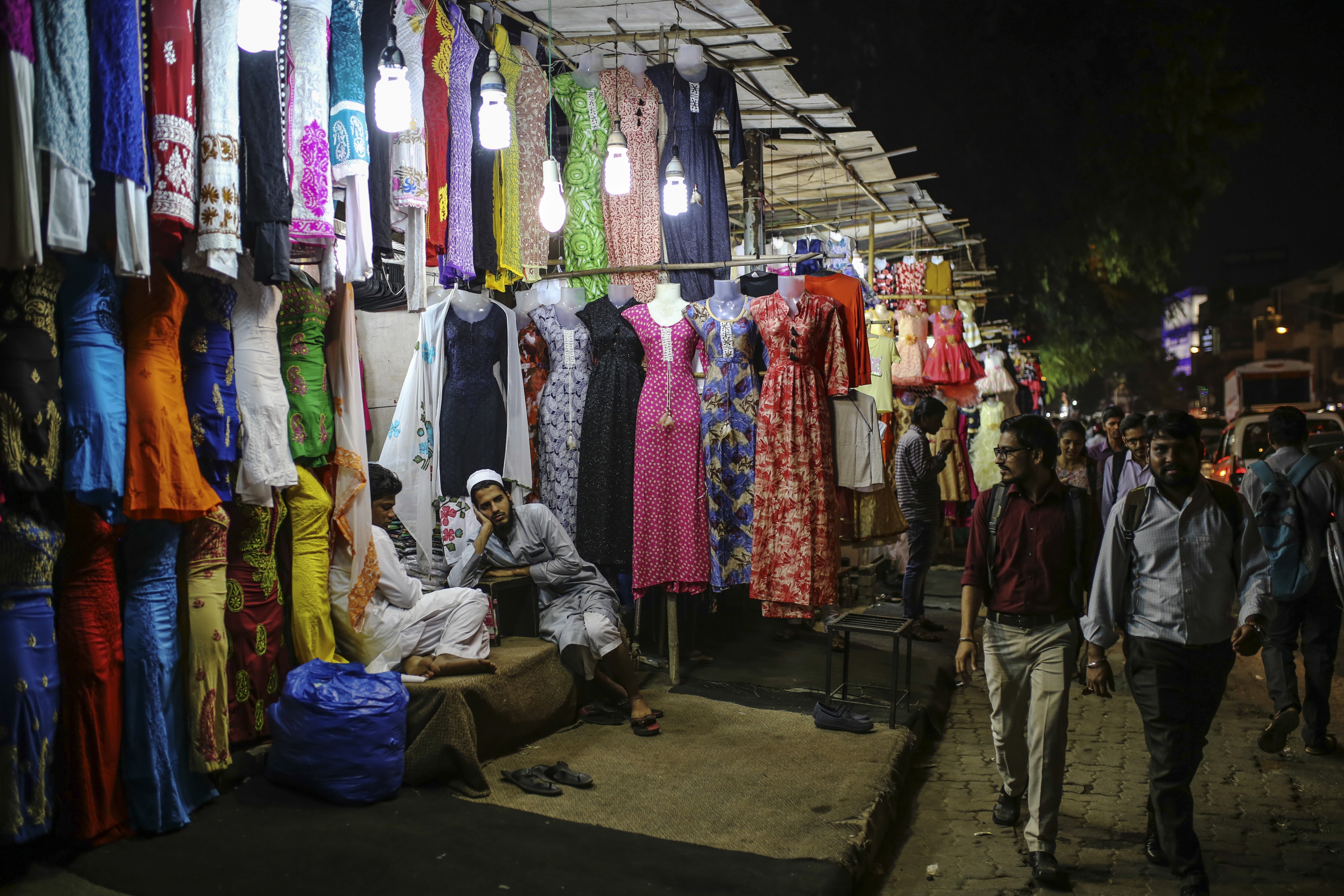
Prospects seem dim for a recovery in private investment in 2018. But the mood is a tad more upbeat when it comes to a pick-up in consumer demand. Yet the Union Budget will have to do some heavy lifting, said three of India's top chief financial officers in a video discussion on BQ Live.
“The second quarter was more like hope, that things are going to be normal so let me buy tractors,” said VS Parthasarathy, group chief financial officer of Mahindra & Mahindra Ltd.
“But come Q3, I'm seeing that it's not just green shoots, there seems to be clear demand coming to the rural sector. Therefore I'm seeing a lot more positivity in Q3 than sometime back.”
The data doesn't seem as confident. The full year gross domestic product estimate indicates moderate strength in private consumption. The Reserve Bank of India's consumer confidence survey for November shows declining optimism.

Striking an equally circumspect note, Seshagiri Rao, joint managing director and group CFO at JSW Steel Ltd., said, “Rural side, whatever demand used to be there in the past that is waning day by day”.
Rao also pointed out the problem of liquidity hurting smaller businesses and, in turn, consumers.
Generally, in the retail sector there is not enough liquidity because the banks are not lending to MSMEs at all. How do we bring back that liquidity through the banking system, in the retail segment and the MSME segment, whereby the demand comes back?Seshagiri Rao, Joint MD and Group CFO, JSW Steel
The Return Of Private Investment?
The Union Budget will have to do its best to boost demand and, in turn, give a leg up to flagging private sector investment. That was the broad view among the three, who between them represent the automobile, technology, real estate, steel, cement, power and infrastructure sectors.
R Shankar Raman, chief financial officer at infrastructure major Larsen & Toubro Ltd., is confident the Budget will deliver because the message has reached the government.
“2018 is going to be a make or break year. We have already seen some pushback from a political point of view, in terms of the commercial community reacting the way they have reacted in recent state elections. There is some unforgiving sentiment that's creeping in. Much of this has got to do with expectation mismanagement”.
Shankar Raman was more upbeat when talking about infrastructure order flow over the past four months. He described it as “far superior when compared to the first four months of the year” but said the problem of expanded lead times persists.
The problem is in the recent past, last two years, this lead time (the time between project conception to placing the order) has expanded disproportionately to what the government wanted to achieve. According to me, the biggest potential we have for the infrastructure sector to galvanise demand is if the government can find ways to crash time. The cost of time is very visible when you look at an infrastructure project, that too a large capital intensive project. Somewhere between 20-30 percent time overrun happens in most projects.R Shankar Raman, CFO, L&T
Raman insisted the “cash to cash cycle of all commercial entities needs to improve”.
Here too the data is confusing – data released by the Centre for Monitoring Indian Economy suggests almost no improvement in private capital investment levels. But a note by brokerage Jefferies suggests $19 billion dollars in projects lined up for financial year 2018-19.


Rao said the problem of surplus capacity has only marginally lifted. He attributed it to a pick-up in exports, but emphasised that the government will have to lead most of the investment effort in 2018 as well.
Government sponsored projects – metro rail, water pipelines, roads, railways – there definitely activity has started. That is bringing back some demand...But the robustness that is required to bring back confidence in private sector investment, I think it will take some more time.Seshagiri Rao, Joint MD and Group CFO, JSW Steel
Shankar Raman reiterated the importance of public sector investment but added that the one sector that might help boost private investment is metals and mining.
If you look at the minerals and metal space, the recovery of prices and increasing activity in terms of construction and mining related to construction, we see activity coming up. Hence, the leader could be such commodity businesses where the cycles are faster.R Shankar Raman, CFO, L&T
Corporate Tax Rate Cut?
In his first full Budget presentation in 2015, Finance Minister Arun Jaitley promised to do away with the many tax exemptions and incentives available to Indian companies and lower the headline corporate tax rate from 30 percent to 25 percent.
While the statutory tax rate in financial 2015-16 was close to 35 percent, the effective tax rate across almost six lakh companies was 28.24 percent. Since then many exemptions have hit their sunset dates leading to a rise in the effective rate. Parthasarathy said M&M was paying upto 5 percent more.
But the headline corporate tax rate was cut only last year and for businesses with an up to Rs 50 crore annual turnover. Companies had hoped the 2018 Budget will deliver on a lower tax burden but there seems to be little fiscal space for that in a year when revenue may fall short.
Flagship manufacturing programmes such as “Make In India” now face threat from U.S. tax cuts, said Parthasarathy.
My effective tax rate has gone up by 5 percent. Therefore, we have to look at what's to be done relatively. In the U.S. they have reduced the rates. So, what does that do to Make In India?VS Parthasarathy, Group CFO, M&M
Rao recommended further tax breaks for small- and medium-sized enterprises. Shankar Raman countered that he had no hopes of a tax cut this year.
“I am of the opinion that I have to be prepared that he will not reduce the taxes, he will not tinker with MAT. I may fear that he may look at stock market earnings and look how we could participate in portions of it.”
He also suggested that it was time to tax rich farmers. That will also help pave the way for corporatisation of the sector.
If India can take demonetisation it can politically risk such a move and pull it off with some impact. At least start defining thresholds. Upper end of the pyramid in agricultural cycle needs to be looked.R Shankar Raman, CFO, L&T
Watch the full discussion with Rao, Parthasarathy and Shankar Ram here.

-
Getting To Work Costs Women More | The Reason Why

It is not just about women paying more than men. It is about women paying much more in cities than in villages.
-
AI Bias In Investing Cannot Be Eliminated, But It Can Be Governed
Framing is a particularly important example as identical financial information presented in terms of gains rather than losses can lead an LLM to reach a different assessment.
-
Joining The Dots | Dark Skies, Steady Diya: Why Hope Holds This Diwali
With war, a weak rupee and foreign outflows weighing on sentiment, policymakers at the NDTV World Summit and market veterans at NDTV Profit Ignite: Diwali Edition offered the same advice: stay invested and filter out the noise.
-
The Curious Case of Equitas Small Finance Bank And A CEO Who Quit For Stock
PN Vasudevan believes persistent investor concerns over a perceived conflict of interest had become a governance overhang on Equitas Small Finance Bank's stock, even as the lender improved profitability and asset quality.
-
Talking Points This Week: AI Cash Burn, A Tiger Comeback And An India That Still Finds Its Own Path
India is not immune to higher oil or tighter global liquidity, yet its earnings base is broader, its domestic policy levers are still available.
-
Foreign Investors Own Half Of HDFC Bank and ICICI Bank. An LTCG Cut Could Matter Most Here
Foreign portfolio investors have US$115 billion parked in HDFC Bank, ICICI Bank. If the government cuts long-term capital gains tax, Jefferies says returning foreign money could land here first.
-
'Never Seen This Level Of Negativity': Sandeep Tandon Says The Next Rally May Be Closer Than You Think
Veteran investor Sandeep Tandon says foreign selling is easing, large-caps are due a comeback and mid-caps are crowded, while he turns positive on gold, power and pharma this Diwali.
-
Indians Stay With Family, Not In Hotels | The Reason Why
India still lacks enough clean, reliable and affordable hotels for budget-conscious travellers.
-
The Economic Imperative: Analysing The Material Driving Force Behind India-Canada Strategic Reset
This economic complementarity is further reinforced by deep institutional investment ties and talent mobility, which form the bedrock of the bilateral framework.
-
Medicine Pricing: Where Must Profit Stop?
India must confront excessive margins, hidden incentives and regulatory gaps that threaten the integrity of medicine.










