Canada Retaliates, Puts Tariffs On $107 Billion Of US Products
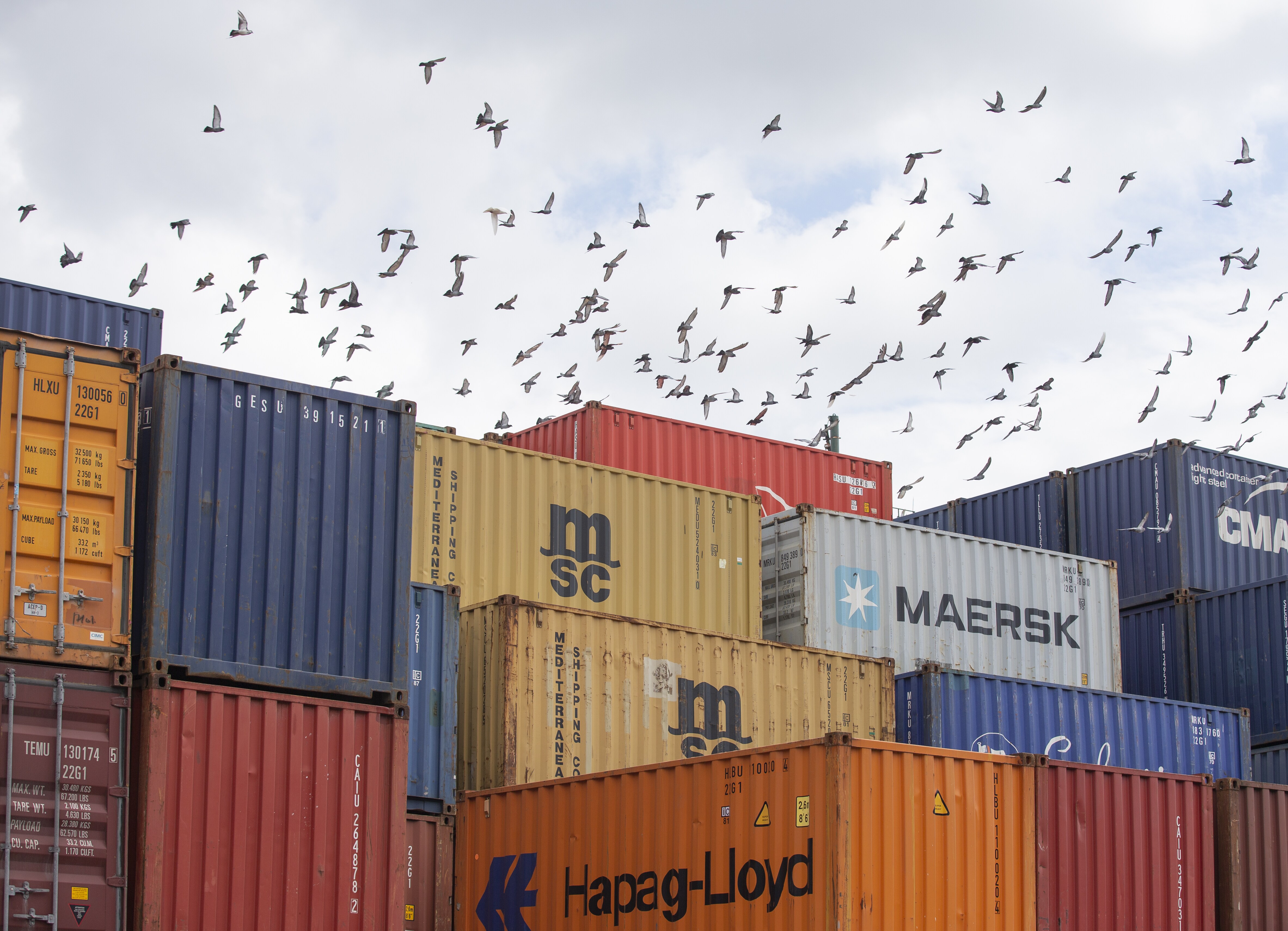
The Canadian government announced a sweeping package of counter-tariffs against US-made products after President Donald Trump confirmed that his administration will go ahead with levies against Canada and Mexico on Tuesday.
"Canada will not let this unjustified decision go unanswered," Prime Minister Justin Trudeau said in a statement late Monday. The retaliation plan is the same as the one he announced in February after Trump signed his executive order for broad tariffs.
The first stage is 25% tariffs on about C$30 billion ($20.6 billion) worth of goods from US exporters, and will go into effect at 12:01 a.m. New York time unless the US drops its tariffs, Trudeau said. A second round of tariffs at the same rate will be placed on C$125 billion of products in three weeks — a list that will include big-ticket items like cars, trucks, steel and aluminum.
"Our tariffs will remain in place until the US trade action is withdrawn, and should US tariffs not cease, we are in active and ongoing discussions with provinces and territories to pursue several non-tariff measures,' Trudeau said.
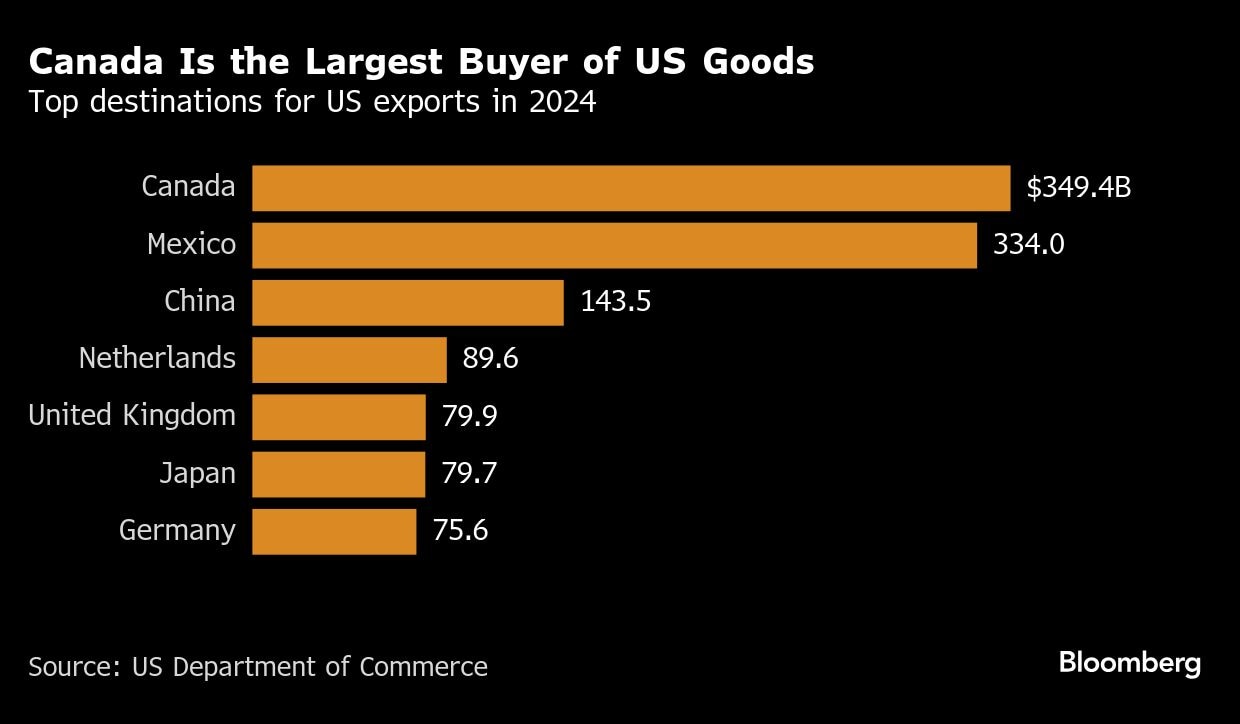
The retaliatory measures were expected after Trump said earlier there was no way for Canada and Mexico to avoid the broad tariffs he has been threatening since he was elected in November. It's a trade war that will disrupt one of the world's largest bilateral trade relationships, worth more than $900 billion in annual goods and services. Canada is the largest single buyer of US goods, and vice versa.
The Canadian dollar and stocks tumbled, with the benchmark S&P/TSX Composite Index falling 1.5%, the most since Dec. 18. Traders in overnight swaps increased bets the Bank of Canada would cut interest rates by 25 basis points at its March 12 meeting, rising to nearly 80% from about a coin flip.
Trump's executive order, signed Feb. 1, calls for 25% tariffs against most of what the US imports from Canada and Mexico and 10% on Canadian energy products such as crude oil, natural gas and uranium.
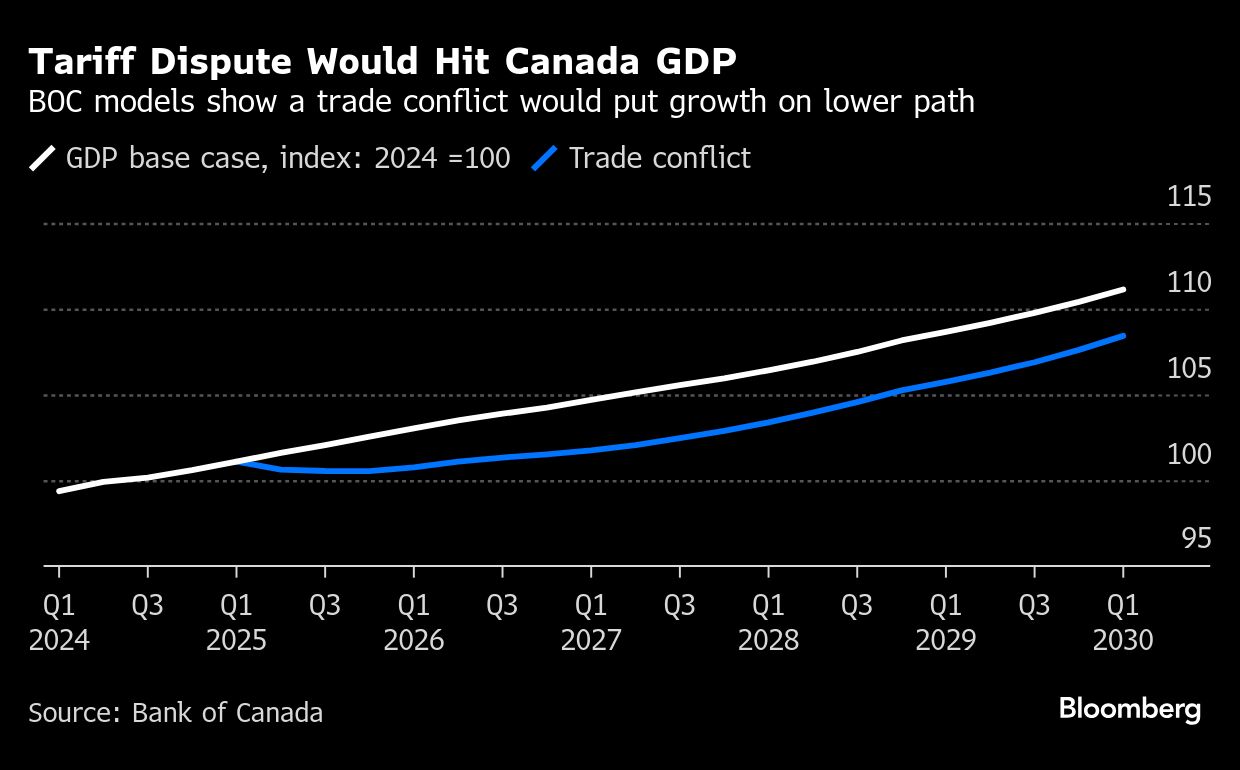
The Bank of Canada has warned that a prolonged tariff war has the potential to chop Canadian output by nearly 3% over two years and “wipe out growth” during that period. Demand for Canadian goods in the US would suffer, exporters would cut production and jobs, prices for products imported from the US would rise, and consumers and businesses would spend less.
Trudeau, who's set to leave office in a matter of days, returned Monday from a trip to London, where he met with UK Prime Minister Keir Starmer and other leaders.
"Businesses on both sides of the border have already been damaged by the uncertainty coming from President Trump's drip-drip-drip of tariff threats," Matthew Holmes, chief of public policy at the Canadian Chamber of Commerce, said in a statement.
'We will have a long road back to Canada and the US being trusted economic partners again. Businesses can't just switch their whole model to avoid tariffs and then go back again, depending on what politicians decide on any given day," Holmes said.
Trump's executive action alleged that Canada allows too much fentanyl to flow over the border. Canadian officials say that's simply not true — pointing to US government data that shows far less than 1% the illicit opioid that's seized by US border agents is found at or near the northern crossing.
Still, Trudeau's government announced a C$1.3 billion plan to beef up border security by adding more aerial surveillance through helicopters and drones. It included a pitch for a new North American joint “strike force” to tackle the fentanyl trade. The prime minister has also appointed a so-called fentanyl czar and increased the number of personnel available to patrol the border, and promised further measures to crack down on organized crime.
Canada's provinces are also prepared to retaliate against the US.
'A tariff on Canada is a tax on Americans," Ontario Premier Doug Ford said at a mining convention in Toronto on Monday. "If they're going to try to annihilate Ontario, I will do everything — including cutting off their energy — with a smile on my face. I'm encouraging every other province to do the same."
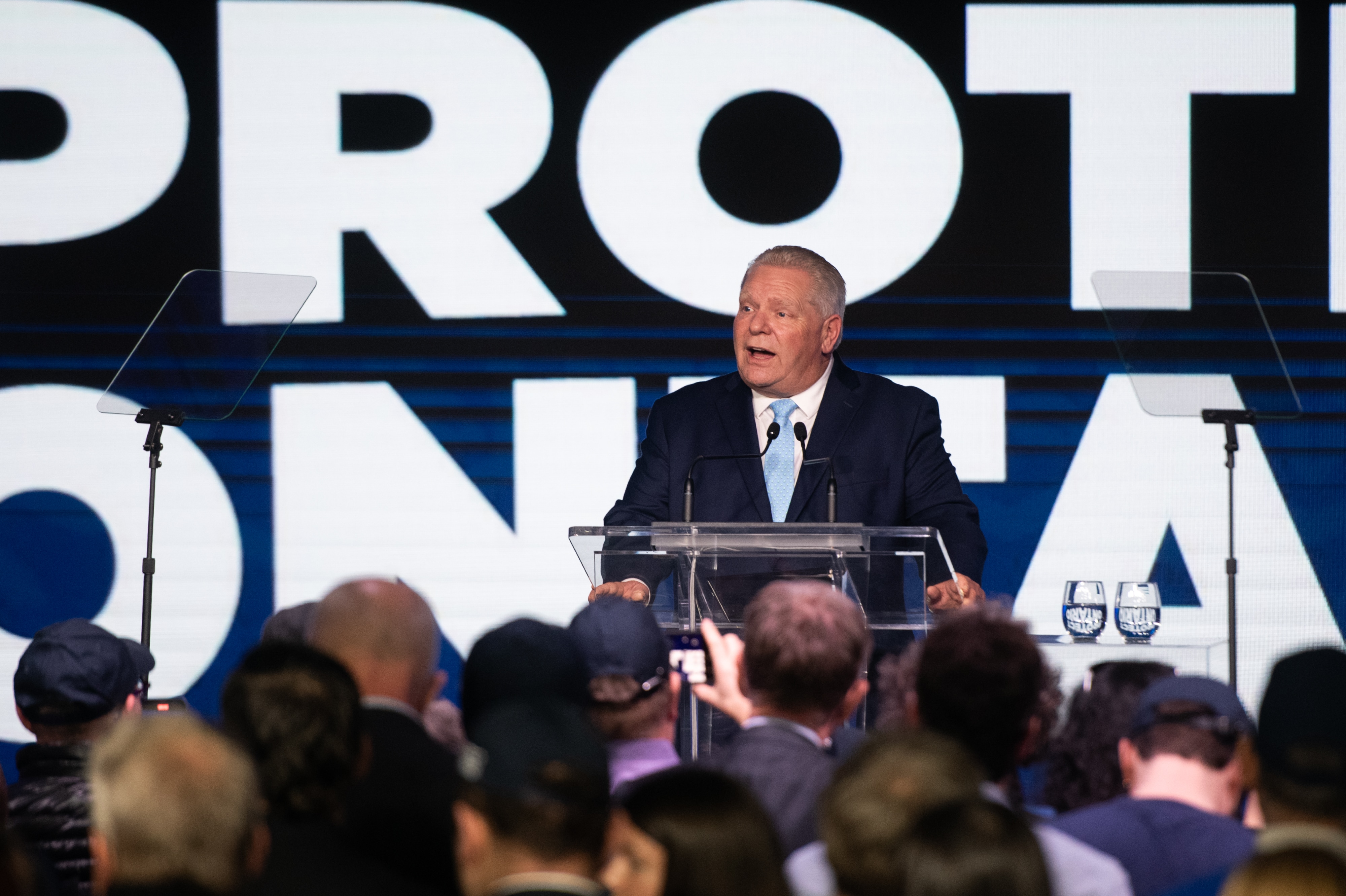
Ontario and other provinces have promised to limit or shut out US companies from government contracts, with Ford reiterating that he would end his province's contract with Starlink, the Elon Musk-controlled satellite network. And in a new threat, the Ontario premier said he was prepared to cut off nickel exports to the US. "It will shut down manufacturing because 50% of the nickel you use is coming out of Ontario," the provincial leader said in an interview with NBC News.
Canadian cabinet ministers, provincial premiers and other policymakers have made repeated trips to Washington in recent weeks to talk about the border and to urge US lawmakers and members of Trump's team not to impose the tariffs.
Joly said government officials have had good conversations with members of the Trump administration. But "there's a level of unpredictability and chaos that comes out of the Oval Office and we will be dealing with it," she said.
Immigration Minister Marc Miller said earlier Monday that there's "no question" tariffs will be painful for the Canadian economy.
"We will have to bring the fight and it will hurt Americans as well. It's important to reiterate that 35 of those states, their primary trading partner is Canada, so it will hurt them. And we hope the logic will prevail."

-
The Curious Case of Equitas Small Finance Bank And A CEO Who Quit For Stock

PN Vasudevan believes persistent investor concerns over a perceived conflict of interest had become a governance overhang on Equitas Small Finance Bank's stock, even as the lender improved profitability and asset quality.
-
Talking Points This Week: AI Cash Burn, A Tiger Comeback And An India That Still Finds Its Own Path
India is not immune to higher oil or tighter global liquidity, yet its earnings base is broader, its domestic policy levers are still available.
-
Foreign Investors Own Half Of HDFC Bank and ICICI Bank. An LTCG Cut Could Matter Most Here
Foreign portfolio investors have US$115 billion parked in HDFC Bank, ICICI Bank. If the government cuts long-term capital gains tax, Jefferies says returning foreign money could land here first.
-
'Never Seen This Level Of Negativity': Sandeep Tandon Says The Next Rally May Be Closer Than You Think
Veteran investor Sandeep Tandon says foreign selling is easing, large-caps are due a comeback and mid-caps are crowded, while he turns positive on gold, power and pharma this Diwali.
-
Indians Stay With Family, Not In Hotels | The Reason Why
India still lacks enough clean, reliable and affordable hotels for budget-conscious travellers.
-
The Economic Imperative: Analysing The Material Driving Force Behind India-Canada Strategic Reset
This economic complementarity is further reinforced by deep institutional investment ties and talent mobility, which form the bedrock of the bilateral framework.
-
Medicine Pricing: Where Must Profit Stop?
India must confront excessive margins, hidden incentives and regulatory gaps that threaten the integrity of medicine.
-
Why Amazon And Flipkart Are Struggling To Beat Meesho In India's Smaller Cities
With 274 million users and lowest-cost logistics, Meesho is defending its value commerce crown against giants like Amazon and Flipkart.
-
High US Salaries, No Green Card Certainty: The Financial Calculation Facing Indian H-1B Families
The suspension of PERM processing at eight technology employers does not cancel existing H-1B visas. What it does is force a question many Indian families have been avoiding: is the US salary worth tying your career and family plans to one employer?
-
Swiggy vs Eternal: Food Delivery's Two Rivals Are No Longer In The Same Race
Eternal is building a private AI assistant, dark.ai. Swiggy is still working out how to make Instamart pay, with an operating loss of Rs 895 crore in the July-September quarter while Blinkit stayed profitable.










