Kudos Modi Sir, For India’s First Post-Truth Budget
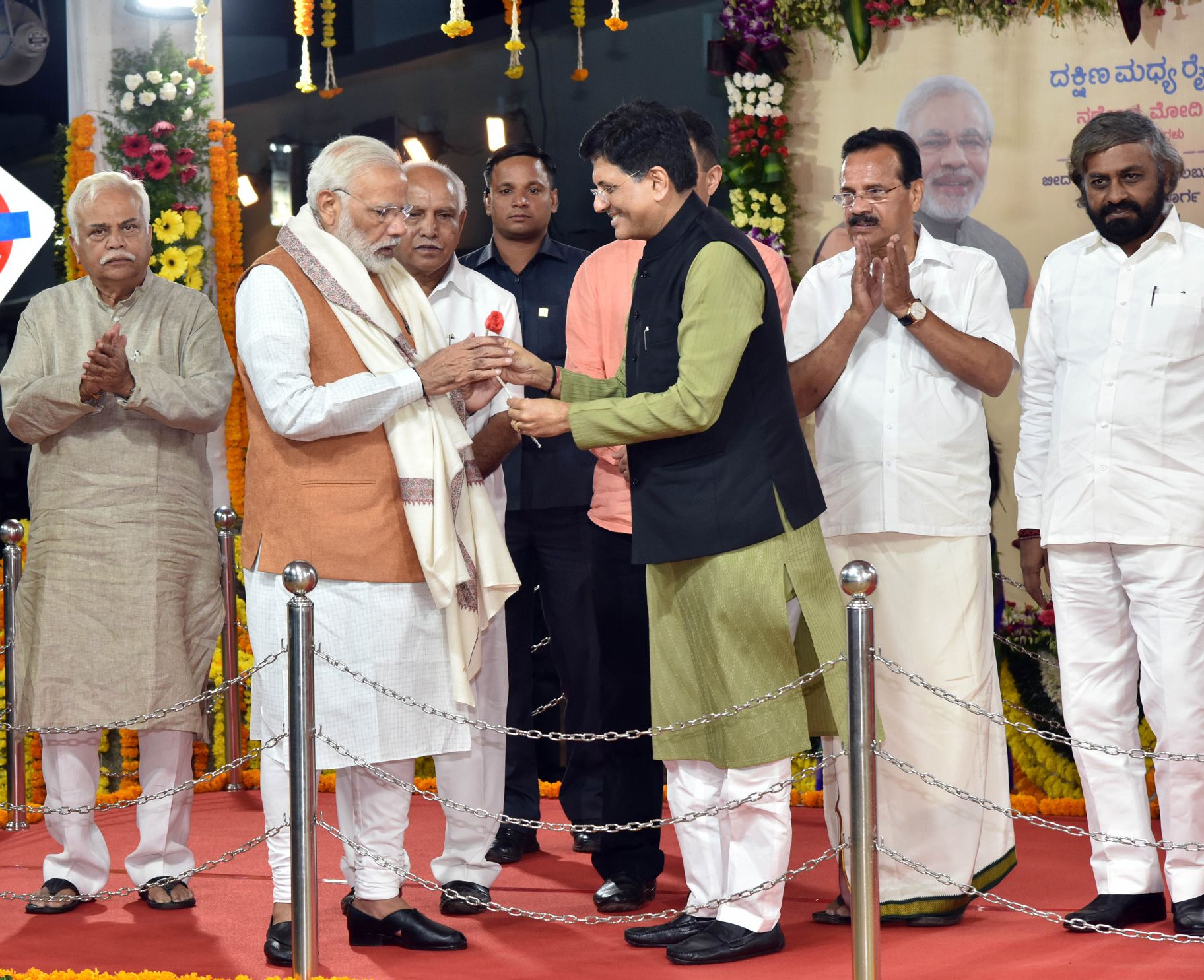
Prime Minister Narendra Modi loves to talk up all his ‘pioneering firsts'. Well, he's now added a truly lethal one to that arsenal – India's first post-truth budget!
Exactly 18 hours before the budget was presented in Parliament, India dramatically upped its previous two years' gross domestic numbers. Ironically, the most brazen ‘upgrade' was reserved for 2016-17 when demonetisation had clearly ravaged the economy. But apparently, people used their cancelled Rs 500 and Rs 1000 notes to go on such a 4-hour spending splurge—remember, citizens only had four hours before their old currency notes became less valuable than toilet paper—that growth in private final consumption expenditure was recalibrated from 7.3 percent to 8.2 percent. And trade, hotels, transport and communication sectors took wings, growing 40 basis points higher than estimated earlier.

But the fudging… err ‘re-stating'… did not stop there. The very next year, agricultural growth was yanked up from 3.4 percent to 5 percent. An eye-popping 50 percent; now I wonder why India's field statisticians missed the telltale signs of such joyful rural prosperity when they were in the countryside?
The net impact? GDP for 2017-18 was increased, at least on paper, by a huge 50 basis points. Now apparently, India's farmers were shining.
Don't Worry, I Control The Denominator
Magically, just hours before the budget was read out, India had added over Rs 3.5 lakh crore to its nominal GDP this year. Now, why is that important?
Since this is the denominator for all key metrics, including the critical fiscal deficit percentage, a bloated figure in the denominator would allow you to hide your budgetary failures.
You could safely overshoot your deficit, but tell the world “hey, since my GDP is actually larger than what I had estimated earlier, I am in the safe zone”. Simply put, a fudge in the denominator allows you to fudge the numerator as well. So cool.
The game was actually given away when Finance Ministry officials were put on the mat for reneging on the fiscal deficit target of 3.3 percent for the current year. Most nonchalantly, they said: “We have new GDP numbers. According to that, GDP for 2019-20 is Rs 225 lakh crore, as against Rs 220 lakh crore which we have assumed in our papers. If you work with these numbers, then our fiscal deficit is 3.1 percent for next year.” Simple.
Since the GDP is not a cold, objective data point, but an estimate, all you need to do is tweak a few things and change it. So cool. Just like that.
Have You Heard Don't Cry For Me Argentina?
I wonder whether Prime Minister Modi has heard of President Christina Fernandez de Kirchner of Argentina, and the earlier Peronist regime headed by her late husband, Nestor Kirchner. They gained notoriety for cooking Argentina's inflation statistics.

Here is a quote from an article in Forbes: “In 2006 the annual inflation rate reached almost 10 percent. This time Nestor Kirchner's administration perfected the fraud. In January 2007, in an effort to conceal the actual inflation rate, President Kirchner fired the experts responsible for measuring and publishing the consumer price index at the National Statistics and Census Institute … after they refused to modify inflation figures, and replaced them with political appointees.”
Does this story from Argentina ring a bell? How two independent professionals at India's National Statistics Commission have just quit because they refused to change the unemployment statistics... And how their jobs have been taken over by political appointees at NITI Aayog... Spooky, right? Now now, do not begin humming that heart-breaking song, Don't Cry For Me Argentina…
Honestly Modiji, do we want India to go the Argentina way? How can your nationalistic fervour even allow this to come into the realm of speculation?
From Cash To Accrual And Consolidated Accounting
Besides suspect GDP data, India's budget is an archaic statement based on a ‘cash accounting' policy. This allows our bureaucrats to merrily fudge the numbers, pushing some ‘off the balance sheet', while simply ignoring others which can be easily hidden. Just consider these examples:
- Until this year, the government had moved nearly Rs 2 lakh crore of its food subsidy liability on Food Corporation of India's balance sheet, which was borrowing from the National Small Savings Fund or Employees' Provident Fund Organisation or commercial banks. This year, the mysterious number has moved up to Rs 1.96 lakh crore; for next year, it's budgeted at Rs 1.78 lakh crore. Given FCI's precarious financial health, all these borrowings can only happen with an implicit or explicit sovereign guarantee. Worse, these are contracted at 100 basis points above the 10-year treasury rate.
In simple words, this is 2-3 percentage points of the fiscal deficit that's been shoved off the government's books.
- The NSSF is a milch cow for other public sector companies too. It may have given over Rs 1 lakh crore to the likes of Air India, NHAI and ‘others'. These are, ultimately, central government liabilities, which are, once again, hidden ‘off the balance sheet'
- Then there is the curious swap of equities between public sector companies in which cash is transferred to the central government; eg, Rs 37,000 crore from ONGC's purchase of HPCL, Rs 14,000 crore in the PFC-REC transaction, over Rs 50,000 crore invested by LIC in buying shares of government companies etc. Since most of these transactions are financed by debt, they have the same impact as an increase in the fiscal deficit, i.e., increasing the interest rate and crowding out private investment.
It's now imperative for the government to move towards accrual and consolidated accounting. That would be fundamental reform.
But until that happens, it's critical to publish the following schedules transparently in the budget:
- Liabilities incurred/accrued but not paid from central government accounts.
- Cash transfers—financed by external debt—by public sector companies to the central government, which would have gotten netted out in consolidated accounting.
If the above reforms don't happen, and we continue to ‘manufacture' economic numbers, we shall be condemned to post-truth budgets.
Of course, the innately wise Indian voter could also intervene in May 2019.
Raghav Bahl is the co-founder and chairman of Quintillion Media, including BloombergQuint. He is the author of two books, viz ‘Superpower?: The Amazing Race Between China's Hare and India's Tortoise', and ‘Super Economies: America, India, China & The Future Of The World'.

-
Talking Points This Week: Leadership Shock At Nvidia, Earnings Strength, And The Fog Over Hormuz

The Anthropic IPO pricing and first trading day, Nvidia's upcoming earnings, and any fresh signals from Iran will set the tone for the following week.
-
Signature Play: The Classic Cocktail Is Dead. Or Is It?
Classic cocktails are disappearing from India's cocktail menus. But they're still being ordered, taught to bartenders and borrowed from. So, who's really having the last drink?
-
A New Samvat Wishlist: Inclusive Prosperity And Human Development
India has strengthened its economic foundations through infrastructure, digital access and enterprise. Its next growth chapter must deepen productivity, create better livelihoods and widen participation in prosperity.
-
Love, Sex Aur Dhokha: The Audacious Plot To Spy On Jensen Huang
A Taipei dinner, a Singapore chip buyer and a suspected Chinese asset: inside the alleged spy operation that got close to NVIDIA's Jensen Huang.
-
Ten Things I Learnt This Samvat
Patience can be a trap. Cheap stocks can stay cheap. Leverage can wipe you out. What did Samvat 2082 teach us? Niraj Shah writes on 10 lessons from the year gone by.
-
Talking Points This Week: Tech Nerves, FII Buying, And A Faraway Banking Shock
The global markets are not shining this Diwali. The exception in the large markets is, India.
-
Midterm Rally Lasted A Day. The Hard Reality Of A Divided US May Last Two Years | Opinion
Between a contested AI boom, a debt ceiling that arrives in 2027 and a president with every incentive to act alone, the next two years may prove more volatile than the first day's rally suggests.
-
Blue Wave Will Derail the AI Trade but Won't Dismantle the AI Era | Unhedged Position
The Democrats' sweep of the US Congress will see politics collide with economic forces both over the long and short term.
-
It's Time To Take The GST Council's Bet On Trust Global
Payment records can prove India's services exports, and clear, proportionate rules can bring foreign digital sellers into the tax net.
-
Opinion | India at 38: From Innovation Overperformer to Innovation Powerhouse
India now has 453 VC-backed deep science startups, 18 of them late-stage, after 117 percent growth since 2020. Laurus Labs, at USD 9.3 billion, is the most valuable deep science company in any middle-income economy outside China.









