Budget 2019 Keeps Funding For School Education ‘Low On Priority’
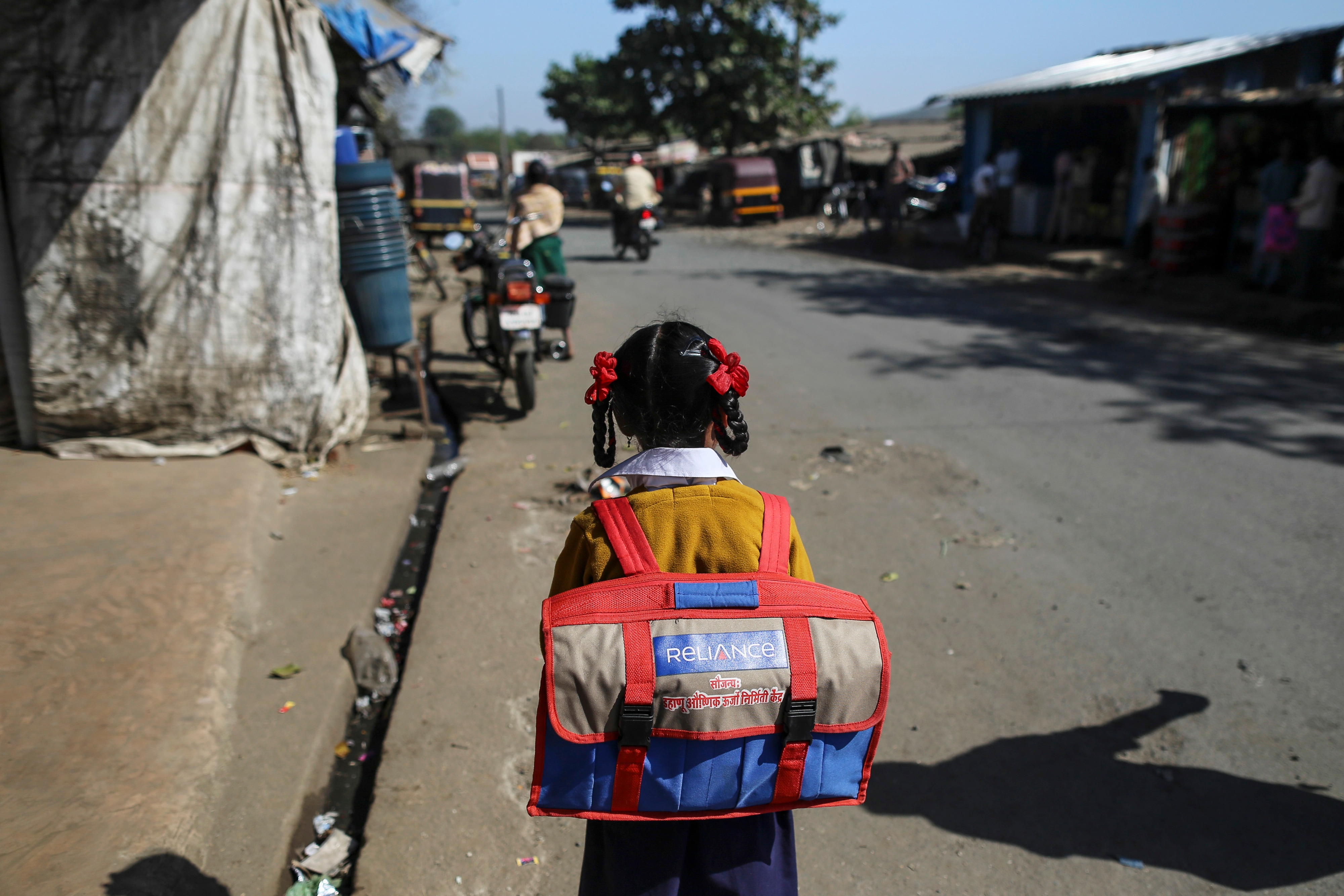
While higher education funding has seen a 28 percent increase in real terms, school education has witnessed a 3 percent decline during the last six years to Rs 39,000 crore, according to government's budget data.
The expenditure as a percentage of gross domestic product has also shown steady decline, from 0.53 percent to 0.45 percent.
Funds for the teacher training component declined by 87 percent over six years, from Rs 1,158 crore in 2014-15 to Rs 150 crore in 2019-20, indicating the low priority accorded.
Education holds the key to skilling, employability, and, in turn, contribution to realisation of faster growth of GDP. Education is in the concurrent list, indicating a role for both union and state governments. The education department is one of the largest in terms of revenue expenditure at the state level, and its budget includes payment of salaries of the elementary and secondary education teachers.
The central government revamped the Sarva Shiksha Abhiyaan (education for all), which aims to provide universal education to all children between six and 14 years, the Rashtriya Madhyamik Shiksha Abhiyan or national middle education mission, which combined secondary education and teacher training into a new scheme, Samagra Shiksha (holistic education) in April 2018.
Considering that the demand for both secondary and higher education remains largely unaddressed through publicly funds and therefore affordable means, this also leads to exclusion of girls and others who cannot afford private education.
Education Funded Through Cess Instead Of Funding Through The Budget
The funding of education through a cess instead of conventional budget funding is apparent in our analysis. A cess is a tax on a tax (calculated as a percentage of tax) and is collected and usually meant for a specific purpose, as the cess' name would indicate.
These cesses are collected as a part of direct taxes (corporation tax, income tax etc) and indirect taxes (with goods & services tax, only a GST-compensation cess is administered and earlier cesses of service tax have been abolished).
An education cess was first imposed in 2004-05 by the central government; currently, education cesses on corporation tax, income tax and customs are collected. The education cess and higher-education cess was revamped into a health-and-education cess from 2018-19 at 4 percent.
The central government has also introduced a social welfare surcharge of 10 percent on aggregate import duties from 2018-19.
Education expenditure has been declining since 2015-16, falling below anticipated collections for 2018-19 (revised estimates) and 2019-20 (budget estimates), indicating that the proposed budget is lower than even the anticipated cess collections.
This means that there is no other revenue being directed towards creating and strengthening public education. It also implies that revenue collected through cess, over which the states have no control, is perhaps being readied to be diverted elsewhere.
The most lucrative taxes accrue to the union government, and education is on the concurrent list, which emphasises a greater role for the central government in framing policies and backing them with funding to improve education across the country.
The introduction of GST has disturbed the flow of finances to the state governments and increased the dependency on the central government. The issues of input tax credit and delays in getting the compensation cess impacts expenditures at the state level.
(Madhusudhan Rao B.V & Jyotsna Jha are research advisor and director respectively, at Centre for Budget and Policy Studies, Bengaluru.)
This copy was published in a special arrangement with IndiaSpend.

-
Signature Play: The Classic Cocktail Is Dead. Or Is It?

Classic cocktails are disappearing from India's cocktail menus. But they're still being ordered, taught to bartenders and borrowed from. So, who's really having the last drink?
-
A New Samvat Wishlist: Inclusive Prosperity And Human Development
India has strengthened its economic foundations through infrastructure, digital access and enterprise. Its next growth chapter must deepen productivity, create better livelihoods and widen participation in prosperity.
-
Love, Sex Aur Dhokha: The Audacious Plot To Spy On Jensen Huang
A Taipei dinner, a Singapore chip buyer and a suspected Chinese asset: inside the alleged spy operation that got close to NVIDIA's Jensen Huang.
-
Ten Things I Learnt This Samvat
Patience can be a trap. Cheap stocks can stay cheap. Leverage can wipe you out. What did Samvat 2082 teach us? Niraj Shah writes on 10 lessons from the year gone by.
-
Talking Points This Week: Tech Nerves, FII Buying, And A Faraway Banking Shock
The global markets are not shining this Diwali. The exception in the large markets is, India.
-
Midterm Rally Lasted A Day. The Hard Reality Of A Divided US May Last Two Years | Opinion
Between a contested AI boom, a debt ceiling that arrives in 2027 and a president with every incentive to act alone, the next two years may prove more volatile than the first day's rally suggests.
-
Blue Wave Will Derail the AI Trade but Won't Dismantle the AI Era | Unhedged Position
The Democrats' sweep of the US Congress will see politics collide with economic forces both over the long and short term.
-
It's Time To Take The GST Council's Bet On Trust Global
Payment records can prove India's services exports, and clear, proportionate rules can bring foreign digital sellers into the tax net.
-
Opinion | India at 38: From Innovation Overperformer to Innovation Powerhouse
India now has 453 VC-backed deep science startups, 18 of them late-stage, after 117 percent growth since 2020. Laurus Labs, at USD 9.3 billion, is the most valuable deep science company in any middle-income economy outside China.









