Budget 2019: In India’s Sandalwood City, Small Businesses Struggle For Credit
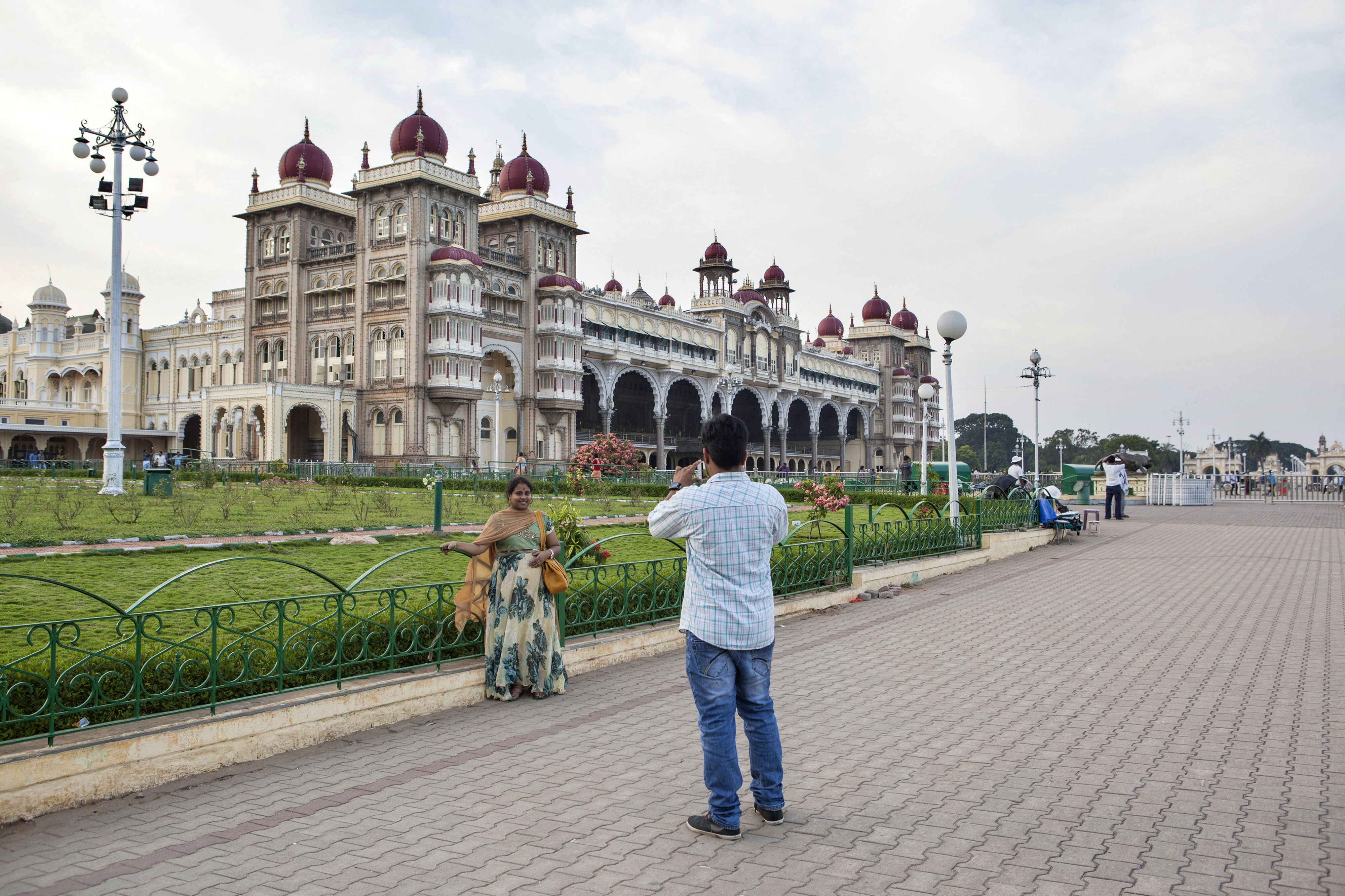
Mysuru, known for palaces and the ghee-dripping sweetmeat Mysorepak, is also India's sandalwood city—famous for incense sticks, figurines and furniture made from timber that costs more than Rs 25,000 a kilogram. Slain bandit Veerappan, who for three decades smuggled the wood prized for its fragrance and oil in forests bordering Karnataka, Tamil Nadu and Kerala, was born about 160 kilometres south of the erstwhile Mysore.
“It's a dangerous business,” said Mohammed Haneef, 34, owner of Rural Artisans Craft Centre that makes sandalwood wall panels, lamps, temple miniatures in the city's Metagalli area. “There's always a fear of robbery,” he said, watching over his workers through security cameras.
But that wasn't Haneef's worry in the months after Prime Minister Narendra Modi outlawed 86 percent of India's currency in November 2016. The cash squeeze threatened to wipe out his firm. Exporters who usually paid in cash and owed him nearly Rs 3 crore disappeared, said the owner of the small business that prior to demonetisation made Rs 5-6 crore in sales a year. Some offered to pay up in “worthless” demonetised notes. He defaulted on his monthly instalment of more than Rs 8 lakh on a Rs 9-crore loan taken in 2013. The business became less creditworthy.
Two years later, sales have recovered with orders from Thailand, China and Dubai. Still, when he sought a collateral-free loan to expand under a government scheme for small and medium-sized businesses, Haneef said banks didn't even know about it. “If you come up with schemes, it's important to implement them as well,” he said. “Otherwise, what's the point?”

Mysuru—150-km southwest of India's information technology and startup hub of Bengaluru—houses more than 23,000 small businesses. They are among 6 crore similar firms in India that contribute nearly a third of the nation's GDP. And many struggled after demonetisation. But even as the economy limped back to normal, small and medium enterprises that BloombergQuint spoke to face the same old problems. Delays in getting loans sanctioned, buying land or expanding business remain the sore points—much like in Gujarat. That's despite India jumping 23 spots to rank 77, the highest in South Asia, on World Bank's Ease of Doing Business Index last year.
Red Tape Blocks Credit Access
Santhosh Reddy, the owner of a factory that makes auto parts like brake shoes and repair kits, had to wait six months to get a Rs 1.5-crore loan to scale up. “It's a time-consuming process,” said a miffed Reddy, whose ESS ENN Engineering turns in an annual revenue of about Rs 36 crore. “One needs to produce a list of documents, including tax receipts and approval from the village panchayat as proof of property for the loan application,” he said. “If the papers have even minor errors, correcting them would take months.”
Reddy wanted to expand his business in Mysuru and was looking for land, but bureaucratic delays forced him to shift to Jamshedpur, Jharkhand. “There are schemes and subsidies (here), but everything takes a lot of time,” he said. “In Jamshedpur, we got land in three months and our unit was up in about a year there, while our project is still at the blueprint stage in Mysuru.”
Access to credit is the biggest pain point for the small industries of Mysuru, AS Satish, president of Mysore Chamber of Commerce and Industry Association, told BloombergQuint over the phone. “Even though the state and central governments have announced schemes like credit guarantee, no bank is willing to lend.”
Satish said benefits of state-run schemes fail to reach small businesses. That discourages young entrepreneurs, he said. “Karnataka may fare better than other states on other indicators, but how can you grow like this?”
Little wonder then that first-time entrepreneur KV Ananthashayana doesn't rely on the government. The owner of a corrugated box making unit purchased machines under the credit-linked capital subsidy scheme for technology sector two years ago. The incentive, however, was credited to his account only last month. “What was supposed to take three months took two years.”
Securing a loan can be laborious. “If you depend on the government then the project will get delayed, so we have to make temporary arrangements in the meantime until the loan is cleared,” he said. “You can't depend on them.”

Cluster Development Flounders
Cluster development was touted as boost for small businesses in the region, by either reducing their cost of land or helping them develop into ancillaries for larger industries. Clusters were proposed for printing, textiles, packaging and engineering sectors, but funds and land were allocated only for the printing cluster, according to Suresh Kumar, secretary of Mysore Industry Association. Even then, the printing cluster failed to make much headway.
Not even a single cluster has come up in Karnataka since 2014, said Kumar, blaming the government for the situation. He said this was despite small industries contributing the most to the regional economy after agriculture.
Sudden Wage Hike
The government, in the run up to the state elections last year, hiked minimum wages. Many SMEs were unable to pass on the increased costs to consumers.
Chirag Mehta's Sun Umbrellas, which makes 15 lakh umbrellas annually and employs 150 people, was one such firm. “From about Rs 7,300 a month, wages went up to Rs 11,100, so absorbing that was extremely challenging,” Mehta said, adding wage hikes are important but should have been done with an eye on business. “You can't effect a 40-percent wage hike just because it's an election year.”
Ananthashayana agreed. “If my buyer is ready to absorb the cost, I'm fine with it. If not, there won't be any margin.”
Optimism On GST
The hasty rollout of the goods and services tax followed by changes to its structure caused disruption in the economy, more so with MSMEs, as they initially struggled to cope with increased compliance.
Mehta was unable to file some returns last November due to technical glitches for which he said he was penalised Rs 3 lakh. “We were unable to submit the transitional form because the software wasn't accepting it,” he said. “Nobody in the department knew a way out.”
But he is optimistic and aims to clock a turnover of Rs 28 crore this year due to good rains and improved sales. “Supplying all over India has become far easier and you don't have the headache of a sea of forms.”
Haneef too is hopeful of growing his sandalwood business back to the levels before Modi announced the cash ban. And he has wish in an election year: “Whatever government comes to power next should implement the schemes and actually make it easier to do business in the country.”

-
Getting To Work Costs Women More | The Reason Why

It is not just about women paying more than men. It is about women paying much more in cities than in villages.
-
AI Bias In Investing Cannot Be Eliminated, But It Can Be Governed
Framing is a particularly important example as identical financial information presented in terms of gains rather than losses can lead an LLM to reach a different assessment.
-
Joining The Dots | Dark Skies, Steady Diya: Why Hope Holds This Diwali
With war, a weak rupee and foreign outflows weighing on sentiment, policymakers at the NDTV World Summit and market veterans at NDTV Profit Ignite: Diwali Edition offered the same advice: stay invested and filter out the noise.
-
The Curious Case of Equitas Small Finance Bank And A CEO Who Quit For Stock
PN Vasudevan believes persistent investor concerns over a perceived conflict of interest had become a governance overhang on Equitas Small Finance Bank's stock, even as the lender improved profitability and asset quality.
-
Talking Points This Week: AI Cash Burn, A Tiger Comeback And An India That Still Finds Its Own Path
India is not immune to higher oil or tighter global liquidity, yet its earnings base is broader, its domestic policy levers are still available.
-
Foreign Investors Own Half Of HDFC Bank and ICICI Bank. An LTCG Cut Could Matter Most Here
Foreign portfolio investors have US$115 billion parked in HDFC Bank, ICICI Bank. If the government cuts long-term capital gains tax, Jefferies says returning foreign money could land here first.
-
'Never Seen This Level Of Negativity': Sandeep Tandon Says The Next Rally May Be Closer Than You Think
Veteran investor Sandeep Tandon says foreign selling is easing, large-caps are due a comeback and mid-caps are crowded, while he turns positive on gold, power and pharma this Diwali.
-
Indians Stay With Family, Not In Hotels | The Reason Why
India still lacks enough clean, reliable and affordable hotels for budget-conscious travellers.
-
The Economic Imperative: Analysing The Material Driving Force Behind India-Canada Strategic Reset
This economic complementarity is further reinforced by deep institutional investment ties and talent mobility, which form the bedrock of the bilateral framework.
-
Medicine Pricing: Where Must Profit Stop?
India must confront excessive margins, hidden incentives and regulatory gaps that threaten the integrity of medicine.










