Budget 2017: Make Six Changes To India’s Labour And Education Laws
Demonetisation and the Goods and Services Tax are risky moves that swap caution for courage. Making India less poor needs four things; formalisation, urbanisation, industrialisation and human capital. Focusing on formalisation and human capital, I'd like to propose six interventions – three for formal employment and three for employable education – that the upcoming Union Budget could make.
1. Allow Low-Wage Employees to Choose Mandatory Salary Confiscation
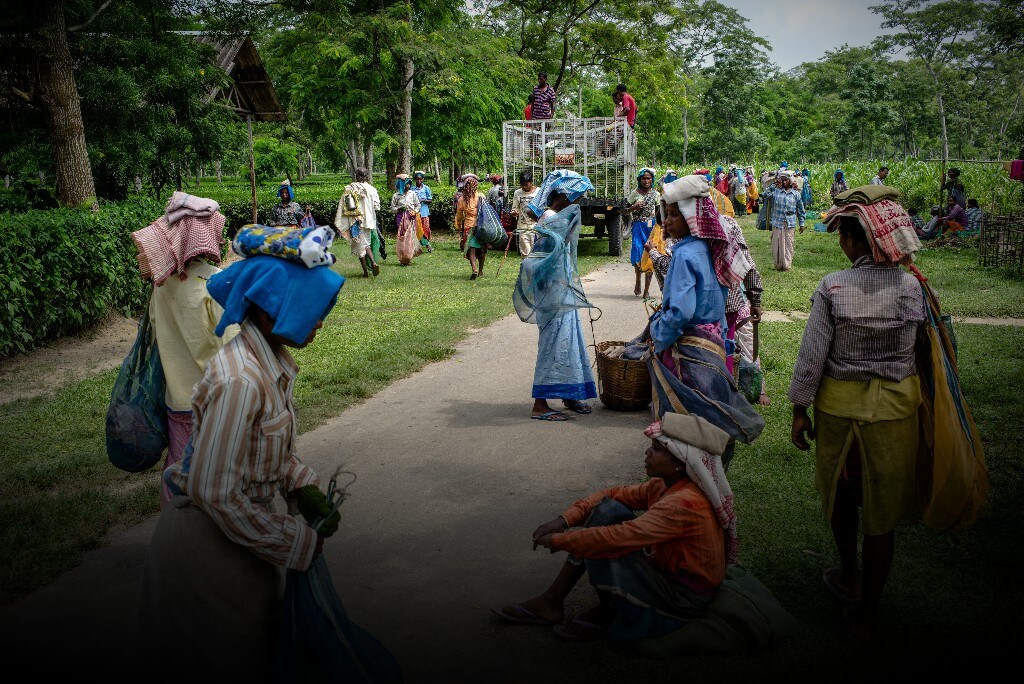
Today, people with monthly salaries of less than Rs 20,000 only receive 55 percent of their salary. That is because 45 percent goes to statutory deductions like the Employees' Provident Fund Organisation, Employee Pension Scheme, Employees' State Insurance, Labour Welfare Fund, Employee Deposit Linked Insurance and others. But low-wage employees do not have a 45 percent savings rate, so they prefer informal employment; where haath waali salary equals chitthi waali salary.
The two largest deductions of Provident Fund and ESI offer poor service and poor value for money. The EPFO has 40 million accounts with unclaimed balances and charges 3.3 percent of contributions as fees. It is the world's most expensive government securities mutual fund. The ESI only pays out 45 percent of contributions received as benefits. No other private or public health insurance policy in India has a claims ratio of less than 90 percent. Formal employment could increase by offering employees three choices:
- Whether they want 12 percent employee contribution to be deducted;
- Whether their 12 percent employer contribution goes to the EPFO or the National Pension Scheme;
- Whether their health insurance premiums go to the ESI Corporation or they buy health insurance from a public or private insurer.
This choice is exercised by employees, NOT employers. Today's status quo should continue to be available to all employees when they start employment.
Also Read: Budget 2017: A New Urban Model To Stop Premature Deindustrialisation
2. Issue A Universal Enterprise Number
Every company doing business in India today is made to carry multiple identity numbers.

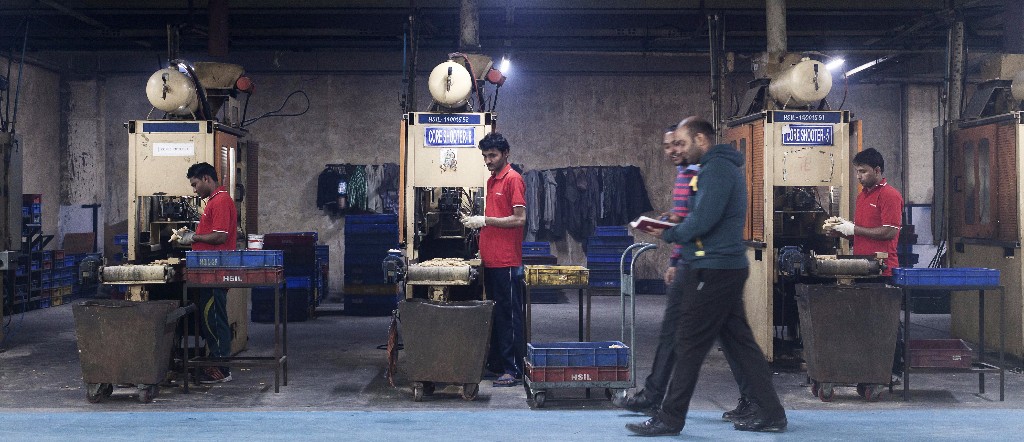
The application, issuance, and renewal of over 25 numbers breeds inefficiency, corruption, and waste. The proposal to adopt the PAN as the universal enterprise number across all central government agencies has been stuck because of a Ministry of Labour demand for an establishment number. This is irrational and defeats the very purpose of the entity responsible under law.
3. Paperless, Presence-less And Cashless Labour Law Compliance
The sum total of central and state labour laws require enterprises to use paper of all shapes and sizes, which amounts to about 6 lakh trees. Collected in physical form, the government is not able to cross-reference this information. In addition, physical presence breeds corruption.
The Ministry of Labour should set a deadline for full digital conversion of 44 central labour laws, and make them available for compliance.
This issue is particularly pronounced for central laws that are operated by states as each state has formatted the laws differently.
4. Restructure Education Regulation
Innovation, quality improvement and quantity expansion in higher and school education are being held back because there is no separation between the roles of regulator, service provider, and policymaker for the sector.
Fixing government education delivery needs to be separated from education policymaking.
That, in turn, needs to be separate from a regulator which is agnostic to private or public delivery. John Gardner who was the United States Education Secretary in the 1960s wrote a great book which questioned whether we can be equal and excellent in a democracy. This tension will never go away but cost, quality, and scale are an optimisation problem that can only be solved by the innovation that comes from a number of statistically independent, genetically diverse tries. The current regulatory cholesterol in education does not allow this innovation.
Also Read: Budget 2017: India's Missing Women Workers
5. Amend The Right To Education Act
The Right to Education framework is overly centralised and too focused on inputs. We must amend the law to make it the Right to Learning Act . This would give power back to state governments, and shift the focus away from inputs toward learning outcomes – curriculum, teacher training, assessments.
The Right to Education Act has enabled massive corruption by block education officers.
Changing K-12 education becomes even more important in a rapidly changing world where the most important work skills are reading, writing, and arithmetic. We have also learned that you can't teach people in six months what they should have learnt in 12 years.
6. Allow All Universities To Conduct Online Higher Education
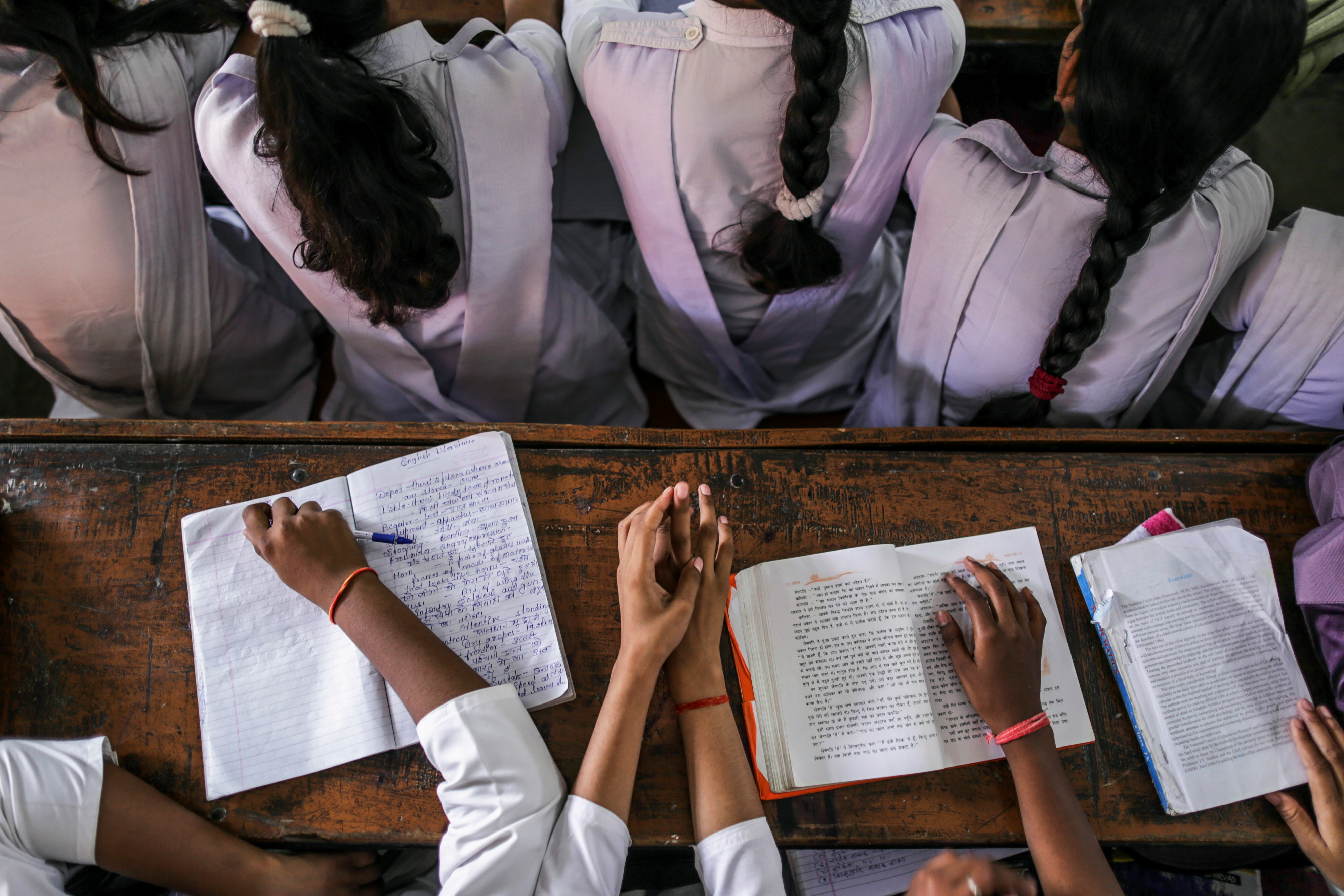
The current higher education system in India has students in three kinds of classrooms:
- 3 lakh apprentices
- 50 lakh in distance/online education
- 2 crore in physical classrooms
Vocational education is usually seen as something 'for other people's children, not our children'. The degree has social signalling value, but combining skills with degrees is key. Getting Indian higher education to achieve the difficult trinity of cost, quality, and scale requires massive adoption of online higher education.
The current regime cannot prevent foreign universities from operating online in India but prevents Indian universities from developing one of the key future capabilities in education. National online education by Indian universities is currently prohibited even though global massive online open courses (MOOCs) like Coursera and edX operate freely in India.
To be sure, technology has not yet been able to replicate the learning outcomes of a physical classroom, but it is rapidly making progress.
The current ban handicaps Indian universities from building and experimenting competence. China protects its internet companies and it is debatable if Baidu, JD.com or Alibaba would be as powerful as they are if Facebook, Google, and Amazon were not handicapped in China due to regulation. Indian universities who want to launch online campuses are not asking for protection, and they should not be held back.
Also Read: Government's Thrust On Housing To Create More Jobs: HDFC's Keki Mistry
The Freedom To Choose
In a few years India will celebrate 75 years of independence. There is a difference between independence and freedom, because with freedom comes the ability to exercise the choices that come from formal employment and employable education. Stepping back even further, of the three projects at independence – nation building, social justice and poverty reduction – we have done a good job at the first one, the second is work-in-progress, and we've fared poorly on the third one. India missed her tryst with destiny but has made a new appointment. This is one she will keep if reforms and the next budget can move us forward by adopting these six ways to improve formal employment and employable education.
Manish Sabharwal is chairman of Teamlease Services, India's largest staffing services company.
The views expressed here are those of the author's and do not necessarily represent the views of BloombergQuint or its editorial team.

-
Getting To Work Costs Women More | The Reason Why

It is not just about women paying more than men. It is about women paying much more in cities than in villages.
-
AI Bias In Investing Cannot Be Eliminated, But It Can Be Governed
Framing is a particularly important example as identical financial information presented in terms of gains rather than losses can lead an LLM to reach a different assessment.
-
Joining The Dots | Dark Skies, Steady Diya: Why Hope Holds This Diwali
With war, a weak rupee and foreign outflows weighing on sentiment, policymakers at the NDTV World Summit and market veterans at NDTV Profit Ignite: Diwali Edition offered the same advice: stay invested and filter out the noise.
-
The Curious Case of Equitas Small Finance Bank And A CEO Who Quit For Stock
PN Vasudevan believes persistent investor concerns over a perceived conflict of interest had become a governance overhang on Equitas Small Finance Bank's stock, even as the lender improved profitability and asset quality.
-
Talking Points This Week: AI Cash Burn, A Tiger Comeback And An India That Still Finds Its Own Path
India is not immune to higher oil or tighter global liquidity, yet its earnings base is broader, its domestic policy levers are still available.
-
Foreign Investors Own Half Of HDFC Bank and ICICI Bank. An LTCG Cut Could Matter Most Here
Foreign portfolio investors have US$115 billion parked in HDFC Bank, ICICI Bank. If the government cuts long-term capital gains tax, Jefferies says returning foreign money could land here first.
-
'Never Seen This Level Of Negativity': Sandeep Tandon Says The Next Rally May Be Closer Than You Think
Veteran investor Sandeep Tandon says foreign selling is easing, large-caps are due a comeback and mid-caps are crowded, while he turns positive on gold, power and pharma this Diwali.
-
Indians Stay With Family, Not In Hotels | The Reason Why
India still lacks enough clean, reliable and affordable hotels for budget-conscious travellers.
-
The Economic Imperative: Analysing The Material Driving Force Behind India-Canada Strategic Reset
This economic complementarity is further reinforced by deep institutional investment ties and talent mobility, which form the bedrock of the bilateral framework.
-
Medicine Pricing: Where Must Profit Stop?
India must confront excessive margins, hidden incentives and regulatory gaps that threaten the integrity of medicine.










