Budget 2017: How Companies Look To Stem Exodus Of Women From The Workforce
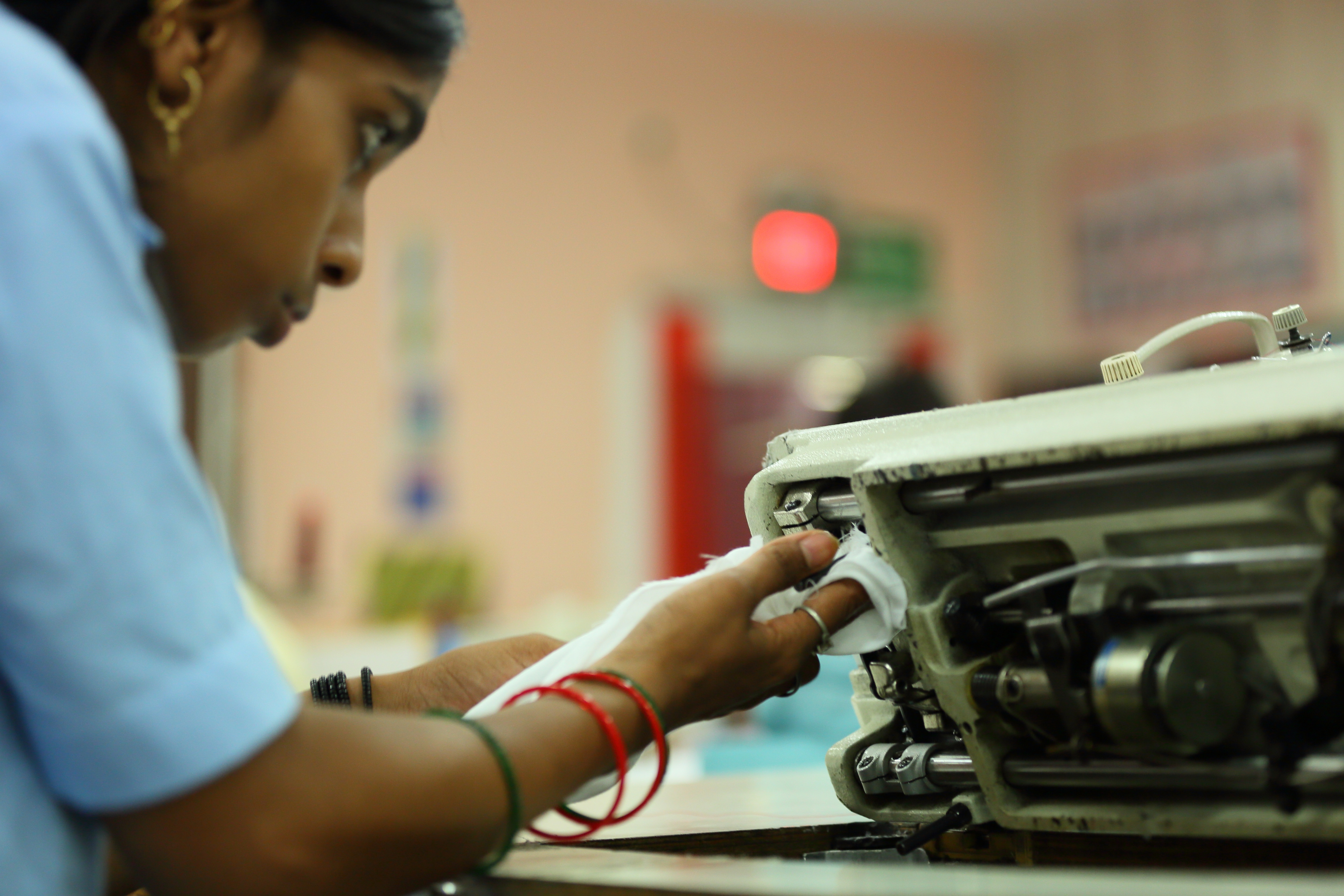
Companies are stepping in to bridge the gender gap at workplaces across India as three in every four eligible women remain jobless. That compares with only 25 percent of Indian men who are unemployed, according to the latest employment-unemployment survey conducted by the government.
Worse still, Indian women's participation in the labour force has fallen from nearly 37 percent in 2005 to around 27 percent in 2014, according to World Bank.
Gender roles reinforced through patriarchal sanctions hinder equal opportunity in Asia's third largest economy, a report by staffing firm Teamlease said. Barriers to women's employment vary from inhibiting the girl child from securing basic education to women-unfriendly corporate policies, the gender diversity report based on a survey of women workers said.
Education And Training
A number of companies have taken the lead to provide equal opportunities to women. On-the-job training and education, better leave and work policies and flexible timings are aimed at attracting and retaining female talent.
Hinduja Global Solutions, an I.T. services provider, offers a leadership training programme, Agrima, to help women employees climb the career ladder. So far, 843 women have graduated and 143 have moved up within the company. The company wants to increase its gender diversity from 39 percent to 50 percent.
India's largest retailer Future Group sponsors the education of its women employees. This year, the company saw over 100 women workers graduate.
Extended Maternity Leave, Flexi Timings
While less than 20 percent of women are employed in most well-paying sectors, especially in urban areas, over 30 percent of them work in subsistence-income occupations such as care and agriculture, according to findings of the National Sample Survey Organisation.
For those who manage to bag better-paying corporate jobs, returning to work after maternity leave remains the biggest challenge.
Several companies, including India's largest online retailer Flipkart, now offer higher maternity leave of up to six months against the statutory requirement of three months. In order to make it easier for women to resume work after the birth of a child Flipkart and Hinduja Global Solutions also offer flexible working hours after an employee returns from the maternity break, besides offering day-care services to children.
The homegrown e-commerce major gives an additional 12-month unpaid leave for those who need more time off to take care of newborns. This is complemented by transport allowance for two months before an employee goes on maternity break. Flipkart offers same benefits to those who adopt a child.
Its rival Amazon India allows 20 weeks, or over four months, of fully paid maternity leave, nearly the same as Dabur.
The Ministry of Women and Child Welfare has moved a Bill in Parliament to increase the statutory requirement of maternity leave to six months.
Globally, the countries that offer the longest paid maternity leave include the U.K. (up to one year) and Sweden (more than 10 months), according to the International Labour Organization's website.
Swedish furniture maker Ikea, ranked among the best women-friendly companies worldwide, wants to bring the same gender-equal policies it offers globally to India. The company, which is setting up its first store in Hyderabad followed by Navi Mumbai and Delhi-NCR, wants women to comprise half of its workforce in India. It is looking to hire 600-800 people for each store.
To reach the position of an attractive workplace for women, we at Ikea India are aiming at providing more opportunities to women in different life situations though flexible work hours, possibilities to choose suitable jobs, child care facilities at the workplace and securing a healthy and safe environment.Anna-Carin Mansson, Country Manager-HR, Ikea India
Welspun India Ltd., where women account for 12-13 percent of workforce, has set an initial gender diversity target of 20 percent over the next five years. The bedsheet and towel maker has set up a hostel for 800 women at its plant at Anjar, Gujarat to ensure safety outside the workspace. The company provides free transport to and from the plant to its women workers.
Gender diversity makes economic sense. A report by McKinsey Global Institute said that if labour participation of women in India matches the fastest-improving country in the region, India would add 16 percent more to its GDP by 2025.

-
Getting To Work Costs Women More | The Reason Why

It is not just about women paying more than men. It is about women paying much more in cities than in villages.
-
AI Bias In Investing Cannot Be Eliminated, But It Can Be Governed
Framing is a particularly important example as identical financial information presented in terms of gains rather than losses can lead an LLM to reach a different assessment.
-
Joining The Dots | Dark Skies, Steady Diya: Why Hope Holds This Diwali
With war, a weak rupee and foreign outflows weighing on sentiment, policymakers at the NDTV World Summit and market veterans at NDTV Profit Ignite: Diwali Edition offered the same advice: stay invested and filter out the noise.
-
The Curious Case of Equitas Small Finance Bank And A CEO Who Quit For Stock
PN Vasudevan believes persistent investor concerns over a perceived conflict of interest had become a governance overhang on Equitas Small Finance Bank's stock, even as the lender improved profitability and asset quality.
-
Talking Points This Week: AI Cash Burn, A Tiger Comeback And An India That Still Finds Its Own Path
India is not immune to higher oil or tighter global liquidity, yet its earnings base is broader, its domestic policy levers are still available.
-
Foreign Investors Own Half Of HDFC Bank and ICICI Bank. An LTCG Cut Could Matter Most Here
Foreign portfolio investors have US$115 billion parked in HDFC Bank, ICICI Bank. If the government cuts long-term capital gains tax, Jefferies says returning foreign money could land here first.
-
'Never Seen This Level Of Negativity': Sandeep Tandon Says The Next Rally May Be Closer Than You Think
Veteran investor Sandeep Tandon says foreign selling is easing, large-caps are due a comeback and mid-caps are crowded, while he turns positive on gold, power and pharma this Diwali.
-
Indians Stay With Family, Not In Hotels | The Reason Why
India still lacks enough clean, reliable and affordable hotels for budget-conscious travellers.
-
The Economic Imperative: Analysing The Material Driving Force Behind India-Canada Strategic Reset
This economic complementarity is further reinforced by deep institutional investment ties and talent mobility, which form the bedrock of the bilateral framework.
-
Medicine Pricing: Where Must Profit Stop?
India must confront excessive margins, hidden incentives and regulatory gaps that threaten the integrity of medicine.










