Budget 2017: Higher Tax Benefits On Home Loans Will Boost Realty Demand
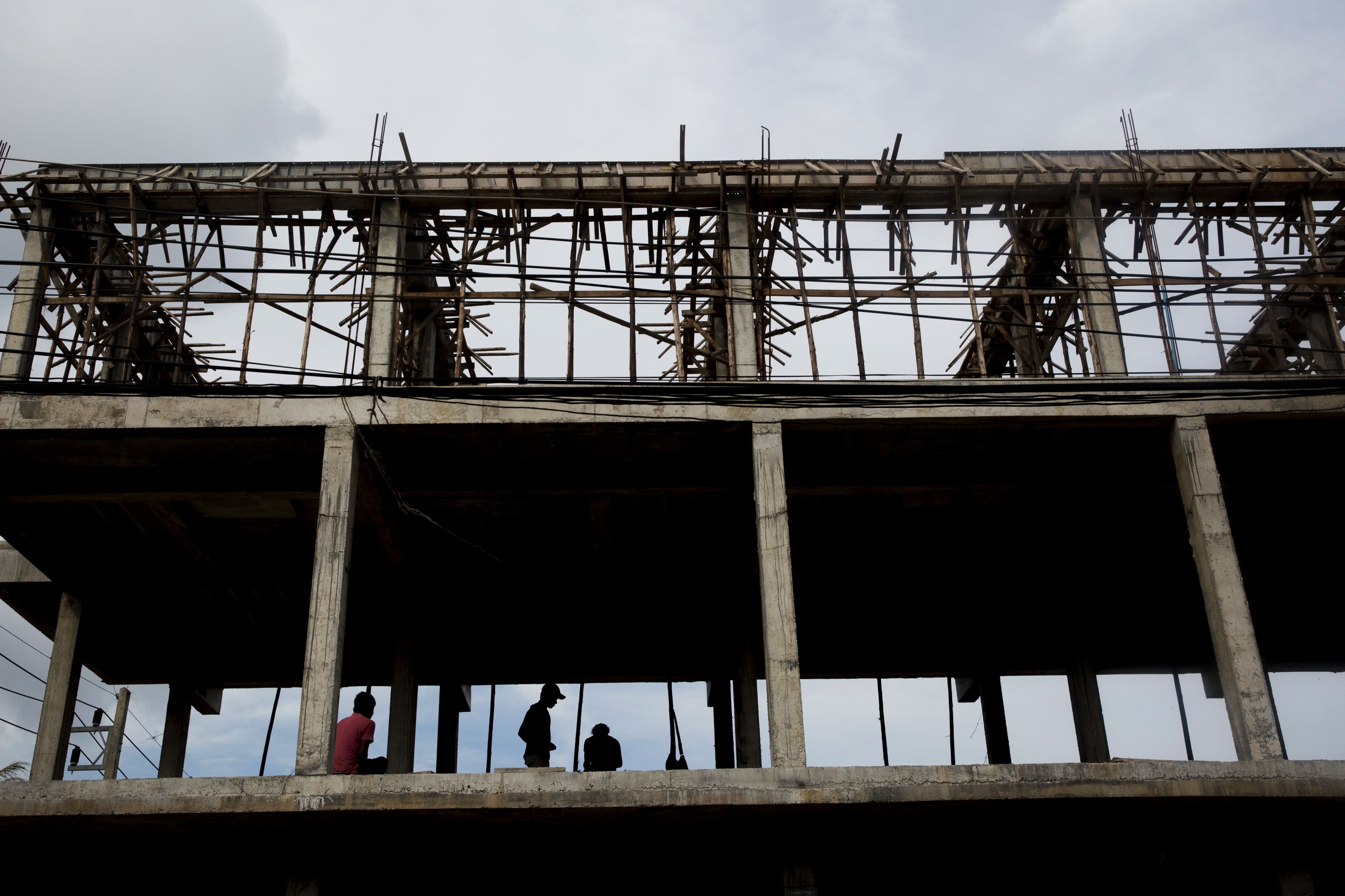
The housing sector, among the largest job creators in the economy, has seen the demand plunge after the government's currency purge. Residential real estate, which contributes 5-6 percent to India's gross domestic product, needs a push-start as it has a multiplier effect on demand for cement, steel, building material and housing finance, say brokerages.
Withdrawal of high-value currency notes hurt the cash-intensive housing sector and top eight cities saw a 44 percent drop in sales volumes and a 61 percent fall in the new project launches in the three months ended December 2016 over the previous year.
The government has already lowered interest rates on low-cost housing projects. Brokerages expect more incentives…
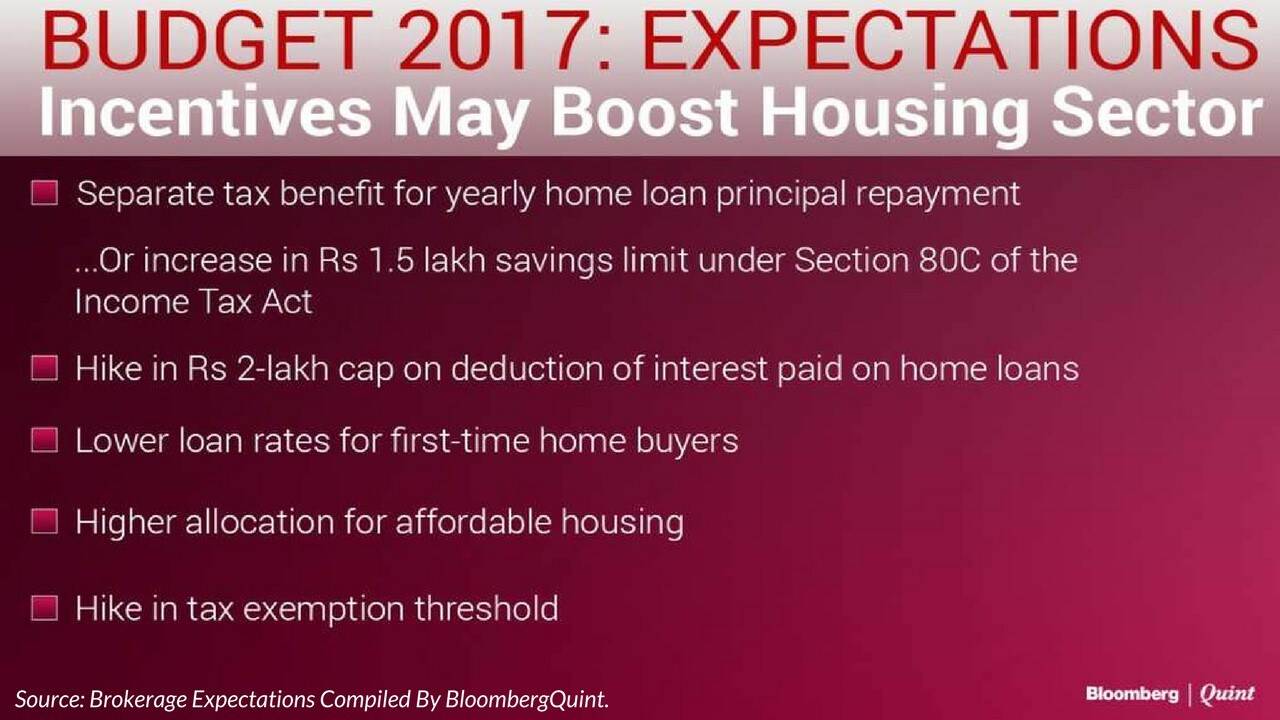
Home owners are allowed to deduct up to Rs 2 lakh of the annual interest they pay on a housing loan from their total income, which helps reduce tax.
Given the increase in property prices and falling demand, it is expected that the deduction limit -- for acquisition/construction of a self-occupied home – may be increased to Rs 3 lakh.
Buyers pay interest on housing loans before they take possession of the property. The tax deduction, however, is allowed only after taking the possession, and that too for a maximum of five years. So, the tax benefit is available to buyers three to four years after taking a home loan even though the interest component is added from the first equated monthly installment (EMI).
Brokerages say the deduction of interest paid on a home loan should be allowed even before a buyer takes possession of the property.
The principal repaid on housing loans is clubbed with other tax-saving instruments under section 80C of the Income Tax Act, 1961, which allows a maximum deduction of Rs 1.5 lakh. The limit is inadequate, brokerages say.
It is expected that either the limit will be increased or a separate deduction on principal repayment could be allowed. This will result in higher tax savings, boosting the spending capacity of buyers.
Salaried individuals without a house rent allowance component can claim a maximum deduction of Rs 5,000, which is not realistic given the inflationary effect on rent. The limit may be raised to bring it in sync with prevailing housing rents.
Under the Pradhan Mantri Awas Yojana for the economically weaker sections and lower income groups, an interest rebate of 4 percent and 3 percent is allowed on loans up to Rs 9 lakh and Rs 12 lakh, respectively. Extending this benefit to first-time home buyers will spur demand for affordable housing.
A hike in the tax exemption threshold from Rs 2.5 lakh will increase disposable income and the savings could result in higher spending on housing.
(Expectations have been compiled from reports by Axis Capital, Edelweiss, Angel Broking, IDFC Securities, Sharekhan and Karvy)

-
Indians Are Travelling, But Not Every Journey Is A Holiday | The Week In Whys

Pilgrims, patients and working women are the real travellers, and the system hasn't quite caught up with them.
-
Getting To Work Costs Women More | The Reason Why
It is not just about women paying more than men. It is about women paying much more in cities than in villages.
-
AI Bias In Investing Cannot Be Eliminated, But It Can Be Governed
Framing is a particularly important example as identical financial information presented in terms of gains rather than losses can lead an LLM to reach a different assessment.
-
Joining The Dots | Dark Skies, Steady Diya: Why Hope Holds This Diwali
With war, a weak rupee and foreign outflows weighing on sentiment, policymakers at the NDTV World Summit and market veterans at NDTV Profit Ignite: Diwali Edition offered the same advice: stay invested and filter out the noise.
-
The Curious Case of Equitas Small Finance Bank And A CEO Who Quit For Stock
PN Vasudevan believes persistent investor concerns over a perceived conflict of interest had become a governance overhang on Equitas Small Finance Bank's stock, even as the lender improved profitability and asset quality.
-
Talking Points This Week: AI Cash Burn, A Tiger Comeback And An India That Still Finds Its Own Path
India is not immune to higher oil or tighter global liquidity, yet its earnings base is broader, its domestic policy levers are still available.
-
Foreign Investors Own Half Of HDFC Bank and ICICI Bank. An LTCG Cut Could Matter Most Here
Foreign portfolio investors have US$115 billion parked in HDFC Bank, ICICI Bank. If the government cuts long-term capital gains tax, Jefferies says returning foreign money could land here first.
-
'Never Seen This Level Of Negativity': Sandeep Tandon Says The Next Rally May Be Closer Than You Think
Veteran investor Sandeep Tandon says foreign selling is easing, large-caps are due a comeback and mid-caps are crowded, while he turns positive on gold, power and pharma this Diwali.
-
Indians Stay With Family, Not In Hotels | The Reason Why
India still lacks enough clean, reliable and affordable hotels for budget-conscious travellers.
-
The Economic Imperative: Analysing The Material Driving Force Behind India-Canada Strategic Reset
This economic complementarity is further reinforced by deep institutional investment ties and talent mobility, which form the bedrock of the bilateral framework.










